Making Electromagnetics Tangible: A Peer-Led Outdoor Demonstration on Antenna Polarization
Making Electromagnetics Tangible: A Peer-Led Outdoor Demonstration on Antenna Polarization
Making Electromagnetics Tangible: A Peer-Led Outdoor Demonstration on Antenna Polarization
Miguel Ferrando-Rocher
 ,
Jose Ignacio Herranz-Herruzo
,
Felipe Vico
,
Eva Antonino-Daviu
Department of Communications, Universitat Politècnica de Valencia, Spain.
How to cite: Ferrando-Rocher, M., Herranz-Herruzo, J. I., Vico, F., Antonino-Daviu, E. (2026). Making Electromagnetics Tangible: A Peer-Led Outdoor Demonstration on Antenna Polarization. In: 12th International Conference on Higher Education Advances (HEAd’26). Valencia, 15-18 June 2026. https://doi.org/10.4995/HEAd26.2026.21317
Abstract
Hands-on activities involving real instrumentation are known to increase student engagement and deepen conceptual understanding in engineering education. This paper reports on a low-cost, portable outdoor experiment on antenna polarization designed and implemented by senior undergraduate students for first-year learners during a science outreach fair at the Universitat Politècnica de València. The setup employed a compact vector network analyzer and two circularly polarized antennas (helix and skew planar wheel) to demonstrate polarization alignment and rotation effects in real time. Qualitative observations and short structured prompts revealed increases in students’ ability to identify polarization types and relate them to measured responses. Technical issues—particularly VNA miscalibration—provided additional learning opportunities and informed improvements for future iterations. The results suggest that short, authentic demonstrations can effectively reinforce core concepts in electromagnetics and support peer-led learning environments.
Keywords: antenna polarization; hands-on learning; portable VNA; engineering education; peer-led instruction; outreach activities.
1. Introduction
Electromagnetics is often the first subject in which engineering students encounter abstract concepts that lack an immediate physical counterpart. Early topics such as polarization, antenna alignment, or wave interaction are typically presented in mathematical and diagrammatic form, long before students can handle real antennas or observe live measurements. This separation between theory and experience frequently leads to persistent conceptual questions, what alignment truly means, why rotation affects received power, or how polarization relates to observable signal levels, which are difficult to resolve through formal instruction alone.
Active learning strategies have repeatedly demonstrated their effectiveness in addressing these difficulties, particularly when students engage directly with physical systems, make predictions, and compare them with real-time observations (Freeman et al., 2014; Prince, 2004). In subjects such as electromagnetics, where fields and interactions cannot be seen, tangible experimentation often provides the missing bridge between mathematical formalism and intuitive understanding.
Peer-supported instruction offers an additional advantage. When more advanced students guide beginners through hands-on activities, explanations tend to be clearer, misconceptions emerge more naturally, and participation becomes less intimidating (Crouch & Mazur, 2001; Topping, 2005). In the context of this work, the peer-led dynamic did not arise spontaneously but as a continuation of the laboratory assignments and exploratory activities carried out in the electromagnetics and antenna courses. The outreach demonstration described here originated directly from those classroom experiences: the skills, procedures and conceptual frameworks developed in the laboratory sessions enabled a group of senior students to adapt a core experiment for a broader audience and transfer it to an outdoor environment.
Recent advances in low-cost RF instrumentation have also facilitated this shift. Portable, battery-operated vector network analyzers and compact circularly polarized antennas now allow meaningful demonstrations to be performed outside conventional laboratories (Wagih & Ghannam, 2025). These tools make it possible to reproduce essential measurement workflows with minimal infrastructure while preserving the authenticity of real-world experimentation.
This paper documents an outdoor antenna-polarization demonstration derived from in-class learning activities and implemented by senior undergraduate students during a science outreach fair. The activity was designed to visualize polarization alignment and rotation effects in real time, using equipment and procedures familiar from the course laboratories. The study reports how the demonstration was structured, how first-year participants interacted with it, and how both expected and unexpected elements contributed to learning opportunities. The goal is to illustrate how small-scale, low-cost, peer-supported demonstrations can extend classroom learning, make abstract electromagnetic concepts tangible, and complement traditional laboratory instruction.
2. Activity design and Methodology
The outdoor demonstration originated as a natural continuation of the laboratory activities carried out in the electromagnetics and antenna courses. The procedures and measurement sequences introduced in the classroom provided the framework from which a group of senior undergraduate students adapted the experiment for an outreach setting. The intention was not to reproduce a complete laboratory session but to extract its essential elements and translate them into a portable, simple and intuitive activity that first-year students could approach without prior experience.
The design emphasised three aspects:
Keeping the setup as straightforward as possible.
Ensuring that the equipment produced immediate and interpretable feedback.
Selecting actions whose physical meaning could be understood even by beginners.
To meet these conditions, the students chose two compact circularly polarized antennas, an axial-mode helix and a skew planar wheel, because their relative rotation produces clear variations in transmitted power. Circular polarization avoided the alignment difficulties often encountered with linear antennas and allowed participants to focus on the effect of rotation alone.
A low-power, battery-operated vector network analyzer was used as the measurement instrument, connected to a laptop displaying the S21 parameter in real time. Before the event, the configuration was calibrated and tested outdoors to ensure that ambient light, surrounding activity and environmental noise would not hinder the visibility or stability of the measurements. The final setup allowed participants to handle the antennas directly and observe the behavior of the trace on the screen with minimal guidance.
Throughout the demonstration, small groups of first-year students approached the station and were introduced to the experiment through a short and repeatable sequence. They first observed the baseline S21 response with the antennas facing each other and then rotated the receive antenna in approximate steps of forty-five degrees. This prompted participants to verbalize predictions and compare them with the behavior of the trace, creating natural opportunities to discuss how polarization affects coupling and transmitted power. The senior students acted as facilitators only when clarification or careful handling of the connectors was required.
To document the experience, participants were invited to comment briefly on what aspect of the measurement surprised them most, and those who wished could write a single sentence on a small card describing what they had understood. These short reflections, anonymous and ungraded, provided insight into the type of conceptual shifts that occur when students encounter real data instead of idealized diagrams.
An unexpected event occurred when the portable VNA lost calibration during the fair. Rather than interrupting the demonstration, the facilitators used the incident as an additional learning opportunity. The process of diagnosing the cause, explaining why calibration drift appears in practical measurements, and performing a live recalibration offered a perspective that seldom appears in formal coursework but is central to real laboratory practice.
Overall, the methodology reflects an effort to transfer the core elements of the laboratory curriculum to a public, informal environment while maintaining the authenticity of genuine RF measurements. The activity preserved the conceptual focus of the classroom while giving first-year students a concrete encounter with phenomena usually introduced only in theoretical form.
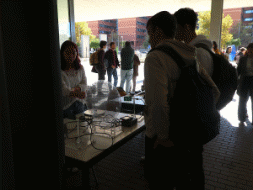
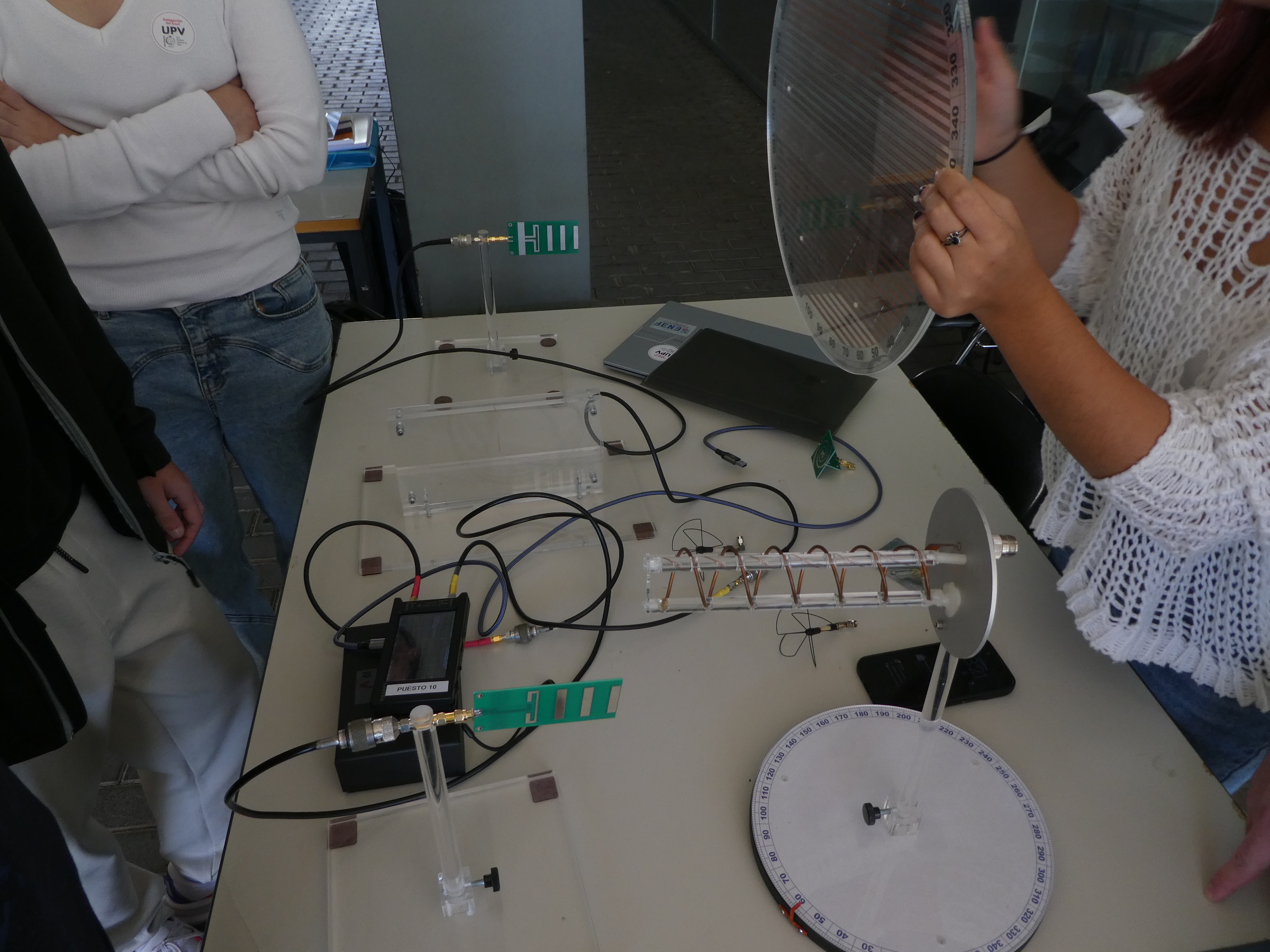
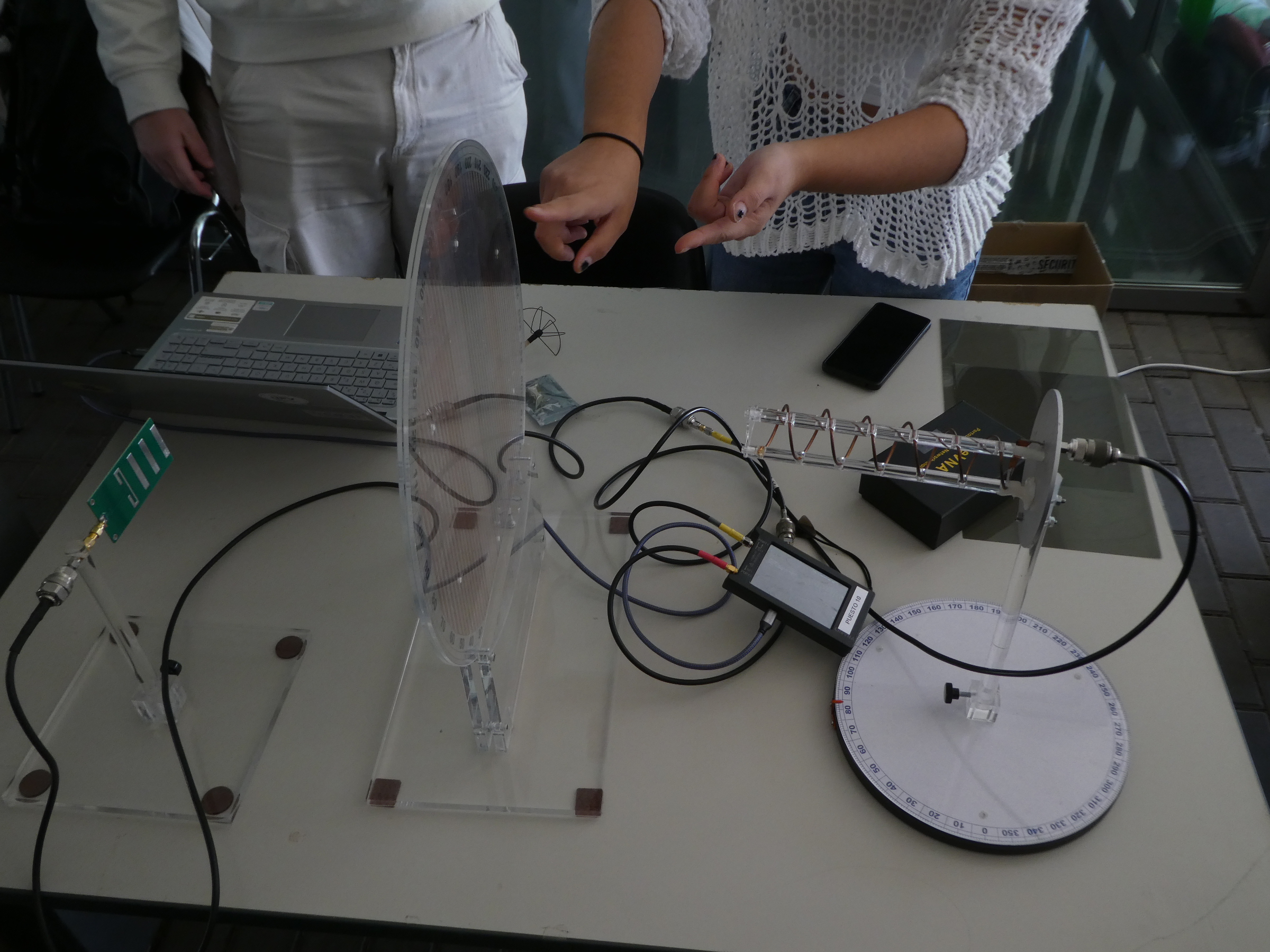
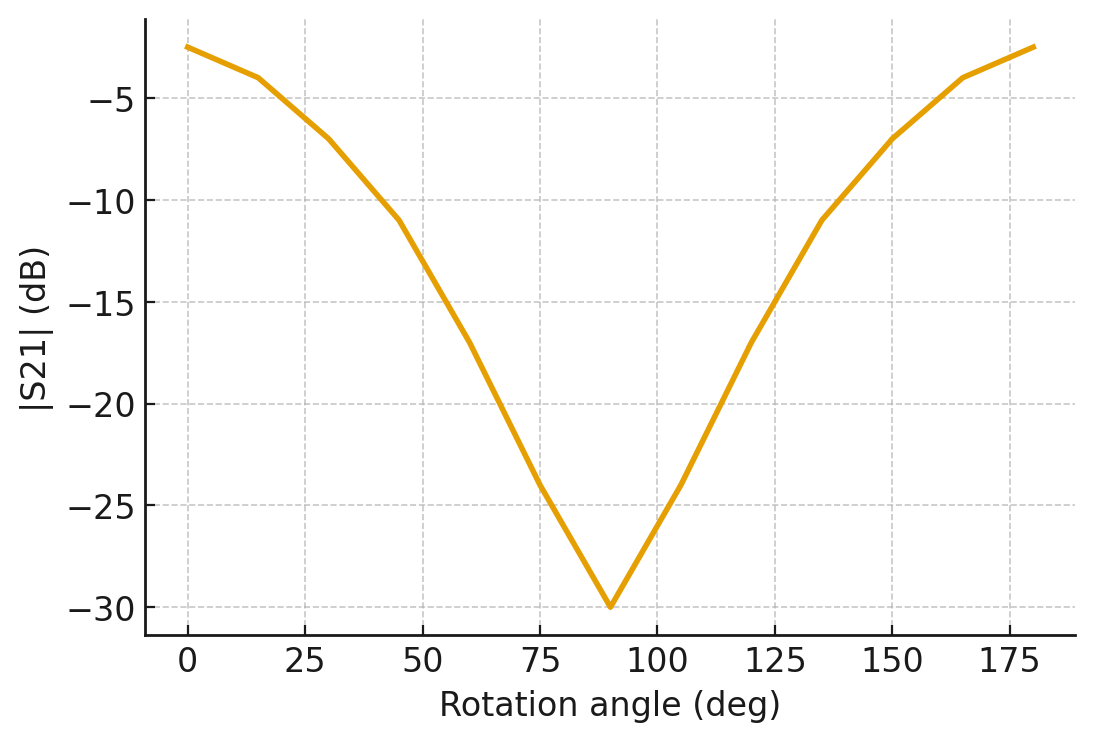
Figure 1. Photographs of the outdoor antenna-polarization demonstration carried out at the UPV, showing the setup, student interaction, and rotation mechanism used during the activity.
3. Results
The activity remained active throughout the fair, attracting small groups of first-year students who interacted directly with the antennas, the rotation mechanism and the measurement interface. As shown in Figure 1, the photographs document the portable setup and the way students handled the equipment while discussing predictions and interpreting the live response. The S21 curve included in the same figure corresponds to the measurements collected during the demonstration. The attenuation pattern, with a clear minimum around 90º, matched the behavior expected for opposite-handed circular polarization and appeared consistently as participants rotated the receive antenna.
Short written reflections from volunteers (e.g., “I didn’t know rotation mattered so much” or “seeing the signal drop helped me understand the diagrams”) indicated that the hands-on component facilitated conceptual clarity. In addition, the temporary loss of VNA calibration became an unplanned learning opportunity, prompting explanations about measurement reliability and illustrating how calibration is restored in practice. Overall, the observations suggest that even a simple, low-cost setup can generate genuine engagement and help students connect theoretical concepts with real electromagnetic behavior.
In addition to the on-site participation, the activity also generated notable engagement on social media. As shown in Figure 2, the student delegation of the Real Sociedad Española de Física (RSEF–ETSIT) shared a photograph of the demonstration on Instagram, where it quickly accumulated more than 80 likes in the first days. This visibility extended the reach of the experiment beyond the fair itself and highlighted its perceived value within the School of Telecommunication Engineering. The public response reinforced the idea that low-cost, hands-on activities not only support conceptual understanding but also contribute to a sense of community and scientific interest among students.
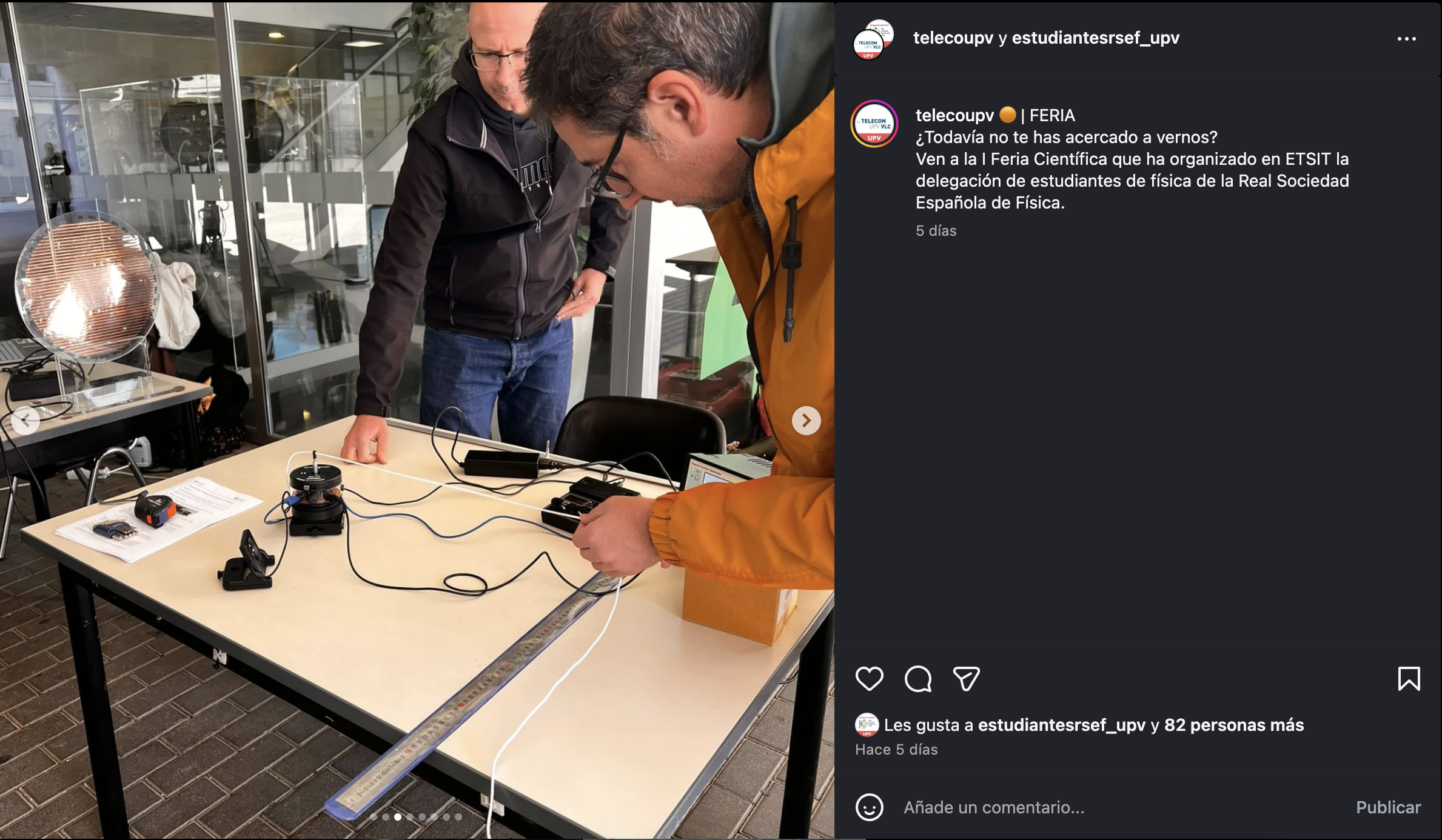
Figure 2. Public dissemination of the antenna-polarisation activity on Instagram by the student delegation (RSEF–ETSIT). The post documenting the demonstration received over 80 interactions within the first days, illustrating the visibility and outreach potential of hands-on activities carried out at the School of Telecommunication Engineering.
4. Conclusions
The study has presented an outdoor demonstration on antenna polarization derived from classroom laboratory activities and implemented by senior undergraduate students for first-year participants. Although the technical components were intentionally simple—a portable vector network analyzer, two circularly polarized antennas and a controlled rotation mechanism—the activity succeeded in transforming a concept that is usually introduced through abstract representations into a phenomenon that could be observed, manipulated and discussed. Students with no prior experience in RF instrumentation were able to relate changes in the S-parameter trace to the physical performance of the antennas, thereby reinforcing ideas that are often difficult to visualize in theoretical form.
The demonstration also revealed aspects of learning that seldom emerge in traditional laboratory sessions. Peer facilitation created a setting in which first-year students felt at ease expressing uncertainties and formulating predictions, and the temporary loss of calibration illustrated the practical constraints of real measurements. Observing the problem, understanding its cause and watching the recalibration process provided an authentic insight into the iterative nature of experimental work.
The initiative required minimal equipment and preparation, yet it fostered meaningful engagement and complemented the formal teaching of electromagnetics. Its success suggests that small-scale, portable demonstrations can serve as effective entry points into the subject, particularly when they extend activities already introduced in the classroom and allow students to interact with the underlying concepts in a concrete way.
Future developments may include incorporating similar demonstrations into regular teaching schedules, exploring the use of low-cost instrumentation for formative assessment, and adapting the activity for secondary-school outreach. Overall, the experience highlights the pedagogical value of integrating real measurements into early encounters with electromagnetics and underscores how brief, well-designed interventions can support a more intuitive and durable understanding.
References
Crouch, C. H., & Mazur, E. (2001). Peer Instruction: Ten years of experience and results. American Journal of Physics, 69(9), 970–977. https://doi.org/10.1119/1.1374249
Freeman, S., Eddy, S. L., McDonough, M., Smith, M. K., Okoroafor, N., Jordt, H., & Wenderoth, M. P. (2014). Active learning increases student performance in science, engineering, and mathematics. Proceedings of the National Academy of Sciences, 111(23), 8410–8415. https://doi.org/10.1073/pnas.1319030111
Prince, M. J. (2004). Does active learning work? A review of the research. Journal of Engineering Education, 93(3), 223–231. https://doi.org/10.1002/j.2168-9830.2004.tb00809.x
Topping, K. J. (2005). Trends in peer learning. Educational Psychology, 25(6), 631–645. https://doi.org/10.1080/01443410500345172
Wagih, M., & Ghannam, R. (2025). A framework for enhancing RF and microwave engineering education with low-cost tools for active, project-based learning. TechRxiv. https://doi.org/10.36227/techrxiv.174906153.35208213/v1