Operationalizing Competency-Based Education in Postgraduate Professional Programs: A Case Study of the MAS Vocational, Study and Career Counselling
Operationalizing Competency-Based Education in Postgraduate Professional Programs
Operationalizing Competency-Based Education in Postgraduate Professional Programs: A Case Study of the MAS Vocational, Study and Career Counselling
Anne Jansen
 ,
Anna Radvila
Institute of Human Resource Management, School of Business, University of Applied Sciences and Arts Northwestern Switzerland, Switzerland.
How to cite: Jansen, A.; Radvila, A. (2026). Operationalizing Competency-Based Education in Postgraduate Professional Programs: A Case Study of the MAS Vocational, Study and Career Counselling. In: 12th International Conference on Higher Education Advances (HEAd’26). Valencia, 15-18 June 2026. https://doi.org/10.4995/HEAd26.2026.21461
Abstract
Competency-based education (CBE) has gained increasing relevance in higher education as institutions seek to enhance the professional relevance and transparency of learning outcomes. This contribution examines how the core principles of competency-based education are operationalized at the program level in a postgraduate professional program. Using a qualitative case study design, the study analyzes the Master of Advanced Studies (MAS) in Vocational, Study and Career Counselling at University of Applied Sciences and Arts Northwestern Switzerland. Data were collected through document analysis of program descriptions and participant evaluations using qualitative content analysis. The findings identify key elements of CBE, including alignment with an externally defined competency profile, experiential learning formats, integrated assessment practices, and program coherence across academic and professional learning settings. Implications for the design and leadership of competency-based postgraduate programs are discussed.
Keywords: competency-based education (CBE); career guidance, postgraduate professional program; dual study program
1. Introduction
Traditional higher education structures often struggle to make graduates’ competencies visible, transferable, and professionally relevant (OECD, 2018). In response, many higher education institutions have increasingly adopted competency-based education (CBE) approaches. Within CBE, the demonstrable development of clearly defined competencies is placed at the center of the educational process. Core principles include a shift from content coverage to learning outcomes and the alignment of curricula with predefined competency profiles rather than with disciplinary content structures (Surr & Redding, 2017).
Drawing on the theory of constructive alignment (Biggs & Tang, 2011), effective competency development depends on the coherent alignment of intended competencies, learning and teaching activities, and assessment practices at the program level. Competencies thus function as organizing principles that guide curricular decisions, pedagogical approaches, and evaluation strategies across modules, rather than serving as isolated learning objectives.
From a socio-constructivist perspective (e.g., Vygotsky, 1978), competencies are not acquired through knowledge transmission alone but emerge through active engagement, reflection, and situated practice. Accordingly, competency-based programs must provide learning environments that enable learners to apply knowledge in authentic, complex, and professionally relevant contexts. This requires didactic designs that integrate experiential learning, formative feedback, and opportunities for transfer across disciplinary and professional boundaries.
For CBE to function effectively, (Higher Education) program leaders must operate simultaneously at multiple levels. It is imperative that there is coherent and consistent alignment of program objectives, curriculum design, pedagogical approaches, assessment practices, and organizational structures. Therefore, this contribution aims to provide insights into the implementation of CBE in postgraduate professional programs.
2. Methods
This study adopts a qualitative case study design (Yin, 2018), aiming to generate insights into how competency-based education is operationalized in a specific postgraduate program with a dual structure. Using the example of the Master of Advanced Studies (MAS) Vocational, Study and Career Counselling the study examines how CBE is implemented in the context of postgraduate professional education for career, educational, and vocational counselors (see Cedefop, 2025), and explores the challenges associated with this approach.
The data corpus included program accreditation documents, curriculum descriptions, competency frameworks, internal evaluation reports, and documented outcomes of program review workshops and focus groups conducted between 2015 and 2025. The document analysis followed a qualitative content analysis approach (Mayring, 2015). Initial coding was guided by core principles of competency-based education (deductive coding). Materials were systematically analyzed to address the following research question:
How are the core principles of CBE operationalized at the program level in the MAS Vocational, Study and Career Counselling?
The results identify and describe the core elements of CBE within the program and discuss their implications for postgraduate professional education.
2.1. The Master of Advanced Studies Vocational, Study and Career Counselling
The MAS program in Vocational, Study, and Career Guidance is a postgraduate professional degree designed to foster advanced competencies in career guidance through practice-oriented and competency-based learning formats. The program is offered by the University of Applied Sciences and Arts Northwestern Switzerland (FHNW) and is structured as a dual study program (Fasshauer & Severing, 2016) combining academic coursework with supervised professional practice.
The academic component takes place at FHNW and follows an interdisciplinary and multidisciplinary approach. The curriculum combines theoretical foundations with opportunities for skills development through small-group learning formats. The practical component is completed at a career guidance center in Switzerland. In the 10 programs conducted so far there are 32 public career guidance centers (in 19 Swiss cantons and the Principality of Liechtenstein), 12 cantonal disability insurance/social insurance counseling centers, and 20 private career guidance centers (e.g., Parawork Center Nottwil, Brändi Foundation, Swiss Post AG, Worklink career coaching, Commercial Association, Wider Potential Development) involved. Participants already work in these institutions as vocational, study and career counselors but are also supervised and assessed by experienced and qualified career counselors.
The MAS Vocational, Study and Career Counselling comprises 9 modules (63 ECTS-Credits), delivered over 24 to 30 months (depending on the speed at which students comply their Master’s thesis). In 2025, the program was in its 10th cohort. By the end of 2025, 174 participants in classes of 12 to 23 students (106 women, 68 men; mean age: 40 years) have enrolled in or completed the program. The program admits both applicants with a university degree and those with a higher vocational qualification and several years of professional experience in diverse fields. 55% of the participants hold a university degree, while 45% possess a higher vocational qualification. Participants come from a wide range of educational and professional backgrounds, including psychology, pedagogy, educational sciences, sociology, social work, geography, history, business administration, engineering, nursing, insurance, banking, human resources, and marketing and communications.
3. Findings
The document analysis illustrates how the core principles of CBE are operationalized at the program level in the MAS Vocational, Study and Career Counselling. The findings are structured along core elements of CBE (see Table 1).
3.1. Competency profile
The MAS Vocational, Study and Career Counselling is aligned with the competency profile for vocational, study, and career guidance. This profile was originally developed in 2011 and revised in 2024 by the State Secretariat for Education, Research and Innovation (SERI) in cooperation with affiliated partners from the field of career counseling in practice, education, and research (universities), referred to as SERI competency profile in the following. It comprises eight core areas of professional competence, encompassing a total of 46 sub-competencies: counseling (17), information analysis and dissemination (6), education (2), working within and on organizations and professional networks (8), interaction with clients and professional partners (3), self-leadership (6), and professional identity and attitudes toward the meaningfulness of one’s own professional practice (4).
Table 1. Core elements of competency-based education in the MAS Vocational, Study and Career Counselling (based on Biggs & Tang, 2011)
Elements of CBE |
Operationalization in the MAS Program |
Competency profile |
SERI competency profile with 8 competence areas and 46 sub-competencies; defined performance criteria; program-wide alignment |
Learning and teaching activities |
Dual structure; classroom teaching; self-study; peer consultation groups; supervised professional practice; experiential and reflective learning formats |
Assessment practices |
Authentic assessments; integrated assessment of multiple competencies; reflective reports; case-based assignments; practice-based performance assessment by supervisors |
Program coherence |
Longitudinal development of competencies across modules; integration of academic and practical learning settings |
For each sub-competency, explicit performance criteria are defined, specifying the expected level of professional performance. This ensures the availability of a transparent and operationalized competency profile, which constitutes a fundamental prerequisite for CBE. The program design is systematically aligned with this profile, positioning competencies as the primary reference point for curriculum development, teaching and learning activities, and assessment practices. Building on this profile, a corresponding questionnaire is developed, which students and their assessors, both in practical settings and at the university, use as a tool for self- and external assessment. This concretizes the competency framework, making it directly applicable in CBE practice.
3.2. Learning and teaching activities
The methodological and didactic concept of the MAS Vocational, Study and Career Counselling is structured around four interrelated learning settings (see Figure 1). First, classroom-based instruction and, second, preparatory and follow-up self-study focus on the acquisition of theoretical knowledge, which forms the foundation for understanding and addressing the tasks of vocational, study, and career guidance.
Third, the practical application of knowledge is already initiated within classroom teaching through case-based work, exercises, and simulations, and is further developed in structured peer consultation groups. These groups employ formats such as collegial case consultation, role plays, and peer feedback to support reflective and practice-oriented learning. Fourth, professional practice placements at career guidance centers provide opportunities to consolidate and deepen learning through everyday professional activities, accompanied by supervision from qualified career counselors.
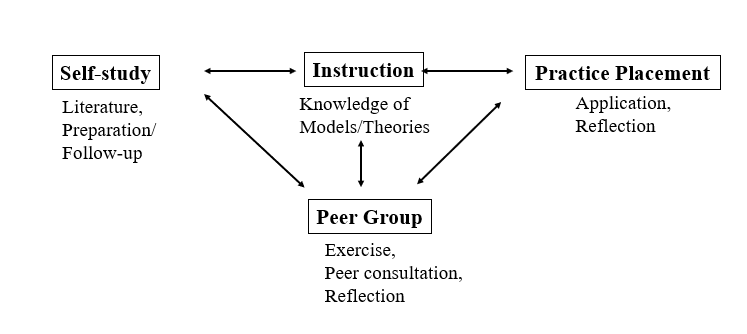
Figure 1. MAS Vocational, Study and Career Counselling learning settings
Through the dual structure of the program and the systematic integration of these four learning settings, the MAS Vocational, Study and Career Counselling employs a range of active and experiential learning formats. These formats enable continuous opportunities for application, transfer, and reflection, thereby supporting the development of competencies across academic and professional contexts.
3.2. Assessment practices
The program incorporates a variety of assessment practices across its modules. These include, among others, the preparation of profession-related reflective reports, the development of a personal counseling concept, case-based assignments, and the preparation, implementation, evaluation, and discussion of diagnostic procedures. These assessment practices are explicitly designed to make the development of competencies visible. For example, reflective reports require participants to document real counseling cases and link them explicitly to defined competency criteria.
In general, individual assessments are not limited to the evaluation of a single competency but address multiple competencies simultaneously, reflecting the integrated nature of professional practice. Knowledge and skills acquired during the program are assessed not only within the academic context of FHNW and practiced in peer consultation groups, but also directly transferred, tested, and further developed through professional practice at career guidance centers.
Supervisors at these centers assess participants’ practical performance based on the SERI competency profile, using reflective reports and practical performance assessments. Overall, the findings indicate that assessments focus primarily on the application of knowledge in professional contexts and assess declarative knowledge only where explicitly required by the learning objectives (i.e., basic knowledge of diagnostics).
3.4. Program coherence
Multiple modules and learning settings are designed to develop the competencies defined in the SERI competency profile. To ensure close integration of academic and practical components, the program managers organize several workshops with career counseling supervisors and module coordinators to facilitate coordination and mutual exchange. The MAS Vocational, Study and Career Counselling steering committee, including representatives from the Swiss Conference of Managers of Career Guidance Centers, directors of disability and social insurance counseling centers, private career guidance centers, professional associations (i.e. profunda-suisse, laufbahnswiss, AGAB), and FHNW University, oversees the continuous refinement and development of the program curriculum.
Taken together, the findings show that the MAS Vocational, Study and Career Counselling operationalizes CBE through the systematic alignment of a clearly defined competency profile, experiential learning formats, and integrated assessment practices across academic and professional contexts.
4. Discussion and Conclusion
The findings can be interpreted through the lens of constructive alignment (Biggs & Tang, 2011), demonstrating how competencies function as organizing principles across curriculum, pedagogy, and assessment. The MAS program exemplifies a high degree of alignment, particularly in the integration of authentic assessment formats and practice-based learning environments.
From a socio-constructivist perspective (Vygotsky, 1978), the program’s emphasis on experiential learning, peer consultation, and supervised practice supports situated and reflective competency development. This suggests that competency development is not only structurally embedded but also socially mediated. While the MAS program represents a specific national and institutional context, the findings point to general design principles of competency-based postgraduate education:
First, alignment with an externally defined competency profile contributes to a high level of employability for participants, as the program is consistently oriented toward regulatory requirements and the needs of professional practice (see Cedefop, 2025). Positioning competencies as binding reference points supports transparency for learners, employers, and professional stakeholders, and strengthens the relevance and legitimacy of the program. This strong labor-market orientation is reflected in graduate outcomes: around 80% of graduates obtained permanent employment at the career guidance centers where they had been working during their studies (or were already permanently employed), while the remaining graduates quickly secured positions, often already during their studies, in other career guidance centers.
Second, the dual structure of the program enables the immediate application of acquired competencies in professional practice while simultaneously allowing practical questions and challenges to be systematically integrated into classroom teaching. This close link between academic learning and professional practice represents a key strength of competency-based postgraduate education. At the same time, it places increased demands on program management, as all participants must be provided with an appropriate practice placement in a career guidance center. Moreover, program responsibility extends beyond coordinating academic teaching staff to include the support and alignment of practice-based supervisors.
Third, as a substantial part of the assessment of competencies is conducted by supervisors at career guidance centers, it is essential that these supervisors are regularly informed about program objectives, assessment criteria, and evaluation processes and receive training accordingly. Ensuring shared assessment standards and a common understanding of competency levels across academic and practice-based contexts is critical for maintaining assessment validity and reliability.
Fourth, each of the four learning settings (see Figure 1) must be carefully designed at the module level to ensure meaningful progression and coherence. Learning activities across classroom instruction, self-study, peer consultation groups, and professional practice should build on one another and avoid unnecessary redundancy. This requires deliberate curriculum coordination and ongoing communication among students, teaching staff and practice partners.
Fifth, competency-based assessment entails a higher level of effort for program leadership and teaching staff, as traditional examination formats such as multiple-choice tests are insufficient to capture performance levels in complex professional competencies. Instead, assessment practices must be transparent, authentic, and aligned with defined performance criteria. Clear communication of expectations is essential to enable participants to understand how competencies are assessed and how evidence of competency development can be demonstrated.
Finally, participant feedback indicates that some learners perceive competency-based learning as more demanding than traditional lecture-based formats and occasionally wish for more frontal instruction. This underscores the need for program managers to support learners through guidance, clear expectations, and scaffolding of active learning experiences. Balancing the rigor and experiential orientation of competency-based education with learners’ familiarity and comfort with more traditional formats is a critical consideration for the successful implementation of such programs.
In conclusion, the study shows that implementing competency-based education in postgraduate professional programs requires not only curricular alignment but also organizational coordination across institutional and practice-based actors. CBE thus emerges as a systemic rather than purely pedagogical approach.
References
Cedefop (2025). Inventory of lifelong guidance systems and practices - Switzerland. Careers Net national records. https://www.cedefop.europa.eu/en/country-reports/inventory-lifelong-guidance-systems-and-practices-switzerland
Biggs, J. & Tang, C. (2011). Teaching for quality learning at university: What the student does. (4th edition). Maidenhead, UK: Open University Press.
Fasshauer, U. & Severing, E. (2016). Verzahnung beruflicher und akademischer Bildung. Duale Studiengänge in Theorie und Praxis. Bielefeld: W. Bertelsmann Verlag
Mayring, P. (2015). Qualitative Inhaltsanalyse. Grundlagen und Techniken (12. Aufl.). Weinheim: Beltz.
OECD (2018). The Future of Education and Skills: Education 2030. OECD Education Policy Perspectives, No. 98, OECD Publishing, Paris. https://doi.org/10.1787/54ac7020-en.
State Secretariat for Education, Research and Innovation SERI (2011). Qualifikationsprofil Berufs-, Studien- und Laufbahnberater/in. https://edudoc.ch/record/39377?In=de#files
State Secretariat for Education, Research and Innovation SERI (2024). Qualifikationsprofil Berufs-, Studien- und Laufbahnberater/in. https://www.sbfi.admin.ch/de/berufs-studien-und-laufbahnberatung
Surr, W. & Redding, S. (2017). Competency-Based Education: Staying Shallow or Going Deep? A Deeper, More Personal Look at What It Means to Be Competent. Washington DC: AIR. https://www.air.org/sites/default/files/2021-06/CBE_GoingDeep.pdf
Vygotsky, L. S. (1978). Mind in Society: The Development of Higher Psychological Processes. Cambridge, MA: Harvard University Press.
Yin, R. K. (2018). Case study research and applications (Vol. 6). Thousand Oaks, CA: Sage.