High-Impact Practice in Higher Education: Students’ Perceptions of Learning Atmosphere and Instructor Impact
Students’ Perceptions of Learning Atmosphere and Instructor Impact
High-Impact Practice in Higher Education: Students’ Perceptions of Learning Atmosphere and Instructor Impact
Jehan Alandejani

Leadership and Educational Policies, College of Humanities and Social Sciences, Northern Border University, Arar, Saudi Arabia.
How to cite: Alandejani, J. (2026). High-Impact Practice in Higher Education: Students’ Perceptions of Learning Atmosphere and Instructor Impact. In: 12th International Conference on Higher Education Advances (HEAd’26). Valencia, 15-18 June 2026. https://doi.org/10.4995/HEAd26.2026.21544
Abstract
High-impact practices (HIPs), especially First-Year Experiences (FYE) programs, play a critical role in enhancing students' engagement and facilitating the transition to higher education. This study investigates undergraduate students’ perceptions of an FYE course at Northern Border University (NBU) in Saudi Arabia, focusing on perceived understanding, course challenge, and the instructor’s role in shaping a supportive learning environment. Data were collected via an end-of-course survey from 28 undergraduate students in two Spring 2026 FYE course sections. The data was analyzed using nonparametric tests to examine differences and relationships across variables. The findings reveal a positive association between class sessions and understanding. No significant differences appeared between course sections or between majors and non-majors. However, descriptive trends indicate that students within the major reported slightly perceived benefits. Overall, the results suggest that FYE courses are positively perceived by students and contribute to enhancing engagement and deeper learning experiences. These findings provide practical implications for the design and delivery of first-year programs in higher education contexts.
Keywords: High-impact practices; first-year experience; learning atmosphere; higher education; student perception.
1. Introduction
Universities play a critical role in developing human capital and supporting social and economic growth. In this context, enhancing teaching and learning has become a central priority for higher education institutions seeking to improve student engagement and academic success. High-impact practices (HIPs), as conceptualized by Kuh (2008), are educational activities that promote deep learning, student engagement, and persistence, particularly when intentionally implemented and supported at the institutional level.
In Saudi Arabia, higher education institutions have increasingly emphasized teaching quality and student engagement. Therefore, Northern Border University (NBU) was among the first in Saudi Arabia to adopt HIPs (Alandejani & Sayed, 2024). The university identified four high-impact practices: first-year seminars, shared experiences, collaborative projects, and undergraduate research, to develop essential skills. The implementation of HIPs at NBU included faculty development initiatives, coordination across academic units, and the establishment of a monitoring and evaluation system (Almutiry et al., 2022; Alandejani & Sayed, 2024).
Among HIPs, First-Year Experience (FYE) programs are particularly important because they support students’ transition to university life, foster a sense of belonging, and encourage early academic engagement (Kuh, 2008). FYE programs typically emphasize structured support, small-group interaction, and close contact with instructors, fostering a positive learning environment (Schwartz et al., 2020). Despite the growing adoption of HIPs across diverse contexts, empirical research examining students’ perceptions of FYE implementation in non-Western settings remains limited.
2. Literature Review
HIPs are grounded in the premise that meaningful engagement, sustained interaction, and appropriately challenging academic work enhance student learning and persistence (Kuh & O’Donnell, 2013). FYE programs integrate academic and social experiences, helping students understand university expectations and develop communication and collaboration skills (Kuh, 2008).
The instructor’s role is central to the effectiveness of FYE initiatives. Prior research shows that a supportive learning environment marked by inclusivity, encouragement, and clear expectations enhances student satisfaction and engagement (Schwartz et al., 2020). Tigri (2024) further notes that structured first-year initiatives promote communication, peer interaction, and the development of students’ academic identities.
At the institutional level, successful HIP implementation requires coordination, faculty training, and alignment with curricular goals. Studies documenting HIP adoption at NBU show that structures that plan and foster collaboration across academic units support consistent implementation (Almutiry et al., 2022; Alandejani & Sayeed, 2004). However, much of the existing literature focuses on the implementation process rather than on students’ perceptions of specific course components, such as assignments, class sessions, and the learning atmosphere.
3. Purpose and Research Questions
The purpose of the study is to examine students' perceptions of the implementation of an FYE course at NBU. Specifically, the study investigates whether FYE implementation is associated with perceived understanding of course content and whether instructors influence the creation of a learning environment conducive to learning.
The study addresses the following research questions:
Is there an association between the course session and the instructor’s ability to create a deep learning atmosphere?
Is there an association between the course level of challenge and course assignments?
Is there a difference between major and non-major students regarding course assignments?
Is there a difference between Section A and Section B regarding course understanding?
4. Methods
4.1. Research Design and Instrument
A quantitative, cross-sectional design collected data via an end-of-semester survey at Spring 2026's end. The 22-item survey covered course structure, practices, learning environment, and student experiences over a 14-week period in 50-60-minute sessions led by the same instructor.
4.2. Participants
The sample was based on convenience sampling. The 28 participants were from two undergraduate classes: 16 (57%) in section A and 12 (43%) in section B. Majors accounted for 71% (n=20), non-majors for 25% (n=7), and one response was missing.
5. Results
Table 1 presents the means, standard deviations, and skewness of the ordinal variables. The table shows that, on a scale of 1-5, the mean was approximately 4 (agree) across all questions examined. This indicates that overall, students agree that using FYE increased their understanding of the subject. They also agree that the instructor created a learning atmosphere suitable for them. In addition, the distributions of all variables are negatively skewed and not approximately normal, as indicated by values less than -1 (Morgan, Leech, Gloeckner, & Barrett, 2010). Figure 1 shows this skewness statistic graphically.
Table 1. Descriptive Statistics for Ordinal Variables
|
N |
Mean |
Std. Deviation |
Skewness |
Assignments |
28 |
4.21 |
.994 |
-1.68 |
Course Level of Challenge |
28 |
4.50 |
.793 |
-1.67 |
Class session |
28 |
4.42 |
.741 |
-1.49 |
Learning Atmosphere |
28 |
4.78 |
.417 |
-1.47 |
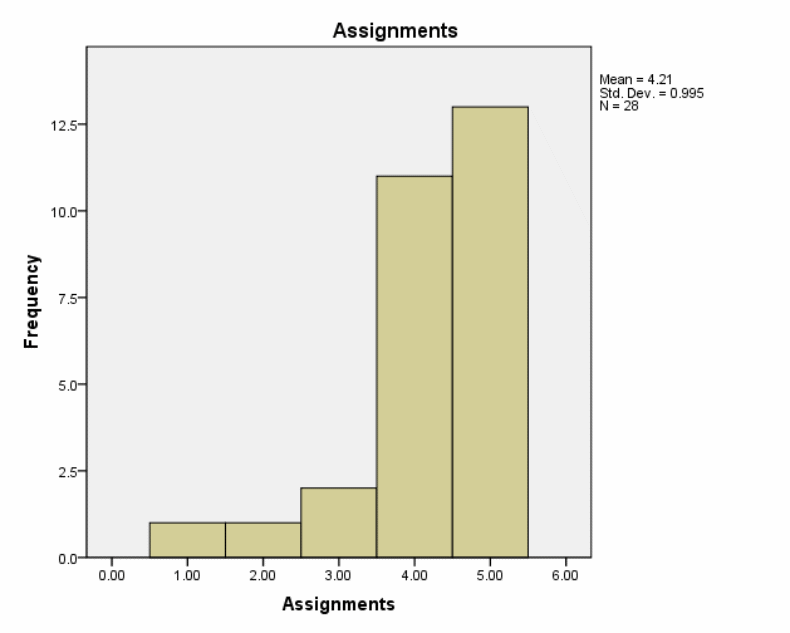
Figure 1. Student response to how assignments increased their understanding using FYE.
However, Figure 2 shows a difference in responses between major and non-major students. It shows that the median score for majors is substantially higher than that for non-majors, although there is substantial overlap between the boxplots, with the highest major score equaling the highest non-major score. Also, the mean for major students was 4.3, with a range of 4 (agree), whereas the mean for non-major students was 4.0, with a range of 3 (neutral). This suggests that non-major students might find writing assignments in FYE difficult or ineffective at increasing their understanding of the subject.
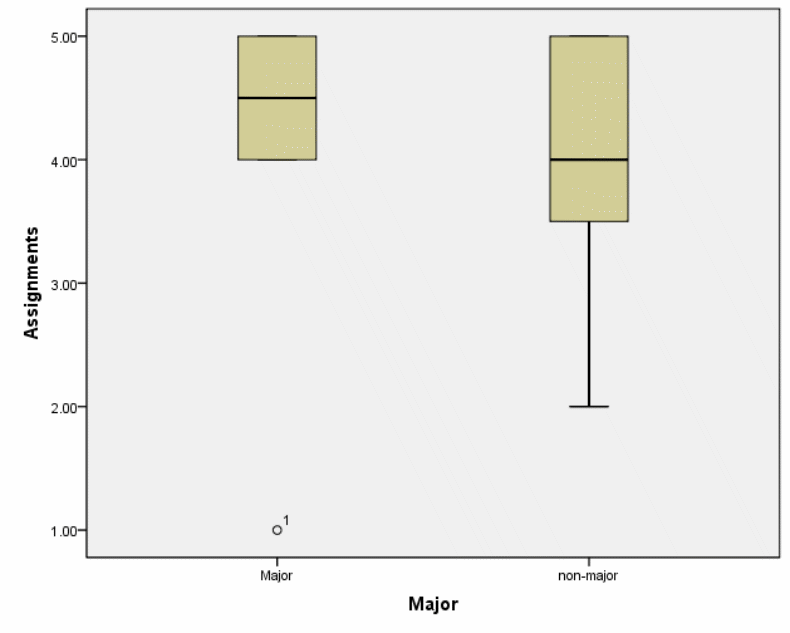
Figure 2. Comparing major and non-major students’ responses to how assignments increased their understanding using FYE.
Do majors and non-majors differ in whether they are in Section A or Section B? If so, how strong is the relationship between majors or non-majors and sections? To investigate, a chi-square test was conducted. However, because the expected values were 5, Fisher’s exact test was used (Morgan, Leech, Gloeckner, & Barrett, 2010). Table 2 shows that there was no significant difference (p = 1.000) between majors and non-majors with respect to section. Majors are not more likely than expected under the null hypothesis to be in Section A or B compared with non-majors. The Phi value, which indicates the strength of the association between the two nominal variables, is .19. Therefore, the effect size is considered smaller than typical according to Cohen (1988).
Table 2 Fisher’s Exact Test of the Relationship between Students’ Major and Sections.
Variables |
|
Sections |
|
|
|
n |
Section A |
Section B |
p |
ф |
|
Major |
|
|
|
1.000 |
.019 |
Major |
20 |
11 |
9 |
|
|
Non-major |
7 |
4 |
3 |
|
|
Total |
27 |
15 |
12 |
|
|
To
investigate whether there was a statistically significant association
between class sessions and assignments, a correlation was computed.
The class session was skewed (skewness = -1.49), violating the
normality assumption. Thus, the Spearman's rho statistic was
calculated: r(25) = .83, p < .001. The correlation was positive,
indicating that students who found the class session increased their
understanding tended to find the assignments helpful and to report
increased understanding of the subject, and vice versa. Using Cohen’s
(1988) guidelines, the effect size is typical for studies in this
area. The
 indicates that approximately 68% of the variance in assignments can
be predicted from class sessions. Figure 3 shows correlations.
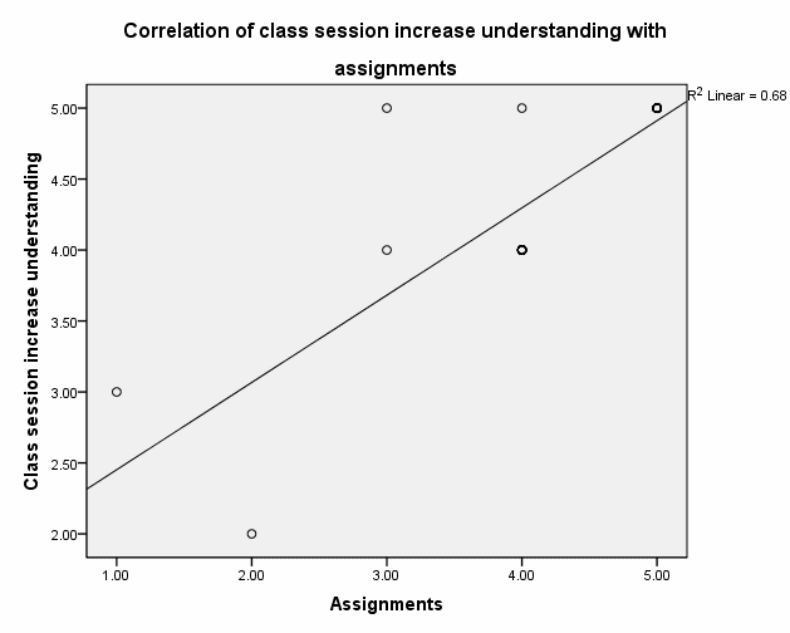
Figure 3. Correlation of class sessions increases understanding of the assignment.
The Spearman rho statistic was also
calculated for class sessions and the learning atmosphere, r(25) =
.63, p < .001. The correlation is positive, indicating that
students were satisfied with both the assignments and the learning
atmosphere. The effect size is typical for studies in this area. The
indicates that approximately 44% of the variance in the learning
atmosphere can be predicted from class sessions.
Also, to investigate if there was a
statistically significant association between assignments and the
course level of challenge, a correlation was computed. The
assignments were skewed (skewness = -1.68), violating the assumption
of normality. Thus, the Spearman's rho statistic was calculated:
r(25) = .70, p = .001. The correlation was positive, indicating that
students who found the assignments to increase their understanding
tend to find the course initially challenging, and vice versa. Using
Cohen’s (1988) guidelines, the effect size is typical for studies
in this area. The
indicates that approximately 43% of the variance in the course level
of challenge can be predicted from assignments. The following
scatterplot shows the correlations.
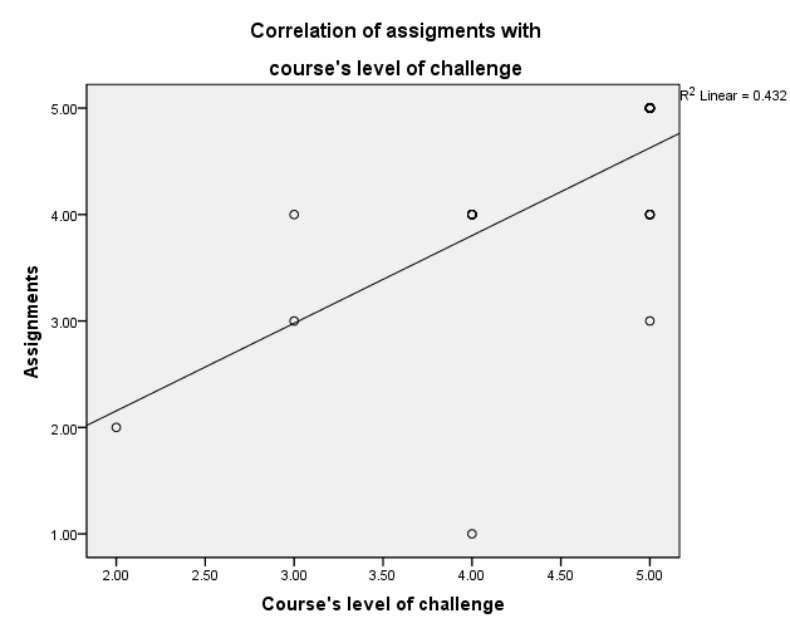
Figure 4. Correlation of assignments with the course’s level of challenge
Since the dependent variables were ordinal and the skewness was < -1, Mann-Whitney U tests were used to compare sections and majors. The 12 students in section B have a larger difference in mean ranks (15.79) than the 16 students in section A (13.53) on assignments, U = 80.5, p = .43, r = .14, which, according to Cohen (1998), is a small effect size. Table 3 displays these results.
Table 3. Mann-Whitney Test Comparison of Sections on Assignments, Course’s Level of Challenge, Class Sessions Understanding, and Learning Atmosphere
Variables |
N |
Mean Ranks |
U |
Z |
p |
r |
Assignments |
|
|
80.5 |
-.78 |
.43 |
-.15 |
Section A |
16 |
13.53 |
|
|
|
|
Section B |
12 |
15.79 |
|
|
|
|
Course’s Level of Challenge |
|
|
95.5 |
-.03 |
.98 |
-.05 |
Section A |
16 |
14.53 |
|
|
|
|
Section B |
12 |
14.46 |
|
|
|
|
Class Session of Understanding |
|
|
90.0 |
-.31 |
.753 |
-.06 |
Section A |
16 |
14.13 |
|
|
|
|
Section B |
12 |
15.00 |
|
|
|
|
Learning Atmosphere |
|
|
90.0 |
-.39 |
.695 |
-.07 |
Section A |
16 |
14.88 |
|
|
|
|
Section B |
12 |
14.00 |
|
|
|
|
Table 4. Mann-Whitney Test Comparison of Majors on Assignments, Course’s Level of Challenge, Class Sessions Understanding, and Learning Atmosphere
Variables |
N |
Mean |
U |
Z |
p |
r |
Assignments |
|
|
58.0 |
-.73 |
.50 |
-.14 |
Major |
20 |
14.60 |
|
|
|
|
Non-major |
7 |
12.29 |
|
|
|
|
Course Level of Challenge |
|
|
54.0 |
-1.03 |
.30 |
-.198 |
Major |
20 |
14.80 |
|
|
|
|
Non-major |
7 |
11.71 |
|
|
|
|
Class Session of Understanding |
|
|
69.0 |
-.06 |
.95 |
-.01 |
Major |
20 |
13.95 |
|
|
|
|
Non-major |
7 |
14.14 |
|
|
|
|
Learning Atmosphere |
|
|
64.0 |
-.46 |
.64 |
-.09 |
Major |
20 |
14.30 |
|
|
|
|
Non-major |
7 |
13.14 |
|
|
|
|
The 20 major students show a larger difference in mean ranks (14.60) than the 7 non-major students (12.29) on assignments, U = 58.0, p = .46, r = .14, which, according to Cohen (1998), is a small effect size. Likewise, there was a larger difference in the mean ranks of major students (14.80) than non-major students (11.71) on the level of challenge in courses, U = 54.0, p = .30, r = .20, which, according to Cohen (1998), is a small effect size. Table 4 displays these results.
6. Discussion
Students viewed the FYE course positively, especially the learning atmosphere. Perceived understanding correlates with class sessions, and the learning atmosphere aligns with research highlighting instructors’ role in creating supportive, engaging environments in FYE programs (Kuh, 2008; Schwartz et al., 2020).
The link between perceived course challenge and assessment usefulness aligns with the HIP framework, which views challenging academic work as promoting engagement when supported sufficiently (Kuh & O’Donnell, 2013). Although no significant difference was found between majors and non-majors, trends suggest non-majors may need more scaffolding or guidance to benefit from FYE assignments. This matches FYE literature emphasizing structured support for students from diverse academic backgrounds (Kuh, 2008; Tigri, 2024).
The lack of significant differences among course sections indicates consistent FYE implementation across contexts, supporting scalability and sustainability of HIPs. However, these findings reflect perceived, not objective, consistency in learning outcomes.
7. Limitations
Several limitations should be acknowledged. The small sample size and single-institution context limit the generalizability of the findings. Course evaluation data also limit measurement precision. Future research should include a larger, more diverse population across multiple institutions and adopt a mixed-methods approach to gain deeper insights into students’ experiences with FYE and academic outcomes.
8. Conclusion
This study suggests that FYE is viewed positively by NBU undergraduates. It highlights the role of supportive environments and well-organized challenges in boosting first-year engagement. Perceptions of FYE in non-Western higher education settings are similar to those in Western settings (Kuh, 2008; Kuh & O’Donnell, 2013; Schwartz et al., 2020).
References
Alandejani, J. A., & Sayed, G. (2024). The implementation of high-impact practices and communication competency using the Arabic language. Cogent Education, 11(1). https://doi.org/10.1080/2331186X.2024.2401253
Almutiry, M., Alshehri, M. Y., & Sayed, G. (2022). Diffusion of High-Impact Educational Practices at a Saudi University. Athens Journal of Education, 9(3), 413 – 428.
Alanassar, S. A., & Dow, K, L. (2013). Delivering High-Quality Teaching and Learning for University Students in Saudi Arabia, In L. Smith and A. Abouammoh (eds.), Higher Education in Saudi Arabia, Higher Education Dynamics, p. 49-60. DOI 10.1007/978-94-007-6321-0 5.
Kuh, G. (2008). High-impact educational practices: What they are, who has access to them, and why they matter. Association of American Colleges and Universities.
Kuh, G., & O’Donnell, K. (2013). Ensuring quality & taking high-impact practices to scale. Association of American Colleges and Universities.
Schwartz, A., & Miller, R. L. (Eds.). (2020). High impact educational practices: A review of best practices with illustrative examples. Society for the Teaching of Psychology. Retrieved from http://teach psych.org/ebooks/highimpacted
Tigri, G. (2024). Becoming a College Student: Exploring How Classroom Experiences Shape First-Year, First-Generation Students’ Transitions Into University Life (Doctoral dissertation, Rutgers The State University of New Jersey, School of Graduate Studies).