Facilitating in flipped classroom teaching scenarios – lessons learned
Facilitating in flipped classroom teaching scenarios – lessons learned
Facilitating in flipped classroom teaching scenarios – lessons learned
Anja Pfennig

School of engineering and life science, University of Applied Sciences, HTW Berlin, Germany.
How to cite: Pfennig, A. (2026). Facilitating in flipped classroom teaching scenarios – lessons learned. In: 12th International Conference on Higher Education Advances (HEAd’26). Valencia, 15-18 June 2026. https://doi.org/10.4995/HEAd26.2026.21545
Abstract
When teaching material science to first year students via “flipped classroom” teaching scenarios in a blended learning environment students motivation and self-attentiveness increases. Critcal thinking and problem solving skills are enhanced, discussions are fruitful regarding solutions and analytical approaches and the course is more homogeneous towards the end of a semester. Inverting the classroom is a method to encourage students to self-study the science and then take time to work on their questions and do extended hands-on lectures or exercises in class. In order to effectively implement an flipped classroom model, it is essential to provide diverse teaching materials tailored to various student learning backgrounds, addressing the heterogeneity of the first-year cohort and aligning with the overall course learning outcomes. The transformation of the instructor's from traditional lecturing to a more cooperative and collaborative teaching approach is crucial for the success of this method. Initial challenges are common, including managing heterogenous learning paces and preknowledge, unprepared students, or facilitating group work effectively. To enhance the teaching experience and ensure successful outcomes for both students and instructors, it is important to anticipate these challenges and develop strategies to address them.
Keywords: flipped classroom, inverted classroom, online teaching, assessment, lecture videos, unprepared students.
1. Introduction
Flipping the classroom or inverting the classroom, as described by Setren et al. (2019), Pfennig (2021), Walsh, O'Brien, and Costin (2021), and Haynes and Currie (2020), is easily described as changing the order of lecture and homework – requiring homework before entering a face-to-face lecture. Flipped classrooms (FC) therefore replace previous class content with homework that now takes place within the class: Cui et al. (2017). The principle behind inverting the classroom involves students studying the material on their own before class or online sessions. This offers advantages such as no time constraints and flexibility regarding location. In class, lecturers typically answer questions and discuss details, while students engage in solving hands-on problems, performing group work, and tackling difficult issues. This method fosters early discussion and equitable communication among students (Pfennig, 2021).
Additionally, this pedagogy fosters student ownership of learning through the completion of preparatory work and being more interactive during actual class time: Cui et al. (2017). It is widely acknowledged that students learn at their own pace and are offered flexibility expecially when they engage with electronic resources. Placing the studying of scientific background knowledge during self-study time frees up actual class time for interactive discussion and associated problem-solving activities that could be initiated by either lecturer of more student-centered by the students themselves.
This method shifts more responsibility for learning progress onto students, which has been found to encourage critical thinking (Ma, 2023), (Ka Lai Ng, 2023).) and results in deeper learning outcomes (Goto and Schneider, 2010) such as accelerating self-learning, improving academic performance (Simon et al., 2010). Flipping the classroom positively impacts self-efficacy beliefs and intrinsic motivation (Thai et al., 2017), (Cui et al., 2017) especially in MINT courses (Setren et al., 2019) and in fact-based subjects such as introductory science courses (Pfennig, 2021). However, some studies showed no significant differences in final exam scores between students undertaking traditional lectures and those in the flipped classroom: Harrington et al. (2015) and even had less satisfaction with the flipped class approach due to increasing the amount of out-of-class preparation time: Simpson et al. (2015).
Therefore, flipping the classroom is a lot more than simply choosing on organization questions. Inverting the classroom requires the involvement of the teacher in the method, the new role as facilitator, new work management, assessment and aligning the teaching method with the learning outcome of the class.
1.1. Practical leads for successfully inverting the classroom in first year materials science
For first-year mechanical engineering students understanding their study habits and effectively learning both the scientific background and its application to engineering contexts is crucial for advancing to higher semesters. The "flipped classroom" method, as described by (Pfennig, 2021), involves students independently studying scientific material and then using class time to explore advanced content, solve problems, and answer transfer questions. To monitor their learning progress during the self-study periods, students utilized exercises, worked solutions, self-assessed tests, and peer instruction during synchronous sessions. This approach has been shown to engage students effectively and improve learning outcomes. Key to its success is allowing students to study independently, asynchronously, and at their own pace, with class time dedicated to homework presentation, discussions, and hands-on problem-solving, helping them connect theoretical knowledge with practical applications. According to Pfennig (2021), various practical strategies have proven essential in turning flipped classroom teaching into a success through formative assessment, especially in accommodating the diversity of a first-year class and achieving the course's learning outcomes:
Begin with low-threshold tasks when assessing the first flipped classroom lecture.
Provide close guidance during students' self-study periods.
Ensure more successful learning outcomes by forming homogeneous study groups.
Transparency regarding learning outcome, assessment, and workload from the beginning.
Organize the online course formally, either by structure or by week.
Use templates to summarize the learning outcomes of each study session.
Face-time (online) for interacting with hands-on problems, rather than just content transfer.
1.2. Practical development and aim of practioner account
Starting from 2016 until 2025 over the period of 10 years (20 semester), each semester students were requested to reflect on the flipped classroom teaching method during the course as well as at the end of the class. Questionnaires were voluntarily, anonymous and not connected to any grading. Per semester a minimum of 36 and a maximum of 96 students participated. Data collection, validation and analytical procedures were done by the author. As the study predominantly relies on student evaluations, the manuscript compiles practical insights and lessons learned, with originality stemming mainly from personal experience. This praxis paper aims at supporting lecturers by sharing learnings from more than a decade (2016-2025) of teaching first year engineering students in flipped classroom settings but does not claim to provide general measurement of the teaching method.
2. Students acceptance of the flipped classroom teaching methods
Generally, students find the flipped classroom teaching scenarios (Figure 1) and self-study periods (Figure 2) als well as lecture videos and lightboard videos (Pfennig, 2026) beneficial for becoming self-organized, preparing students for class and learning complex scientific concepts at their own pace and schedule. The data regarding learning outcome (Figure 3) indicates that the flipped classroom setting effectively introduces students to many fields of material science, as shown by relatively high scores, but it may not foster a comprehensive understanding of the scientific background (decreasing scores). Students generally felt somewhat compelled to study, suggesting a structured learning influence, but their low scores in studying solely for grades indicate a genuine interest beyond grading. There is minimal perception of having only partial knowledge, which suggests that the setting helps provide a more holistic introduction adding to the success of the flipped classroom teaching method.
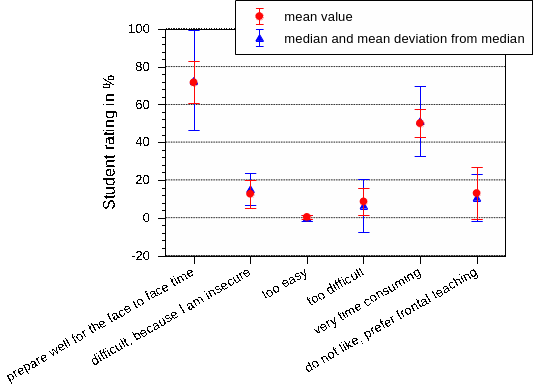
Figure 1. SS2016 to WS2025 (20 semesters av. 45 students): Students evaluation on FC teaching scenarios.
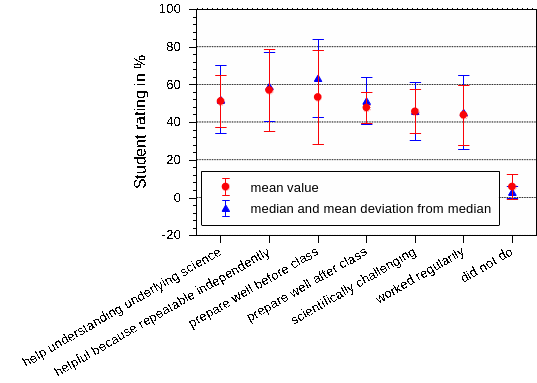
Figure 2. SS2016 to WS2025 (20 semesters av. 45 students): Students evaluation upon the self-study periods in FC teaching.

Figure 3. SS2016 to WS2025 (20 semesters av. 45 students): Students evaluation upon learning outcome when educated via FC teaching.
3. Difficulties arousing in flipped classroom teaching
However, when flipping the classroom, several key obstacles must be considered to ensure success. Student preparedness and engagement can be a challenge, as some students may not complete pre-class assignments or struggle with the self-discipline required for independent study. These reasons include lack of self-efficacy and attentiveness, inefficient study habits, family responsibilities, lack of motivation or interest in the subject, inability to see the connection to mechanical engineering, and a lack of seriousness about studying (Pfennig, 2026). Technological challenges also arise, with some students lacking reliable access to necessary technology or internet, and both students and instructors potentially facing difficulties using online platforms and tools. Instructional design is another critical area, as developing engaging and effective pre-class materials requires careful planning and can be time-consuming, while balancing the workload between pre-class and in-class activities is essential. In-class dynamics change as instructors must shift from lecturing to facilitating, a skill that requires different techniques, and ensuring all students actively participate and benefit from these activities is crucial. Assessment and feedback must be timely and constructive, and designing assessments that accurately measure students' understanding and application of material is important. Support systems need to be in place to assist students struggling with the new format, and instructors must be well-prepared and comfortable with the flipped classroom model. Cultural and institutional barriers also pose challenges, as both students and faculty might resist shifting from traditional teaching methods, and a lack of institutional support in terms of resources and recognition can hinder the process. Addressing these obstacles is vital for educators to effectively implement the flipped classroom model and enhance the learning experience for their students.
The following findings were compiled by the author from 10 years of teaching flipped and continuously adapting and improving the teaching method:
Not everyone can learn independently, so it is essential to provide clear questions or tasks during self-study phases.
Students often feel frustrated when learning alone because they are uncertain if what they are learning is correct. It's important to reassure them and encourage them to note down their questions for discussion in class.
Before a face-to-face session where applied work can be done, the students' knowledge should be assessed using tools like Invote, Socrative, or Kahoot. This gives the instructor an overview of whether the necessary knowledge is present and allows for addressing specific questions if needed.
To reinforce learning, students should be given homework, which must be reviewed. Typically, this involves answering many questions online.
After an flipped classroom (FC) session, it's crucial to consolidate the results to prevent students from feeling abandoned. There should be a summary of the knowledge and learning outcomes, which should ideally be reviewed. This way, both the instructor and the students are aware of the learning progress. Templates with a clear structure are very useful for result consolidation, providing a shared learning foundation for future exam preparation.
Alternative forms of assessment are recommended. After a FC session, a traditional exam may seem pointless since it reverts to old assessment structures. An assessment method that evaluates independent learning (like a portfolio) should be found.
It's beneficial to offer a variety of learning materials since there are many different ways to learn and everyone has different focal points. If possible, alternative materials for the same content should be provided (Pfennig, 2021, 2026).
Nothing is more boring than seeing the same layout in every FC session. While some very structured students may appreciate the consistency, the majority prefer diverse materials and types of media.
The preparation effort for instructors is so much higher that sometimes I think, "I should just write an exam..."
4. The role of the lecturer and key responsiblilties
Although the role as facilitator seems to be obvious the above mentioned second thoughts request many guidelines before the flipped classroom model may be called successful in terms of students acceptance, learning, self-attentiveness and preparation towards future skills. Overall, while the format seems successful in sparking initial interest and understanding (Figure 1 to 3), it might need adjustments to enhance deeper scientific comprehension. Table 1 summarizes the lecturer's responsibilities in a flipped classroom teaching model.
Table 1. Aspects and key responsibilities in flipped classroom teaching scenarios according to the author`s experience.
Aspects |
Key responsibilities |
Course design and planning |
Create engaging pre-class learning content (videos, readings, quizzes) Design in-class activities (problem-solving, group work, discussions) |
Facilitating learning |
Guide self-study with clear instructions and focus questions Monitor progress using quizzes and online tools |
In-class lecture |
Address and clarify student questions Promote engagement through discussions and collaborative projects Facilitate problem-solving and provide support |
Assessment and feedback |
Conduct formative assessments Offer constructive feedback on assignments and activities |
Supporting student autonomy |
Encourage self-directed learning with resources and strategies Build student confidence and initiative |
Continuous improvement |
Reflect on and adapt teaching methods and materials Seek and incorporate student feedback |
5. Conclusion
In the context of flipped classroom teaching, the role of the lecturer transforms from a traditional information provider to a facilitator of learning. Lecturers are tasked with designing engaging pre-class materials and planning interactive in-class activities that promote critical thinking and problem-solving. They should guide students through self-study phases with clear instructions and monitor their progress using digital tools. During class, lecturers address student questions, encourage active participation, and help apply knowledge to practical problems. Providing timely and constructive feedback, supporting students' independent learning, and continuously adapting teaching methods based on student feedback are essential. Overcoming technological, cultural, and institutional barriers, as well as ensuring equitable access to resources and focussing on scientific learning outcome, further define the lecturer's pivotal responsiblility in enhancing student learning outcomes in a flipped classroom setting.
References
Carberry, A.R., Siniawski, M.T., Dionisio J.D.N. (2012). Standards-based grading: Preliminary studies to quantify changes in affective and cognitive student behaviors. IEEE Frontiers in education conference, Seattle, WA.
Cui T., Wei-Gang Y., Fu Y. (2017). Effectiveness of flipped classrooms in nursing education: Systematic review and meta-analysis. Chinese Nursing Research, 4, 192-200.
Educause Learning initiative (2016). 7 THINGS YOU SHOULD KNOW ABOU FLIPPED CLASSROOMS. Retrieved 07/2021 from https://library.educause.edu/resources/ 2012/2/7-things-you-should-know-about-flipped-classrooms.
Goto, K. & Schneider, J. (2010). Learning through teaching: Challenges and opportunities in facilitating student learning in food science and nutrition by using the interteaching approach. Journal of Food Scence. Education, 9(1), 31-35.
Harrington, S.A., Bosch, M.V., Schoofs, N., Beel-Bates, C., Anderson, K. (2015). Quantitative outcomes for nursing students in a flipped classroom. Nurses Ed. on Perspect., 36, 179-181.
Haynes, B.J., Currie, N.G. (2020). Outcomes from applying the flipped classroom to a first year structures module. The Structural Engineer, 98(5), 8-15.
Ka Lai Ng, E. (2023). Flipped versus traditional classroom and student achievement and cognitive engagement in an associate degree nursing fundamental course. Nurse Education in Practice, 68, 103567. https://doi.org/10.1016/j.nepr.2023.103567.
Ma, Y. (2023). Exploration of flipped classroom approach to enhance critical thinking skills, Heliyon, 9(11), e20895. https://doi.org/10.1016/j.heliyon.2023.e20895.
Pfennig, A. (2021). How flipped classroom teaching methods in first year studying succeed, Proceedings of the 7th Intern. Conf.. on Higher Education Advances HEAd21, 1211-1218.
Pfennig, A. (2026). Reflecting on the role of the lecturer in inverted classroom teaching scenarios. EduCon Ho Chi Minh – International Conference on Education, 20-21, January 2026. Proceedings of Teaching & Education Research Association (TERA), 2026, 66-86.
Setren, E., Greenberg, K., Moore, O., Yankovich, (2019). Effects of the Flipped Classroom: Evidence from a Randomized Trial. SEII Discussion Paper #2019.07, MIT Department of Economics, National Bureau of Economic Researc.
Simon, B., Kohanfars, M., Lee, J., Tamayo, K, & Cutts, Q. (2010). Experience report: peer instruction in introductory computing. Proceedings of the 41st ACM Technical Symposium on Computer Science Education, 341-345.
Simpson, V., Richards, E. (2015). Flipping the classroom to teach population health: increasing the relevance. Nurses Education Practice, 15, 162-167.
Thai, N.T.T., De Wever, B., Valcke, M. (2017). The impact of a flipped classroom design on learning performance in higher education: Looking for the best “blend” of lectures and guiding questions with feedback. Computers & Education, 107, 113-126.
Walsh J., O'Brien M., Costin Y. (2021). Investigating student engagement with intentional content: An exploratory study of instructional videos. The International Journal of Management Education, 19(2), 100505