Changes in Mathematical Preparedness of Engineering Students
Changes in Mathematical Preparedness of Engineering Students
Changes in Mathematical Preparedness of Engineering Students
Dagmar Dlouhá1
 ,
Lukáš Pospíšil1
,
Karolina Dlouhá2, Magdalena Dlouhá2
1Department of Mathematics, Faculty of Civil Engineering, VSB - Technical University of Ostrava, Czech Republic, 2Faculty of Safety Engineering, VSB - Technical University of Ostrava, Czech Republic.
How to cite: Dlouhá, D.; Pospišil L.; Dlouhá K.; Dlouhá M. (2026). Changes in Mathematical Preparedness of Engineering Students. In: 12th International Conference on Higher Education Advances (HEAd’26). Valencia, 15-18 June 2026. https://doi.org/10.4995/HEAd26.2026.21556
Abstract
This paper presents the results of an entry-level diagnostic mathematics test administered to engineering students at the beginning of their university studies in 2013 and 2023. In both years, the same test focused on upper-secondary-school mathematics was used, allowing direct comparison of student performance over time. The analysis draws on test results and information on the type of secondary school attended and completion of the mathematics school-leaving examination. Data were analysed using descriptive statistics and group comparison tests. The results show that overall performance was higher in 2023 than in 2013. A significant association between completion of the mathematics school-leaving examination and higher diagnostic test performance was observed in the 2023 cohort, whereas no such difference was found in 2013. Students who identify gaps in their mathematical background are offered academic support through an online mathematics course and consultations within the Math Support Centre.
Keywords: Mathematics education; diagnostic testing; academic readiness; learning support; comparative analysis.
1. Introduction
Mathematical preparedness is an important factor influencing success in engineering programmes, especially during the first year of study. Students entering engineering fields differ markedly in their level of upper-secondary-school mathematics knowledge, which is influenced by the type of secondary school attended and by whether they completed a mathematics school-leaving examination (SLE).
Entry-level diagnostic testing in mathematics is one way to monitor this situation. Such tests can help identify gaps in students’ knowledge at an early stage and support the design of targeted support measures. Previous research has shown that diagnostic testing can provide useful information about students’ prior knowledge and academic performance in first-year engineering studies (Lee et al., 2008; Ní Fhloinn et al., 2014). Other studies also highlight the importance of prior mathematical preparation for success in engineering studies (Rose and Betts, 2001; Faulkner et al., 2014). In the local context, previous work has examined the level of upper-secondary-school mathematics knowledge among students entering a technical university and has also described possibilities for its evaluation and remediation through diagnostic testing and follow-up support activities (Dlouhá et al., 2022; Dlouhá et al., 2024). However, longitudinal comparisons based on the same diagnostic instrument remain less common. The aim of this paper is to compare the level of upper-secondary-school mathematics knowledge of engineering students at the start of their university studies in two cohorts from 2013 and 2023.
2. Materials and Methods
2.1. Study Participants
The analysed sample consisted of full-time engineering students entering the first year of technical university studies in the academic years 2013 and 2023. In both observed periods, the entry-level diagnostic mathematics test was administered in the first week of the first semester. Participation in the testing was voluntary, and the test was completed anonymously.
The analysis included only students who completed the test and for whom information on secondary school type and passing the mathematics SLE was available. In 2013, a total of 91 students completed the diagnostic test, whereas 146 students completed the test in 2023.
Students were classified according to the type of secondary school completed and according to whether they had taken the mathematics SLE, see Figure 1.
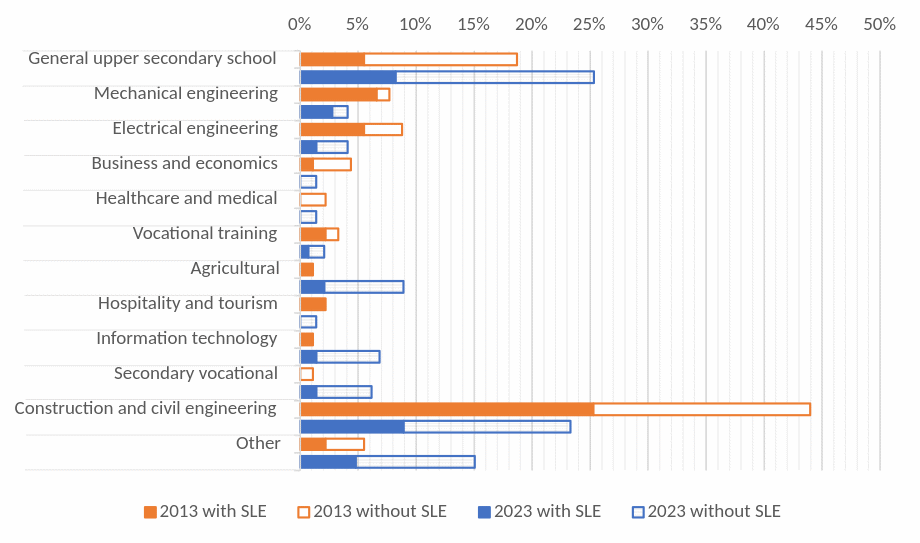
Figure 1. Distribution of students by type of completed secondary education, comparing cohorts from 2013 and 2023, with respect to completion of the school-leaving examination (SLE).
In the national context, a substantial decline can be observed in the proportion of secondary school graduates choosing the mathematics SLE, decreasing from approximately 39% in 2013 to 17.9% in 2023. At the same time, a growing proportion of students opted to take a foreign language as their compulsory SLE subject instead of mathematics, see Figure 2. This shift reflects a long-term trend in students’ subject preferences at the upper-secondary level and has implications for the mathematical preparedness of students entering technical study programmes. The data are based on official statistics published by CERMAT, the national institution responsible for the organisation and evaluation of SLE in the Czech Republic (CERMAT, 2026).
2.2. Diagnostic Mathematics Test
The diagnostic test was designed to assess knowledge of upper-secondary-school mathematics essential for the study of engineering disciplines. It included tasks from elementary algebra, work with functions, and the solution of equations and inequalities. Some tasks focused on verifying mastery of standard solution procedures, while others emphasized problem-solving based on logical reasoning and mathematical literacy, see Figure 3.
The format and content of the test were identical in both examined years, which allowed for a direct comparison of results over time. The test was evaluated using a point-based scoring system, with each task scored as either 0 or 1 point, where 0 indicated an incorrect answer and 1 indicated a correct answer. Each task had exactly one correct option.
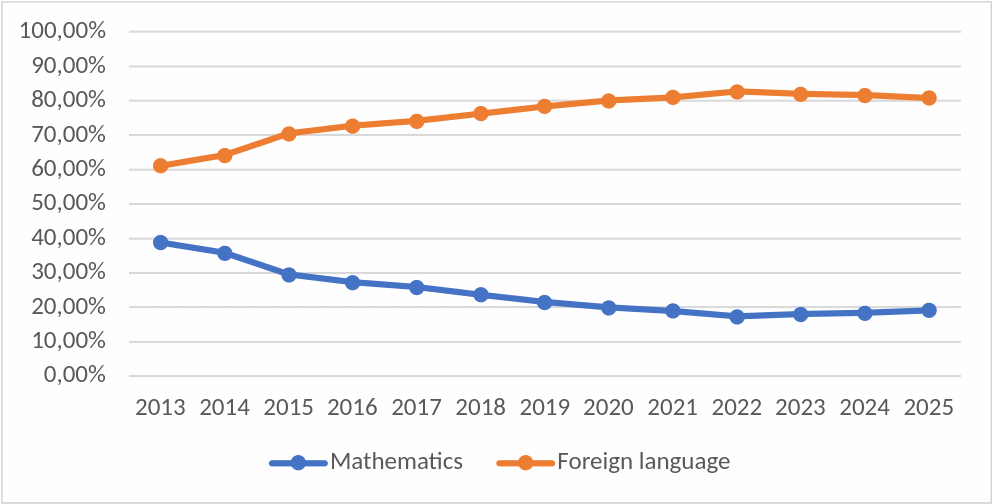
Figure 2. Trends in the choice of mathematics and foreign language as compulsory SLE subjects in the Czech Republic between 2013 and 2025 (CERMAT, 2026).
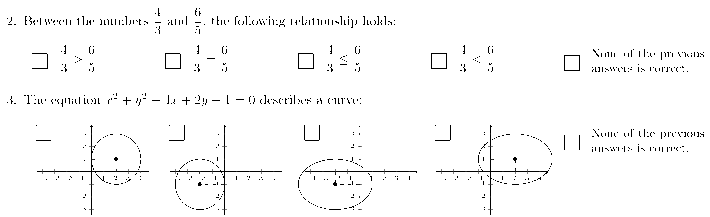
Figure 3. Illustrative examples of two tasks from the diagnostic mathematics test.
2.3. Variables of Interest
The observed variables included overall test performance, defined as the total score obtained across individual tasks (ranging from 0 to 10 points), performance with respect to the type of secondary school completed, and completion of the mathematics SLE. Descriptive statistical methods and tests of differences between groups of students were used for the analysis.
Given the non-normal distribution of test scores and the ordinal nature of the data, differences between independent groups were evaluated using the Mann-Whitney U test (Mann and Whitney, 1947), a non-parametric alternative to the two-sample t-test. Because the comparisons were formulated with directional expectations, one-sided tests were used. The results are reported using the Mann-Whitney test statistic (U), its standardized value (z), the corresponding p-value, and the rank-biserial correlation (r) as a measure of effect size.
In addition, differences in response distributions for categorical variables were assessed using Fisher’s exact test for 2×2 contingency tables (Fisher, 1922), which is appropriate for categorical data and unequal group sizes. This test was used to examine differences in proportions between groups where applicable.
3. Results
The results of the diagnostic testing indicate that students tested in 2023 achieved significantly better results than those tested in 2013, see Figure 4. Higher performance was observed both in absolute test scores and in relative terms, suggesting a moderate improvement in the level of upper-secondary-school mathematics knowledge among the examined group of students.
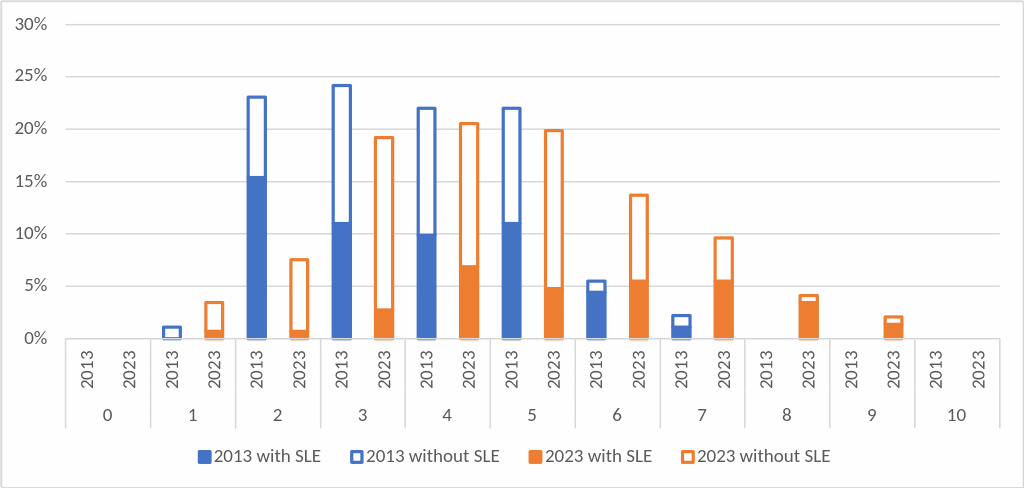
Figure 4. Distribution of total scores obtained in the diagnostic mathematics test for the 2013 and 2023 cohorts, stratified by completion of SLE.
Descriptive statistics showed that the 2013 cohort (n = 91) achieved a median score of 4.0 (IQR 3.0-5.0; mean = 3.65, SD = 1.33), whereas the 2023 cohort (n = 146) achieved a median score of 4.0 (IQR 3.0-6.0; mean = 4.54, SD = 1.78). Overall performance was significantly higher in 2023 than in 2013 (U = 4697.5, z = -3.854, p = 5.8 × 10^-5, r = -0.293).
When students were compared according to completion of the mathematics SLE, no significant difference was found in the 2013 cohort (U = 1068.5, z = 0.302, p = 0.619, r = 0.035), whereas a significant difference was observed in the 2023 cohort in favour of students who had completed the mathematics SLE (U = 1447.5, z = -3.643, p = 1.35 × 10^-4, r = -0.371). The pooled analysis suggested only a weak overall association between completion of the mathematics SLE and higher diagnostic test performance (U = 5839.5, z = -1.736, p = 0.041, r = -0.131).
Item-level analysis using Fisher’s exact test identified significant differences only for items 1, 5, and 6 (p < 0.05), suggesting that the overall cohort difference was driven mainly by selected tasks.
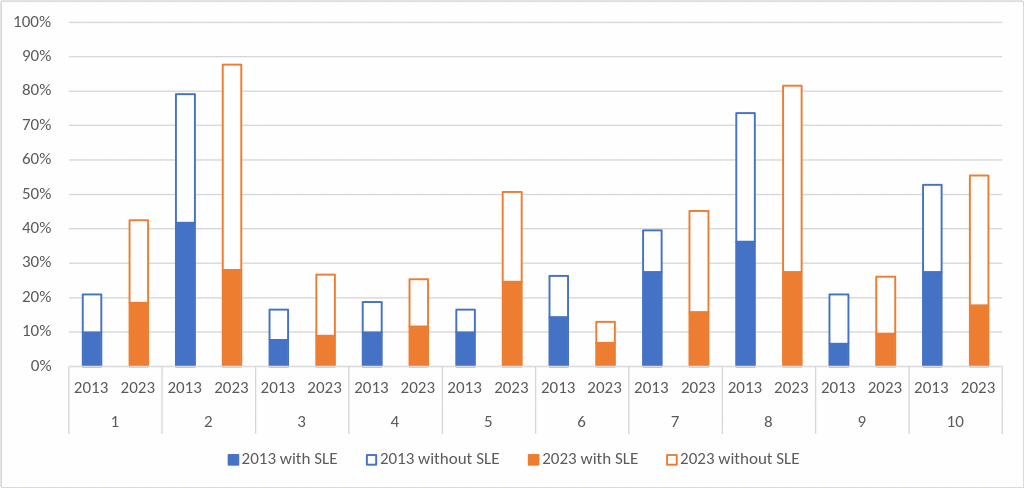
Figure 5. Comparison of relative success rates for individual test items between the 2013 and 2023.
In addition to the item-level analysis, the relationship between the type of completed secondary school and the total diagnostic test score was examined. For greater interpretability, individual secondary school programmes were aggregated into broader categories based on educational orientation: general upper secondary schools (type A), technically oriented schools such as mechanical and electrical engineering, information technology, and business and economics (type B), vocational programmes including healthcare, agriculture, hospitality, and vocational training (type C), and construction and civil engineering programmes (type D). Based on this aggregation, score distributions were analysed separately for the 2013 and 2023 cohorts (Figures 6 and 7). The results in both years show systematic differences in overall test performance between school types, indicating that mathematical preparedness at entry to engineering programmes varies with the type of secondary education completed.
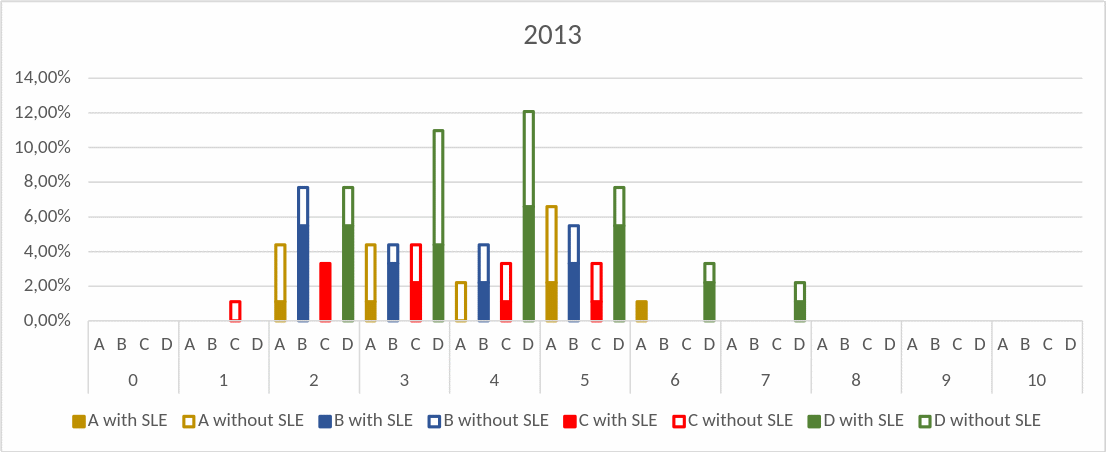
Figure 6. Distribution of total diagnostic mathematics test scores by secondary school type (2013).
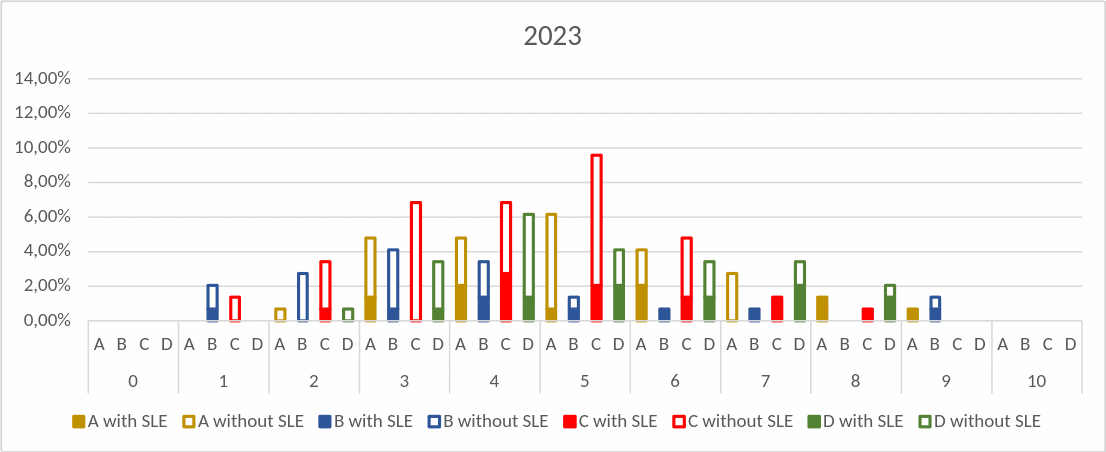
Figure 7. Distribution of total diagnostic mathematics test scores by secondary school type (2023).
4. Discussion
The finding that students tested in 2023 achieved better results than those tested in 2013 points to differences in the mathematical preparedness of students entering engineering programmes across the two cohorts. This may reflect changes in upper-secondary education, differences in cohort composition, or the availability of supportive activities at the beginning of university study.
The role of the mathematics SLE was not uniform across both cohorts. While students who had completed the mathematics SLE achieved significantly higher scores in 2023, no statistically significant difference was found in 2013. This suggests that the mathematics SLE may provide useful information about students’ preparedness, but it should not be considered a sufficient indicator on its own. Entry-level diagnostic testing therefore remains important, as it provides a direct assessment of students’ actual mathematical knowledge at the start of their studies.
From a pedagogical perspective, the results support the use of entry-level diagnostic testing as an early screening tool for identifying students who may benefit from targeted support, such as online revision materials, bridging courses, or consultations in the Math Support Centre. In this way, diagnostic testing can contribute not only to the description of student performance, but also to the design of timely support measures.
This study has several limitations. Participation in the diagnostic test was voluntary, which may have introduced self-selection bias. The analysis was based on students from a single institution and on two specific cohorts, which limits the generalisability of the findings. In addition, the test consisted of ten items and therefore captured only selected aspects of upper-secondary-school mathematics knowledge.
5. Conclusion
The results indicate that upper-secondary-school mathematics knowledge among engineering students was higher in 2023 than in 2013. A significant association between completion of the mathematics SLE and higher diagnostic test performance was observed only in the 2023 cohort. These findings support the use of entry-level diagnostic testing to assess students’ mathematical preparedness and to inform targeted support measures at the beginning of university study.
Acknowledgement
This work was supported by the Department of Mathematics, VSB-TUO, and by the project Staff development and student support VSB-TUO, CZ.02.02.XX/00/23_022/0009115. We thank the students for their participation in the survey.
References
CERMAT (2026). School-leaving examination - statistical data on the choice of examination subjects. Centre for the Evaluation of Educational Achievement. https://data.cermat.cz/menu/maturitni-zkouska/vizualizace-dat
Dlouhá, D., Pospíšil, L., & Dlouhá, K. (2022). High school mathematics knowledge level of technical university students. 8th International Conference on Higher Education Advances (HEAd'22), 531-538. http://dx.doi.org/10.4995/HEAd22.2022.14268.
Dlouhá, D., Pospíšil, L., Dlouhá, K. & Dlouhá, M. (2024). Evaluation and Remediation Opportunities for High School Mathematics Knowledge Among Students Entering a Technical University. 10th International Conference on Higher Education Advances (HEAd'24), 1046-1053. http://dx.doi.org/10.4995/HEAd24.2024.17124.
Faulkner, F., Hannigan, A., & Gill, O. (2014). The role of prior mathematical experience in predicting performance in higher education. International Journal of Mathematical Education in Science and Technology, 45(5), 648–667. http://doi.org/10.1080/0020739X.2013.868539
Fisher, R. A. (1922). On the interpretation of χ² from contingency tables, and the calculation of P. Journal of the Royal Statistical Society, 85(1), 87–94.
Lee, S., Harrison, M., Pell, G., & Robinson, C. (2008). Predicting performance of first year engineering students and the importance of assessment tools therein. Engineering Education, 3(1), 44–51. http://doi.org/10.11120/ened.2008.03010044
Mann, H. B., & Whitney, D. R. (1947). On a test of whether one of two random variables is stochastically larger than the other. The Annals of Mathematical Statistics, 18(1), 50–60.
Ní Fhloinn, E., Mac an Bhaird, C., & Nolan, B. (2014). University students’ perspectives on diagnostic testing in mathematics. International Journal of Mathematical Education in Science and Technology. http://doi.org/10.1080/0020739X.2013.790508
Rose, H., & Betts, J. R. (2001). Math matters: The links between high school curriculum, college graduation, and earnings. San Francisco: Public Policy Institute of California.