Promoting professional-entrepreneurial synergy: A Study on teaching reform in public administration program in the era of new liberal arts
A Study on teaching reform in public administration program in the era of new liberal arts
Promoting professional-entrepreneurial synergy: A Study on teaching reform in public administration program in the era of new liberal arts
Xiaochen Gong, Yanling Zhou, Fan Zhang, Yaoyao Cheng, Siyu Yao
College of Humanities and Law, Beijing University of Chemical Technology, China.
How to cite: Gong, X.; Zhou, Y.; Zhang, F.; Cheng, Y.; Yao, S. (2026). Promoting professional-entrepreneurial synergy: A Study on teaching reform in public administration program in the era of new liberal arts. In: 12th International Conference on Higher Education Advances (HEAd’26). Valencia, 15-18 June 2026. https://doi.org/10.4995/HEAd26.2026.21584
Abstract
In the era of China’s New liberal arts, Public Administration (PA) program is experiencing a transition toward competency-based talent cultivation. Faced with persistent issues such as the island effect and the digital divide, this study explores “Professional-Entrepreneurial Synergy” (PES) as a three-tier pathway: macro-level alignment with national governance priorities, meso-level integration through University–Government–Enterprise collaboration and a Tri-Mentor mechanism, and micro-level curricular restructuring via a blended PBL–PST cycle. Empirical evidence from three Beijing universities shows participant support for the design, yet reveals low institutional recognition and persistent data-sharing barriers. This comprehensive ecosystem aims to cultivate high-quality PA professionals equipped with public service values, innovative thinking, and digital intelligence.
Keywords: China’s New liberal arts initiatives; Public Administration program; Professional- Entrepreneurial Synergy (PES)
1. Introduction
In the context of globalization and digitalization, higher education has shifted from knowledge transfer to holistic talent cultivation (Wright, 2011). As a response, China’s New Liberal Arts initiative aims to enhance the coordination between scientific-technological education and the humanities (CPC Central committee and State Council, 2025). In this context, Public Administration (PA) program faces the imperative of transitioning towards cultivating competency-based talent (Kapucu & Koliba, 2017). Professional-Entrepreneurial Synergy (PES), defined as the integration of professional education with innovation and entrepreneurship education (IEE), constitutes a crucial pathway for this transition.
Despite the accumulation of substantial educational resources over the past three decades, PA program in China still faces challenges. Primarily, a dichotomy between theory and practice, coupled with the absence of entrepreneurship education, has created a structural misalignment between talent supply and societal needs (Rinfret & Pautz, 2018). In addition, the integration of industry and education remains superficial; this fragmentation prevents the effective alignment of the educational chain with the industrial chain, leaving students ill-equipped for real-world challenges.
PES is a process of reconfiguring the educational ecosystem, with its significance shown in three dimensions: First, it reshapes the multi-disciplinary competency structure. The PES model integrates classroom learning with entrepreneurial practices, fostering a synergy between public service ideals and adaptive governance. Second, it addresses the demand for digital empowerment. As the technological revolution fundamentally transforms the public governance landscape (Mergel et al., 2019), PES aims to create full-chain practice scenarios by embedding digital-intelligent tools, such as Python for data analysis, GIS for spatial mapping, and machine learning, into entrepreneurial projects and competitions, which bridges the gap between value rationality and the digital demands of modern governance, preparing students to meet the evolving needs of digital-intelligent governance (Bertot et al., 2010). Third, it fosters a collaborative educational ecosystem. Acknowledging that PA is inherently interdisciplinary and practical, PES transforms real governance issues into case studies and returns intellectual capital to society. This effectively bridges the last mile between academic talent development and societal needs (Etzkowitz & Leydesdorff, 2000).
In the context of the New liberal arts, this study takes China as a case study and provides an in-depth analysis of PES in PA program. It explores practical pathways for cultivating high-quality, adaptable PA professionals who embody public service values, innovative thinking, and digital intelligence.
2. Theoretical analyses of PES in PA program
This study employs Innovation Ecosystem Theory as the foundational framework for PES. Originating in biology and introduced to management sciences by Moore (1993), the theory views innovation instead as the outcome of a complex, adaptive system characterized by multilateral interdependence and co-evolving capabilities (Granstrand & Holgersson, 2020). As to PA program, this perspective shifts the focus from static resource accumulation to dynamic value creation, implying that integrating professional and entrepreneurship education is not merely a curricular addition but a comprehensive systemic reconfiguration (Granstrand & Holgersson, 2020).
Applying Innovation Ecosystem Theory to university ecosystem, two ecological mechanisms are revealed (Graham, 2014): the first is actor co-evolution, driven by a dynamic of benign competition and collaboration. Within this ecosystem, internal and external actors evolve reciprocally, practitioners transition into co-educators, while students emerge as active solution-providers. This ensures that educational content remains synchronized with evolving real-world governance challenges. The second mechanism is the cycle of knowledge energy. This facilitates a bidirectional flow that effectively dismantles the island effect and promotes factor mobility, enabling the continuous generation of new quality productive forces through dynamic resource reconfiguration and functional embedding. Ultimately, this framework elucidates how higher education institutions can transcend disciplinary boundaries to cultivate adaptable, high-quality talent.
3. Challenges of Implementing PES in PA program
The China’s New Liberal Arts initiatives advocates for the blending of disciplines and the intersection of scientific and humanistic fields, providing possibilities for organically integrating professional education with Innovation and Entrepreneurship education. However, it still faces three challenges.
First, the inherent tension between public service values and market-oriented entrepreneurial logic. Most PA courses are characterized by non-market attributes, focusing on public sector theories and institutional policies to cultivate guardians of public value (Denhardt & Denhardt, 2000). Instructors often struggle to identify the nexus between public management expertise and entrepreneurial concepts. Consequently, innovation and entrepreneurship are frequently marginalized in course design, leading students to view them as irrelevant to professional knowledge. This cognitive disconnect results in a lack of training in innovative thinking and adaptive problem-solving (Bernier, 2014; Demircioglu & Chowdhury, 2021).
Second, the structural misalignment of University-Government-Enterprise collaboration hinders deep integration. While such collaboration is regarded as the most effective link between theory and practice (Etzkowitz & Leydesdorff, 2000), PES tends to be confined to internships for graduating seniors. Rather than cultivating innovative thinking throughout the curriculum, these engagements often serve merely as pre-employment adaptation training. Constrained by rigid schedules, limited resources, and weak cooperation mechanisms, instructors find it difficult to leverage external partnerships for substantive practical teaching. As a result, entrepreneurship education remains decoupled from the core professional curriculum.
Third, traditional pedagogical approaches are not well-suited for the demands of PES. PES requires the integration of professional knowledge with innovative practice to foster practical abilities. However, the dominance of didactic, lecture-based teaching often leads to the passive acceptance without active exploration. The lack of contextualized analysis and problem-based inquiry fails to stimulate students’ enthusiasm or initiative, making it difficult to bridge the gap between static knowledge acquisition and dynamic innovation capabilities (Reichard et al., 2021; Raadschelders & Yan, 2022).
4. Pathways for Implementing PES in PA program
To bridge the gap between PA program and practical application, this study proposes a hierarchical framework encompassing macro-level value alignment, meso-level resource integration, and micro-level pedagogical restructuring, aiming at fostering an educational ecosystem marked by coherent objectives, resource integration, and aligned processes (Figure 1).
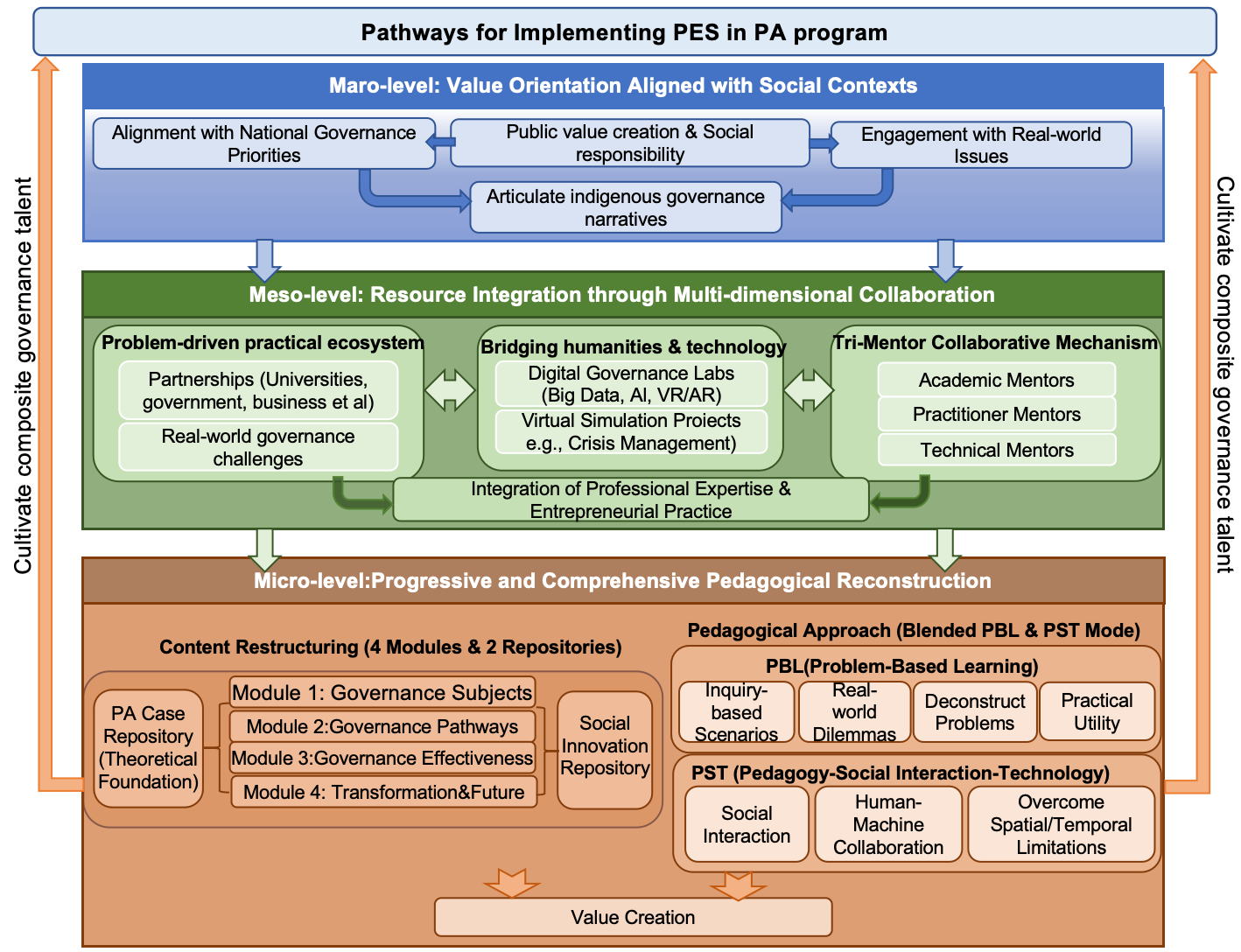
Figure 1 Pathways for Implementing PES in PA program
4.1. At the macro-level: Value orientation aligned with social contexts
The construction of PES begins by addressing the fundamental questions of “for whom is innovation intended” and “how should innovation be implemented.” We take public value creation and social responsibility as the core guiding principles, aligning academic activity with national governance priorities, such as digital governance, rural revitalization, and the modernization of grassroots administration. By conducting field studies to identify governance bottlenecks and applying rigorous research methods (e.g., qualitative coding, data analysis), they can contribute to both theory and solution design. This process enables the synergy between articulating indigenous governance narratives and developing robust theoretical frameworks (Li, 2025). This value-oriented PES aims to cultivate versatile governance professionals who possess both public spirit and practical innovation capacity.
4.2. At the meso-level: Resource integration through multi-dimensional collaboration
To achieve a deep integration of professional expertise and entrepreneurial practice, it is essential to dismantle institutional barriers and establish a multi-directional, cross-boundary mechanism based on the principles of interconnectivity, co-sharing, and mutual benefit.
First, a problem-driven practical ecosystem is created by integrating diverse external resources. This involves forming robust partnerships among universities, government agencies, businesses, and social organizations. By introducing real-world governance challenges faced by local governments (e.g., community micro-renewal, smart elderly care services) into academic contexts as case studies, it ensures that innovation projects are grounded in realistic implementation scenarios, and achieves a transition from theory to social service practices. Second, reinforcing technological empowerment is critical for cultivating digital governance competencies. By collaborating with technology enterprises to build digital governance laboratories, PA program can leverage Big Data, AI, and VR/AR technologies to create virtual simulation projects for high-risk, irreversible governance scenarios, such as public crisis management and urban emergency response. This allows students to engage in policy simulations and solution development in a digital space, bridging the gap between traditional humanities education and modern technological demand. Third, establishing a Tri-Mentor collaborative mechanism is key to connecting academia and practice. This involves forming a cross-disciplinary mentorship team, comprising academic mentors, who provide theoretical frameworks and public value guidance to ensure scholarly depth; practitioner mentors (such as government officials or NGO leaders) are charge of policy insights on social issues, and technical mentors provide guidance on data processing and technological implementation. This comprehensive mechanism effectively fosters the integration of academic theory, practical experience, and technical expertise.
4.3. At the micro-level: Progressive and comprehensive pedagogical reconstruction
The micro-level of PES represents the last mile in its implementation, including the restructuring of both teaching content and pedagogical approach. In terms of teaching content, the PA course is reconstructed into four modules, involving governance subjects, pathways, effectiveness, and future trends. Each module is supported by two interconnected repositories: a PA case repository that solidifies core theoretical foundations, and a social innovation repository that features successful social entrepreneurship projects. This dual structure demonstrates how professional knowledge can drive social change, facilitating a progression from theoretical learning to innovative thinking and project incubation. As for pedagogical approach, a blended PBL (Problem-Based Learning) and PST (Pedagogy-Social Interaction-Technology) mode is adopted. The PBL mode reshapes the cognitive process, in which the instructors begin with inquiry-based scenarios and real-world governance dilemmas, then guide students to deconstruct problems using professional knowledge. Throughout this process, governance practices and social entrepreneurship cases are progressively introduced to demonstrate the practical utility of theory, promoting value cultivation. Meanwhile, the PST framework emphasizes social interaction through fieldwork while enabling human-machine collaboration via AI assistants and simulation platforms. By transcending spatial and temporal limitations, the PST approach enhances competencies and innovation capabilities as students transition from knowledge acquisition to value creation.
5. Empirical evidence
5.1 Data and method
We conducted 18 semi-structured interviews between March and April 2025 across three universities in Beijing offering undergraduate PA programs. Participants included six PA faculty members responsible for core courses, six practitioners (four district-level civil servants and two enterprise programme officers serving as external mentors or internship supervisors), and six senior PA students involved in innovation competitions or service-learning projects. Sampling was purposive, targeting individuals with direct experience in professional-entrepreneurial integration. Interviews lasted 45–70 minutes, were conducted in Mandarin, audio-recorded with consent, and transcribed verbatim. The interview protocol focused on four themes: (1) perceived gaps between PA education and governance practice, (2) experiences with University–Government–Enterprise collaboration, (3) classroom pedagogies that did or did not work, and (4) institutional and legal constraints on public-sector innovation. Data were analysed using reflexive thematic analysis (Braun & Clarke, 2006). Two researchers independently coded a subset of six transcripts, resolved discrepancies through discussion, and then applied the consolidated codebook to the remaining transcripts. Member checking was conducted with five participants to enhance credibility.
5.2 Findings
The interviews illustrated the barriers to PES. Faculty members described a profound tension between core public-value principles and the market-driven logic of entrepreneurship. Unable to reconcile the two within a single syllabus, several admitted to treating innovation as an extracurricular afterthought. “Entrepreneurship and public values? They just don’t really mesh in one curriculum.”(Faculty F03). Structurally, both practitioners and students noted that external collaborations are typically backloaded into final-year internships, functioning more as a form of adaptation to the working environment rather than continuous innovation incubators. “Interns are familiar with the policies, but they are totally oblivious to the energy in the meeting.” (Practitioner P04).
While participants endorsed the hierarchical PES pathways conceptually, concerns emerged across levels. At the macro level, aligning student projects with national governance priorities proved practical and reinforced existing university incentives. At the meso level, though the Tri-Mentor mechanism is valued in principle, it lacks formal institutional recognition. “The Tri-Mentor design is meaningful, but currently not well-recognized by our performance system” (Practitioner P02). Similarly, digital labs often encountered data-sharing barriers than technological ones. At the micro level, students completing a full PST cycle, ranging from scenario briefing, field interview with a district official, AI-assisted policy text analysis, virtual simulation, to peer critique, reported the greatest gains in analytical ability through this full-chain practice scenarios. Faculty likewise welcomed the four-module restructuring (subjects, pathways, effectiveness, trends) as compatible with existing syllabus. “After the in-class simulation, I finally understood what the policy documents were actually doing” (Student S05).
6. Concluding remarks
PES represents both a complex, long-term endeavor and a critical pathway for cultivating innovative talent within the context of the New Liberal Arts. As our empirical findings suggest, cultivating this synergy in Public Administration is not about promoting unconstrained disruption, but rather fostering bounded public-value innovation that respects public value and administrative constraints. This is not specific to China, as the tension between public-value curricula and entrepreneurial logic recurs wherever PA programs attempt IEE integration. The three-tier architecture is generalizable as a design template, with the micro-level PBL–PST cycle being the most directly portable component because it depends on pedagogical design rather than institutional context, while the meso-level Tri-Mentor mechanism is portable in form but requires local re-specification.
This study is subject to the limitation that the empirical base comprises eighteen interviews at three Beijing universities and cannot yet speak to student outcomes or long-run effectiveness. Future research should expand the evidence base through multi-site pilots, longitudinal assessment of graduate competencies, and comparative studies across jurisdictions with differing innovation regimes. It is also imperative to empirically examine the efficacy of these pedagogical reforms and to identify best practices across diverse institutional settings. By analyzing PES implementation across various institutions and regions, future research can further validate the generalizability of these strategies, ultimately providing evidence-based insights for policymakers.
References
Bernier, L. (2014). Public enterprises as policy instruments: The importance of public entrepreneurship. Journal of Economic Policy Reform, 17(3), 253-266.
Bertot, J. C., Jaeger, P. T., & Grimes, J. M. (2010). Using ICTs to create a culture of transparency: E-government and social media as openness and anti-corruption tools for societies. Government Information Quarterly, 27(3), 264-271.
CPC Central Committee & State Council. (2025). Jiaoyu qiangguo jianshe guihua gangyao (2024-2035) [Outline of the plan for building a leading country in education (2024-2035)]. https://www.gov.cn/gongbao/2025/issue_11846/202502/content_7002799.html
Demircioglu, M. A., & Chowdhury, R. (2021). Entrepreneurship in public administration: A systematic literature review. Public Performance & Management Review, 44(6), 1195-1222
Denhardt, R. B., & Denhardt, J. V. (2000). The new public service: Serving rather than steering. Public Administration Review, 60(6), 549-559.
Etzkowitz, H., & Leydesdorff, L. (2000). The dynamics of innovation: from National Systems and “Mode 2” to a Triple Helix of university–industry–government relations. Research Policy, 29(2), 109-123.
Graham, R. (2014). Creating university-based entrepreneurial ecosystems: Evidence from emerging world leaders. MIT Skoltech Initiative.
Granstrand, O., Holgersson, M. (2020). Innovation ecosystems: A conceptual review and a new definition. Technovation, 90-91,102098.
Kapucu, N., Koliba, C. (2017). Using Competency-based Portfolios as a Pedagogical Tool and Assessment Strategy in MPA Programs. Journal of Public Affairs Education, 23(4), 993-1016.
Li, H. (2025). How to conduct public administration case research? Debates, responses, and improvement paths in the Chinese context. Administrative Tribune, 32(5), 102-113. (in Chinese)
Mergel, I., Edelmann, N., & Haug, N. (2019). Defining digital transformation: Results from expert interviews. Government Information Quarterly, 36(4), 101385.
Moore, J. F. (1993). Predators and prey: a new ecology of competition. Harvard Business Review,3,75-86.
Raadschelders, J. C., & Yan, B. (2022). Pedagogy in public administration: The state of the art. Public Administration,100(1),19-36.
Reichard, C., Costi, M., & Gullekson, N. (2021). Teaching public administration: The impact of active learning methods. Teaching Public Administration, 39(2),168-185.
Rinfret, S. R., & Pautz, M. C. (2018). The gap between theory and practice: A study of the public administration masters degree in the United States. Teaching Public Administration, 36(1), 5-21.
Wright, G. B. (2011). Student-centered learning in higher education. International Journal of Teaching and Learning in Higher Education, 23(1), 92–97.