Student Resistance to Active Learning in First-Year Engineering: A 2025 Perspective on Autonomy and Engagement
Student Resistance to Active Learning in First-Year Engineering
Student Resistance to Active Learning in First-Year Engineering: A 2025 Perspective on Autonomy and Engagement
Gaizka
Erkizia1
 ,
Idoia San Sebastian2
1Department of Graphic Design and Engineering Projects, School of Engineering of Gipuzkoa, University of the Basque Country EHU, Spain, 2Department of Graphic Design and Engineering Projects, School of Engineering of Bilbao, University of the Basque Country EHU, Spain.
How to cite: Erkizia, G.; San Sebastian, I. (2026). Student Resistance to Active Learning in First-Year Engineering: A 2025 Perspective on Autonomy and Engagement. In: 12th International Conference on Higher Education Advances (HEAd’26). Valencia, 15-18 June 2026. https://doi.org/10.4995/HEAd26.2026.21607
Abstract
The transition to Industry 4.0 requires engineering graduates to possess high levels of autonomy and self-regulation. However, implementing Active Learning (AL) strategies in first-year courses often faces significant student resistance. This paper contributes empirical evidence to document and contextualise the 'autonomy gap' observed during the 2024-2025 academic year in a first-year engineering design course. Through a mixed-method approach comprising diagnostic tests and perception surveys, we evaluate student readiness for Flipped Classroom methodologies. Results indicate a marked preference for traditional passive instruction and printed materials, despite the availability of comprehensive digital resources. These findings suggest that while students acknowledge the importance of soft skills, they lack the necessary self-regulation strategies to thrive in AL environments without substantial scaffolding. The study concludes by recommending transitional pedagogical frameworks to gradually build student autonomy and engagement.
Keywords: Engineering Education; Flipped Classroom; Student Resistance; Active Learning; First-Year Experience; Self-Regulation.
1. Introduction
The rapid evolution of the industrial sector toward Industry 4.0 has fundamentally altered the competency profile required for engineering graduates. Beyond technical proficiency, modern engineers are expected to demonstrate high levels of transversal skills, particularly autonomy, critical thinking, and the ability to manage complex, open-ended problems (Rosas Quintero & Namuche Maldonado, 2024). Consequently, Higher Education Institutions have increasingly moved away from traditional lecture-based models toward Active Learning (AL) methodologies, such as the Flipped Classroom (FC). The efficacy of AL in improving student performance and reducing failure rates in STEM disciplines is well-documented, with seminal meta-analyses establishing it as a pedagogical standard (Freeman et al., 2014).
However, the transition to these student-centred models is rarely seamless, particularly in first-year engineering courses. The success of methodologies like the FC is heavily contingent upon the students' willingness and ability to engage with pre-class materials and assume responsibility for their own learning process (Kapur et al., 2022). This challenge is often rooted not in a lack of ability, but in a deficiency of self-regulation strategies. As noted by Biwer et al. (2025), undergraduate students frequently rely on passive learning techniques (e.g., rereading notes) and lack the metacognitive tools to effectively manage the "productive failure" inherent in active methodologies.
In the post-pandemic context, this "autonomy gap" appears to have widened. Recent studies suggest that while hybrid and digital learning environments are now ubiquitous, engineering students often struggle to adapt, reporting lower levels of well-being and engagement when faced with the demands of autonomous learning (Firmante, 2025). Furthermore, this resistance may also reflect broader attitudinal patterns documented in the literature, whereby students prefer methodologies that minimize autonomous effort and externalize responsibility for learning to the instructor (Knepp & Knepp, 2022).
This study is theoretically grounded in two complementary frameworks. Cognitive Load Theory posits that novice learners operate under significant working memory constraints; without adequate scaffolding, the autonomous demands of FC generate extraneous cognitive load that undermines engagement (Ouwehand et al., 2025). Self-Regulated Learning theory further establishes that effective autonomous study requires metacognitive skills—planning, monitoring, and evaluating one's own learning process—that remain underdeveloped in many first-year engineering students (Biwer et al., 2025; Valero, 2022). These two frameworks inform the present study's research design: a diagnostic test to assess actual knowledge baselines and a perception survey to capture methodological preferences, with the dual aim of documenting and contextualizing the autonomy gap — a phenomenon widely reported in the literature but insufficiently measured in post-pandemic first-year engineering contexts.
2. Methodology
The study was conducted during the first semester of the 2024-2025 academic year at the University of the Basque Country EHU, specifically within the subject of "Graphic Expression in Engineering" (Industrial Engineering branch). This is a mandatory first-year course designed to develop spatial reasoning and technical standardization skills (Yang et al., 2023). The curriculum employs a blended learning approach, combining traditional lectures with FC activities where students are expected to review digital materials (videos and tutorials) prior to laboratory sessions.
The study initially enrolled N=397 first-year students for the diagnostic assessment. Active participation declined markedly throughout the semester, a well-documented pattern in first-year engineering programs where early dropout is structurally high. The final perception survey comprises N=125 respondents (31.5% retention). This attrition introduces a potential selection bias, as respondents likely represent the more engaged segment of the cohort, which may result in an underestimation of resistance to active learning among the broader student population.
A mixed-method approach employed two instruments, both developed by the teaching team and reviewed by two external faculty members. The Diagnostic Knowledge Test comprised 10 items distributed across three competency areas: two on theoretical concepts, three on standardized procedures, and five on spatial visualization skills (see Figure 1), administered individually in written format at Week 1. The Methodological Perception Survey was administered anonymously in paper format at Week 8, after exposure to both traditional and FC-based instruction, assessing preferences through single-choice questions. Quantitative data were analyzed to document the discrepancy between knowledge baselines and methodological preferences, providing empirical grounding for the autonomy gap hypothesis.
Pre-class materials combined no more than two resource types per session (e.g., short videos, PDF documents, or interactive tutorials). In-class laboratory sessions followed a three-phase structure: an opening segment addressing doubts from autonomous pre-class work; an activity phase alternating between individual and small-group tasks (maximum three students) with a mandatory deliverable; and instructor feedback. Scaffolding intensity decreased progressively across the semester, with greater student autonomy expected as the course advanced.
3. Results
The data collected provide a clear overview of the current status of first-year engineering students regarding their technical readiness and learning preferences. Initially, the diagnostic assessment revealed a contrast between the students' prior academic background and their actual proficiency. A significant majority of the cohort (91.4%) stated they had taken Technical Drawing courses previously. However, Figure 1 reveals a disparity in their actual proficiency. While students demonstrated excellent Spatial Vision (bars in green, avg. >95%), likely due to innate ability or basic training, their scores in Theoretical Concepts and Standardized Procedures were significantly lower than expected (below 50% in most cases). This pattern is consistent with what the literature describes as an 'illusion of competence' (Kruger & Dunning, 1999): students appear to overestimate their readiness based on spatial ability, while lacking the procedural knowledge required for engineering.
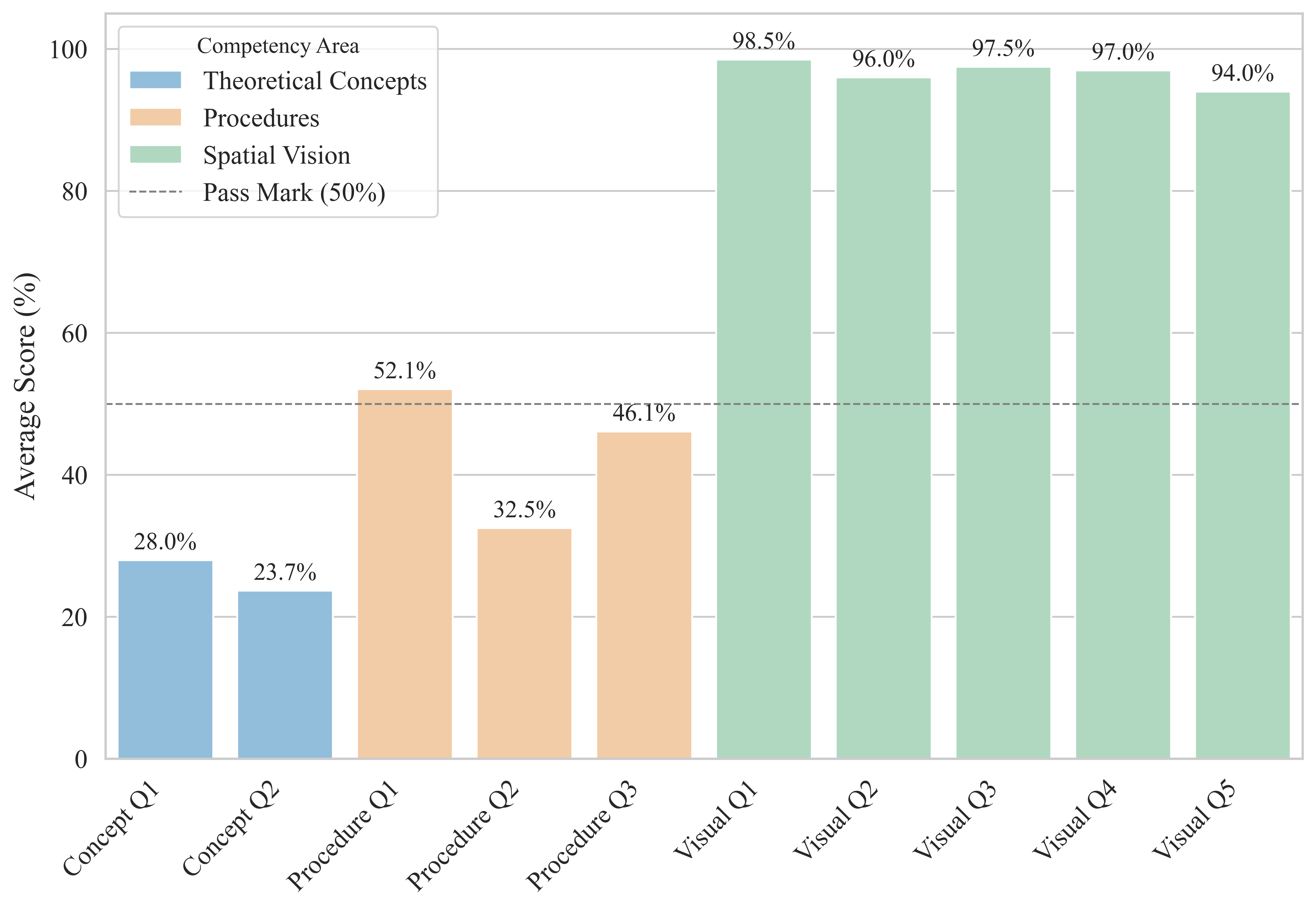
Figure 1. Diagnostic test results: High performance in Spatial Vision contrasts with significant deficiencies in Concepts and Procedures (Q = Question).
Complementing these performance metrics, the survey results offer a quantitative explanation for the resistance observed in the classroom. When asked to rank their preferred instructional resources, the data show a marked preference for traditional, instructor-led scaffolding. As illustrated in Figure 2, the option "Teacher explains & solves problems in class" received the highest approval ratings (72%), whereas autonomous strategies such as pre-class video preparation received significantly lower engagement.
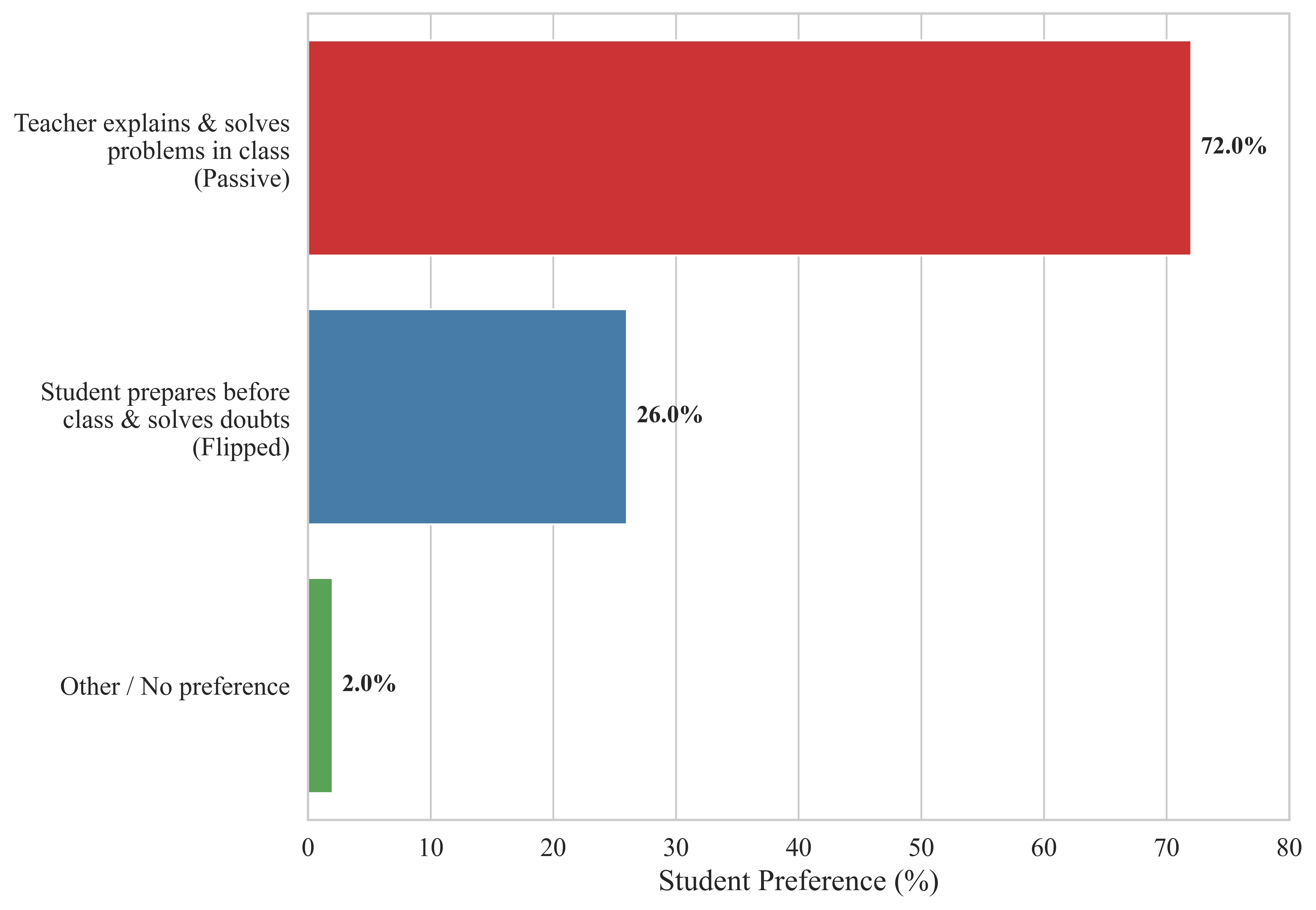
Figure 2. Student preferences regarding instructional methodologies (N=125).
This reliance on traditional methods extends to the format of study resources. Despite the ubiquity of digital tools in the 2025 educational landscape, students demonstrated a strong attachment to physical formats. Figure 3 indicates that "Printed notes/Books" are still perceived as the most valuable resource for study (61%), significantly outperforming online campus resources and interactive videos. These findings define the "autonomy gap": students express a desire to learn but prefer methodologies that minimize their cognitive load outside the classroom.
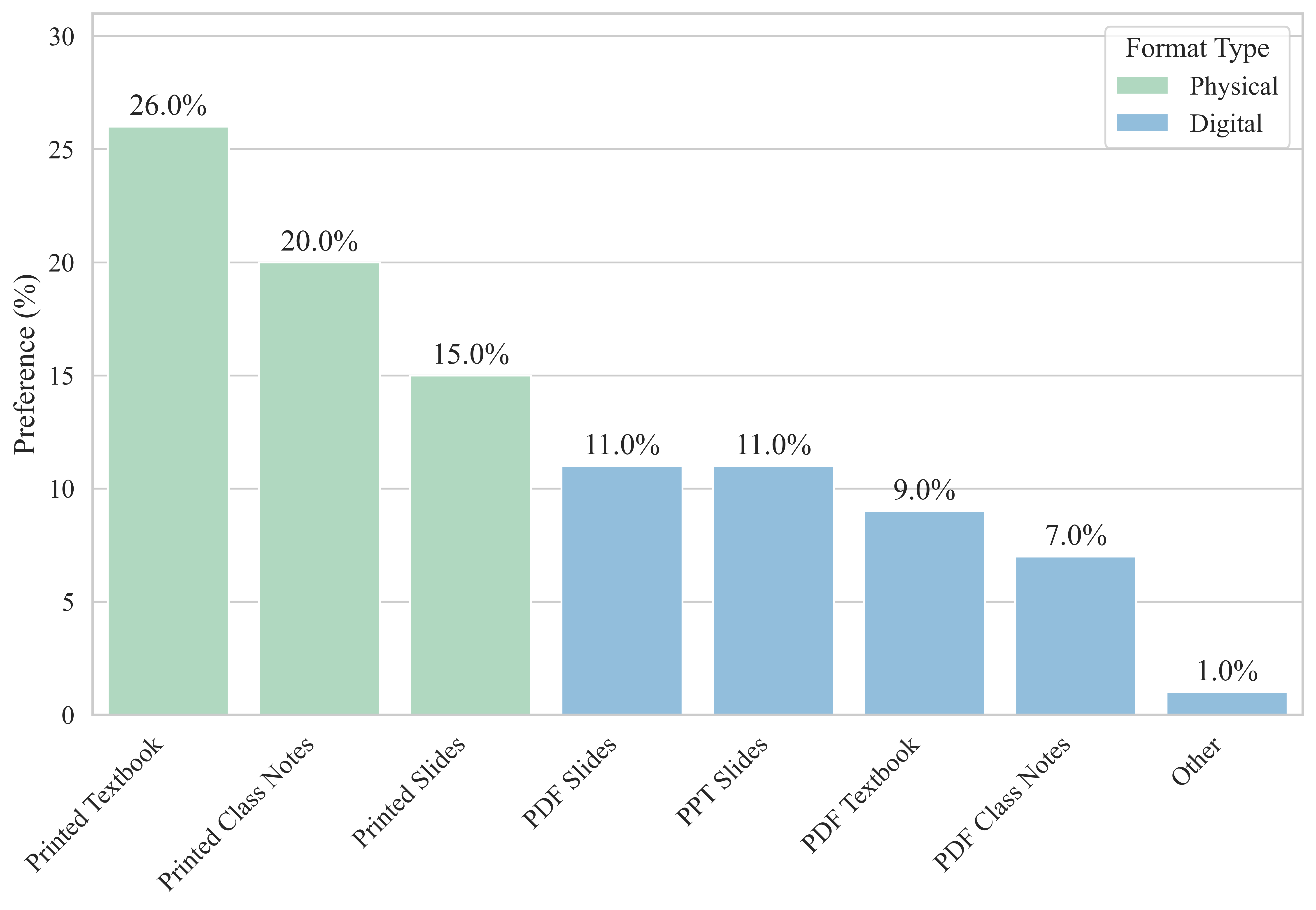
Figure 3. Ranking of preferred study resources: physical vs. digital formats.
4. Discussion
The results of this study reveal a significant "autonomy gap" among first-year engineering students in the 2024-2025 academic year. While the literature universally advocates for AL to develop professional competencies, our findings indicate that students still harbour a strong preference for passive, instructor-centred methodologies. Crucially, this preference appears consistent with the competence gap documented in the diagnostic results: students' high spatial abilities may mask their procedural deficiencies, leading them to perceive the autonomous effort required by AL as unnecessary. This complex resistance can be analysed through three intersecting theoretical lenses.
First, regarding cognitive load, the marked preference for traditional lectures should not be interpreted merely as a lack of effort, but potentially as a coping mechanism. Ouwehand et al. (2025) argue that Cognitive Load Theory is crucial in understanding instructional efficiency; for novice learners, unguided instruction can overwhelm working memory. The FC model demands that students self-regulate their engagement with pre-class material. When students lack these metacognitive skills, the "cost" of autonomy outweighs the perceived learning benefits, leading them to retreat to the safety of the "teacher explains, I listen" model. This aligns with Mai and Love (2025), who found that first-year engineering students often perceive AL as "teaching themselves," leading to frustration when the scaffolding is insufficient.
Furthermore, this phenomenon is exacerbated by the post-pandemic context. The persistence of the "paper format" preference and the reliance on direct instruction appear to be lingering effects of recent educational disruptions. Allen et al. (2025) describe a sense of disruption leading current cohorts to crave structure and predictability. The open-ended nature of AL tasks introduces ambiguity that students, conditioned by highly structured secondary schooling, find unsettling. Consequently, they associate the physical presence of the teacher and the tangibility of printed notes with academic security.
Finally, the analysis of engagement mechanisms reveals that this resistance is not merely attitudinal but behavioural. The attrition rate observed in this study (dropping from N=397 to N=125) demonstrates that when faced with the demand for autonomy, a significant majority of students (approx. 68%) opt to disengage from the continuous assessment track entirely. As El-Thalji (2025) notes, "weak learning styles" emerge when students are not intrinsically motivated to perform pre-class activities. Our study confirms that without extrinsic motivators—or given the new possibility of using AI to bypass content consumption (Nikolic et al., 2023)—the default student behaviour leads to procrastination and disengagement.
5. Conclusions
This study highlights a critical challenge in modern engineering education: the misalignment between the competency-based demands of the curriculum and the self-regulation readiness of first-year students. Although the FC is theoretically superior for developing the transversal skills required by Industry 4.0, our data from the 2024-2025 cohort demonstrates a continued student resistance, manifesting as a marked preference for passive, traditional instruction.
A key finding concerns the competence gap generated by previous educational stages. While a vast majority of students enter with high grades in technical subjects, this background creates a false sense of security that hinders engagement with active tasks. Students underestimate the procedural rigor required in engineering, leading to a knowledge gap that becomes evident only after diagnostic assessment — a pattern consistent with what the literature describes as an illusion of competence (Kruger & Dunning, 1999).
Furthermore, the resistance to active methodologies appears to be a rational response to cognitive overload rather than a lack of interest. Without explicit training in self-regulation strategies, the "digital natives" of this cohort perceive autonomous online learning as inefficient. Paradoxically, despite the ubiquity of technology, there remains a tangible demand for physical resources and direct face-to-face guidance to mitigate the uncertainty of the learning process.
We conclude that simply "flipping" the classroom is insufficient for first-year students in the post-pandemic context. This study presents three key limitations: the absence of direct measures of self-regulation and metacognition, the predominantly descriptive nature of the analysis, and its single-cohort, single-institution design, which restricts generalizability. Future research should incorporate validated instruments — such as the Motivated Strategies for Learning Questionnaire — to enable correlational analyses between diagnostic performance and methodological preferences. Pedagogically, a 'fading scaffolding' approach is recommended, beginning with high structure and progressively releasing autonomy to the student (Valero, 2022). Gamification and AI-assisted tutoring represent promising complementary strategies, though their effectiveness requires empirical validation in future studies.
References
Allen, R. E., Kannangara, C., Conn, C., Heyworth, B., & Carson, J. (2025). “Everything was up in the air”: A qualitative study exploring the disruption of the covid-19 pandemic for UK university students. Journal of Further and Higher Education, 49(7), 899–918. https://doi.org/10.1080/0309877X.2025.2509576
Biwer, F., Taban, G., & de Bruin, A. (2025). How undergraduate engineering students regulate their learning: A qualitative comparison between different strategy users. European Journal of Engineering Education, 50(4), 744-763. https://doi.org/10.1080/03043797.2025.2458117
El-Thalji, I. (2025). Boosting Active Learning Through a Gamified Flipped Classroom: A Retrospective Case Study in Higher Engineering Education. Education Sciences, 15(4), 430. https://doi.org/10.3390/educsci15040430
Firmante, M. C. M. (2025). Engineering student wellbeing in hybrid learning environments post-COVID-19: A call for targeted mental health interventions. Frontiers in Psychology, 16, 1694258. https://doi.org/10.3389/fpsyg.2025.1694258
Freeman, S., Eddy, S. L., McDonough, M., Smith, M. K., Okoroafor, N., Jordt, H., & Wenderoth, M. P. (2014). Active learning increases student performance in science, engineering, and mathematics. Proceedings of the National Academy of Sciences, 111(23), 8410-8415. https://doi.org/10.1073/pnas.1319030111
Kapur, M., Hattie, J., Grossman, I., & Sinha, T. (2022). Fail, flip, fix, and feed – Rethinking flipped learning: A review of meta-analyses and a subsequent meta-analysis. Frontiers in Education, 7, 956416. https://doi.org/10.3389/feduc.2022.956416
Knepp, K. A., & Knepp, M. M. (2022). Academic entitlement decreases engagement in and out of the classroom and increases classroom incivility attitudes. Social psychology of education: an international journal, 25(5), 1113–1134. https://doi.org/10.1007/s11218-022-09716-4
Kruger, J., & Dunning, D. (1999). Unskilled and unaware of it: How difficulties in recognizing one's own incompetence lead to inflated self-assessments. Journal of Personality and Social Psychology, 77(6), 1121–1134. https://doi.org/10.1037/0022-3514.77.6.1121
Mai, A., & Love, M. (2025). First-Year Engineering Students’ Perceptions of Active Learning. Proceedings of the 2025 Canadian Engineering Education Association (CEEA-ACÉG25), https://doi.org/10.24908/pceea.2025.19598.
Nikolic, S., Daniel, S., Haque, R., Belkina, M., Hassan, G. M., Grundy, S., Lyden, S., Neal, P., & Sandison, C. (2023). ChatGPT versus engineering education assessment: a multidisciplinary and multi-institutional benchmarking and analysis of this generative artificial intelligence tool to investigate assessment integrity. European Journal Of Engineering Education, 48(4), 559-614. https://doi.org/10.1080/03043797.2023.2213169
Ouwehand, K., Lespiau, F., Tricot, A., & Paas, F. (2025). Cognitive Load Theory: Emerging Trends and Innovations. Education Sciences, 15(4), 458. https://doi.org/10.3390/educsci15040458
Quintero, W. R, & Maldonado, J. E. N. (2024). Competencies of the engineer in industry 4.0 context: a systematic literature review. Production, 34, e20230051. https://doi.org/10.1590/0103-6513.20230051
Valero, M. (2022). Challenges, difficulties and barriers for engineering higher education. Journal of Technology and Science Education, 12(3), 551–566. https://doi.org/10.3926/jotse.1696
Yang, W., Chookhampaeng, C., & Chano, J. (2023). Spatial Visualization Ability Assessment for Analyzing Differences and Exploring Influencing Factors: Literature Review with Bibliometrics and Experiment. Indonesian Journal Of Science And Technology, 9(1), 191-224. https://doi.org/10.17509/ijost.v9i1.66774