Podcasting Ancient Myths: An Innovative Approach to Interdisciplinary and Reflective Learning in Higher Education
An Innovative Approach to Interdisciplinary and Reflective Learning in Higher Education
Podcasting Ancient Myths: An Innovative Approach to Interdisciplinary and Reflective Learning in Higher Education
Zlatica
Zacharová1 ,
Marcela Andoková2
1Faculty of Education, Comenius University Bratislava, Slovakia, 2Faculty of Arts, Comenius University Bratislava, Slovakia.
How to cite: Zacharová, Z.; Andoková, M. (2026). Podcasting Ancient Myths: An Innovative Approach to Interdisciplinary and Reflective Learning in Higher Education. In: 12th International Conference on Higher Education Advances (HEAd’26). Valencia, 15-18 June 2026. https://doi.org/10.4995/HEAd26.2026.21627
Abstract
This paper presents a podcast-based educational project using ancient Greek and Roman myths as an innovative tool for interdisciplinary learning in higher education and lifelong learning. The project connects mythological narratives with psychology, pedagogy and contemporary social experience through monthly podcast episodes designed as expert dialogues. The study applies a mixed-methods approach. Quantitative data include analytics from podcast and qualitative data consist of feedback from university students, in-service teachers and participants of the University of the Third Age (U3A), as well as observations from the integration of the podcast into the teaching process. Results show increasing audience engagement after the podcast was embedded in university courses and seminars. Students perceive ancient myths as meaningful tools for reflection on identity, relationships and moral dilemmas. The findings indicate that podcasting ancient myths can function as an effective and inclusive innovation in higher education.
Keywords: Ancient myths; podcast-based learning; innovative teaching; interdisciplinary education; lifelong learning; student engagement.
1. Introduction
In recent years, higher education has faced a growing need for innovative teaching approaches that respond to changes in students’ learning habits and modes of information processing (Schaap et al., 2025; Khamitova, 2023). Although digital technologies provide fast access to information, authors emphasize the importance of learning formats that support sustained attention, critical thinking and deeper cognitive engagement (Bhuttah et al., 2024; Meden et al., 2024).
In this context, podcasts have emerged as a flexible educational medium that supports self-directed learning and complements traditional teaching (Fernández et al., 2009; Besser, 2021; Meden et al., 2024). Their accessibility allows learning to take place in everyday situations and positions podcasting between formal and informal education. At the same time, research has shown that students’ use of technologies for learning is shaped more by pedagogical practices than by technological availability alone (Margaryan & Littlejohn, 2008).
Unlike video-based content, podcasts rely exclusively on auditory perception, encouraging focused attention on language and its paralinguistic qualities. As audio-based media belonging to a form of “secondary oral culture”, they support imagination, meaning-making and deeper cognitive engagement (Atalay et al., 2022).
2. Theoretical background
2.1. Ancient myths as an educational resource
Myths can be understood as symbolic narratives through which societies articulate their values, norms and fundamental understandings of the human condition. While their narrative forms may change across time and cultures, their semantic and symbolic core remains stable, which explains their lasting educational relevance. At the same time, myths reflect key relationships between humans, nature and the divine and convey the cultural and moral frameworks of specific historical contexts (Vlachaki et al., 2019). Historically and cross-culturally, myths have functioned as explanatory narratives that address sources of social conflict, tension and existential uncertainty. Tyrell (1984) defines myth as a dramatic story that explains and symbolically resolves fundamental disruptions within a society. Because of their symbolic character, myths carry psychological, moral, relational and cultural meanings that make abstract and emotionally complex themes accessible for reflection. They create a safe interpretative space in which learners can explore issues such as identity, power, guilt, autonomy or relationships without direct personal exposure. In this sense, myth offers a protective distance that enables projection, interpretation and self-reflection.
Myths have always been a shared cultural language rather than the property of an educated elite (Lunn, 2019), and their symbolic nature is universally recognised across cultures (Detienne, 1986). This familiarity, combined with narrative distance, gives myths a unique pedagogical potential: they are emotionally resonant yet not autobiographical, personal yet not threatening.
In higher education, myths therefore function as timeless learning resources that support reflective and interdisciplinary learning. When combined with podcasting, they create a powerful educational space in which cultural heritage, personal experience and contemporary social questions can be meaningfully connected.
2.2. Podcasting and reflective learning in higher education
Reflective learning connects academic knowledge with personal experience and enables students to reinterpret content in relation to their own lives, thereby supporting deeper understanding and changes in perspective (Mezirow, 1997; Moon, 2004). The podcast format is particularly well suited to this process because, as an audio-based medium, it creates an intimate listening environment that supports focused attention and emotional engagement. The absence of visual stimuli directs attention to verbal language and its paralinguistic qualities, such as intonation, rhythm and emotional nuance, which are essential for meaning making and interpretation (Fernández et al., 2009; McHugh, 2022; Ristani & Bampatzimopoulos, 2024).
Research further shows that podcasts support flexible, self-directed and informal learning while effectively complementing formal education (Besser, 2021; Meden et al., 2024). By stimulating inner dialogue, they encourage learners to relate academic content to their own experiences, beliefs and emotions, thereby strengthening reflective and interpretative thinking (Götzfried et al., 2024). When embedded in planned instruction, podcasting has also been shown to positively influence learning outcomes (Farangi et al., 2015). In this sense, podcasting can be understood not merely as a technological tool, but as a reflective learning space that supports student-centred and technology-enhanced pedagogies in higher education and creates favourable conditions for connecting complex symbolic material, such as ancient myths, with personal experience and emotional meaning.
3. Project description
The podcast Having Coffee with Prometheus (broadcast in the Slovak language) was designed as an educational initiative that makes ancient Greek mythology accessible through a contemporary podcast format. Its contribution lies in the structured combination of myth-based interpretation, expert dialogue and podcasting as a reflective learning environment applicable across formal, non-formal and informal education.
From its beginning (July 2025), the podcast has primarily been intended for several target groups. First, it was designed as a complementary learning resource for university students of classical studies and related disciplines (e.g., classical languages, ancient mythology, ancient Greek religion, classical literature and cultural history), supporting the interpretation of mythological texts and their contemporary relevance. Second, it was meant to address students of primary education and teacher training programmes, for whom myths represent a valuable didactic tool for developing symbolic thinking, narrative competence and reflective approaches to cultural heritage. Third, the podcast was conceived as an educational support for students of the U3A, especially those attending courses focused on the cultural significance of ancient myths in contemporary society. Finally, it was intentionally opened to a broader public of all ages who are interested in mythology, psychology, culture and their intersections with everyday life.
The podcast concept symbolically draws on the ancient ritual of gathering around a fire to share stories and wisdom: the logo and sound design invite listeners “for a coffee with Prometheus”, framing each episode as a modern form of collective storytelling and transmission of knowledge through a shared “digital fire”.
The podcast series is released on monthly basis, with each episode lasting approximately 45,6 minutes (min = 38; max = 54 minutes). Episodes are structured as a dialogue between a host, who is herself a specialist in classical philology, and invited experts from classical studies, psychology, education and related disciplines. Each episode integrates myth narration, expert interpretation, interdisciplinary perspectives, and connections to personal experience, professional practice and contemporary social issues, with a strong emphasis on the reflective potential of mythological narratives. At the time of the first data collection and analysis, the podcast series consisted of six published episodes (Table 1). The project is ongoing, and the number of episodes has since expanded, which will allow for further longitudinal analyses in future research.
The podcasts are distributed through major platforms (Spotify 72.3 %, Apple Podcasts 15.7 %, Listen Notes 10 % and others 2 %), ensuring open access for diverse age and educational groups. The project has been further supported by educational and dissemination activities, including university teaching, lectures, public discussions and its integration into lifelong learning programmes, particularly within the U3A.
Table 1. Overview of podcast episodes, their publication timeline, duration, and core educational and themes
Episode |
Release date |
Length |
Educational focus |
The Two Faces of Medusa |
July 2025 |
48:58 |
Trauma, abuse of power, identity, social stigmatization, female anger, the gaze as a symbol of confrontation with truth. |
The Fate of the Weaver Arachne |
August 2025 |
38:17 |
Hybris, relationship to authority, creativity versus pride, generational conflict, limits of talent and power. |
Narcissus and Echo |
September 2025 |
43:06 |
Self-love and identity, loss of voice, patriarchal patterns, narcissism in modern psychology, ethical dimension of self-image. |
Asclepius – The God of Medicine |
October 2025 |
52:26 |
Origins of medicine, relationship between faith and science, healing as a combination of ritual, psychotherapy and techné, ethics of medical care. |
Demeter and Persephone |
November 2025 |
54:18 |
Mother–daughter relationship, loss and separation, autonomy, individuation, therapeutic dimension of myth, cycles of life and death. |
Apollo – The God of Contradictions |
December 2025 |
38:36 |
Contradictions of rationality and cruelty, relationship to love, art and prophecy, harmony versus violence, knowledge as conflict. |
4. Methods
This study
adopts a primarily qualitative research design, complemented by
descriptive quantitative indicators. Quantitative data included
podcast analytics from major platforms (Spotify, Apple Podcasts and
others). Qualitative data were derived from written (N = 33) and oral
(N = 15) feedbacks provided by university students (N = 33),
in-service teachers (N = 4) and participants of the University of the
Third Age (U3A; N = 6), as well as from observations during the
integration of the podcast into teaching and public educational
events (N = 5).
Qualitative data were analysed using thematic
analysis (Braun & Clarke, 2006), involving coding and the
identification of recurring patterns related to reflection, identity,
relationships and changes in perspective. Additional informal
feedback collected after the initial analysis indicated positive
reception of the podcast across diverse student and professional
groups.
5. Results
The audience was predominantly female (71.1%) and largely composed of adult listeners. Besides university students (especially the 23–27 age group, 24.9%), a substantial proportion belonged to middle aged (45–59: 27.8%) and senior (60+: 7.4%) listeners, corresponding to participants of lifelong learning programmes and the U3A. The podcast has therefore reached both traditional higher education students and senior learners. Most listeners were based in Slovakia (87.8%), followed by the Czech Republic (5.0%), with a smaller but stable international audience across several European countries and overseas (altogether 23 countries).
The highest
number of streams and downloads was recorded for The
Two Faces of Medusa
(371), followed by Narcissus
and Echo
(259) and The
Fate of the Weaver Arachne
(255).
Episode
popularity should be interpreted in relation to several contextual
factors: (1) the time of release and broader sociocultural dynamics,
for example the episode on Medusa coincided with increased
discussions on sexual violence on social media as well as with a
theatre production entitled Medusa
in the Kitchen,
which increased its social visibility; (2) the attractiveness,
thematic relevance and emotional resonance of episode titles, as
Narcissus and Echo
engages with themes of identity and relational dynamics, while The
Fate of the Weaver Arachne
combines these themes with a distinctive and evocative title; and (3)
the educational context, as episodes integrated into teaching and
public academic events showed higher engagement. A notable increase
in listening was observed in August and November 2025. The podcast
was officially launched online in July 31. and subsequently promoted
in November during the Science and Technology Week through
institutional channels, including social media and QR-code access
(see Figure 1).
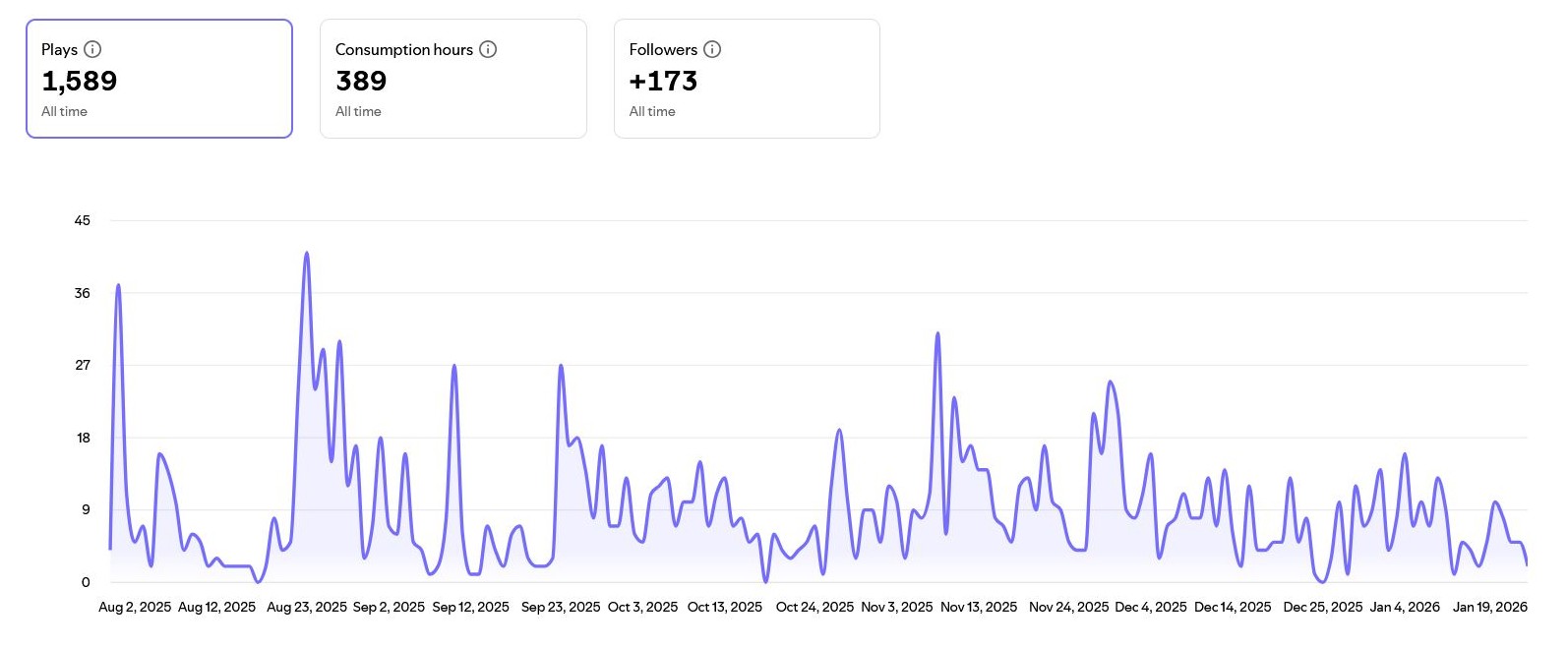
Figure 1. Trends in podcast listening over time. Source: Spotify (19.1.2026)
5.1. Qualitative results: students’ preferences and interpretative learning
Qualitative data consisted of both written and oral feedback collected from different listener groups, including university students, adult learners and participants of lifelong learning programmes as U3A. These data included short written reflections, emails, spontaneous comments, discussions during seminars, and verbal reactions expressed in teaching and public educational contexts. Data were analysed using thematic analysis (Braun & Clarke, 2006).
Students (33) and adults (15) engage with the podcast in different ways and face different barriers to participation (Table 2). Students mainly value its reflective and identity-related dimension but are limited by time pressure and cognitive overload. Adults emphasise its social and cultural relevance, yet their engagement is often constrained by technological accessibility and platform dependency. This suggests that non-engagement does not reflect a lack of interest in the content, but rather structurally different forms of exclusion that must be considered when designing inclusive podcast-based educational initiatives.
Table 2. Thematic analysis of feedback from university students
Main category |
Students – codes and examples |
Adults – codes and examples |
A. Engagement with the podcast (36 %) |
||
1. Reflective learning and identity |
Self-reflection, new perspectives, emotional resonance, personal experience, sense of understanding. “It makes you think from different perspectives”, “Everyone can find themselves in it”, “It was an experience”, “Open discussion, feeling of safety.” |
Better understanding of social phenomena, interpretative depth, social sensitivity. “It helped me better understand the behaviour of people experiencing homelessness”, “It opens new interpretative frameworks.” |
2. Connection to contemporary life |
Linking myths to current reality, relevance for psychology and everyday life. “The myths are connected to today’s world”, “Modern psychology can draw from antiquity”, “I see parallels with the present.” |
Practical and professional application, cultural and social relevance. “You connect the past with the present”, “It helped me in practice (theatre, work, education)”, “Myths as responses to contemporary problems.” |
3. Motivation and cognitive engagement |
Intellectual stimulation, curiosity, desire to explore further, accessibility. “It made me google more information”, “I became addicted to the podcasts”, “Clear and stimulating”, “You analyse the symbols in depth.” |
Appreciation of clarity and public accessibility, value for science communication. “The most understandable for a wider audience”, “Very stimulating”, “I appreciate the concept and accessibility.” |
B. Barriers to engagement (apr. 64 %) |
||
4. Temporal and motivational barriers |
Lack of time, exam period, mental overload (35 %), preference for leisure unrelated to study, low interest in podcasts as a medium 15 %)., “I want rest from school-related content”, “Podcasts don’t interest me”, “I forgot.” |
Rare or not reported. |
5. Technological and access barriers |
Rare or not reported. |
Digital illiteracy, platform dependency, lack of technical skills or equipment. “It requires Spotify and that is paid”, “I don’t know how to play it”, “I have nowhere to listen to it” |
6. Discussion
These results indicate that using podcasts to engage with ancient myths fosters reflective thinking and interpretative learning in higher education contexts. The convergence between students’ declared interests and their actual listening behaviour suggests that the selection of mythological topics responded to learners’ educational and psychological needs, supporting research on innovative pedagogies that enhance engagement and critical thinking when linked to students’ experience (Bhuttah et al., 2024). The results further show that the podcast format fostered primarily reflective and interpretative learning rather than mere content acquisition, in line with theories of reflective and transformative learning (Mezirow, 1997; Moon, 2004) and with evidence that podcasts can stimulate conceptual change and critical reflection (Götzfried et al., 2024).
Qualitative feedback confirms that podcasting supports informal and self-directed learning and encourages connections between academic content and everyday life (Meden et al., 2024). The intimate and narrative nature of audio storytelling appears to strengthen emotional engagement and inner dialogue, which are central to reflective learning (McHugh, 2022; Ristani & Bampatzimopoulos, 2024).
The results highlight the importance of institutional embedding. Higher engagement was observed when the podcast was integrated into teaching and public educational activities, supporting findings that podcasting is most effective when actively framed within pedagogical practice rather than used as an isolated tool (Fernández et al., 2009; Fose & Mehl, 2007; Schaap et al., 2025). At the same time, the findings should be interpreted with caution, as the qualitative nature of the data allows for analytical insight into patterns of engagement rather than generalisable conclusions.
Several limitations must be acknowledged. Listening statistics were influenced by contextual factors such as promotion, timing and unequal availability of episodes, while qualitative data were based on informal feedback rather than systematic interviews or focus groups. In addition, although the podcast was publicly available, its accessibility was uneven across age groups due to platform dependency and varying levels of digital literacy. The strong concentration of listeners in Slovakia further limits generalisability. Together, these factors indicate that technological and cultural contexts significantly shape patterns of engagement and reception.
Despite these limitations, the study provides evidence that combining podcasting with ancient myths represents a promising approach to innovative, interdisciplinary and reflective learning, connecting cultural heritage with personal experience in both higher education and lifelong learning contexts.
Funding
This work was supported by the KEGA project No. 032UK-4/2025, “A return to ancient myth-telling in education: the podcast as an effective vehicle for the spoken myths.”
References
Atalay, G. E., Azap, E., Kınay, K., & Özşirin, S. (2022). The rise of audio-based communication technologies: A research on podcast, Clubhouse and audio book application. Nişantaşı Üniversitesi Sosyal Bilimler Dergisi, 10(2). https://doi.org/10.52122/nisantasisbd.1114873
Besser, E. (2021). Engaging students through educational podcasting: Three stories of implementation. Technology, Knowledge and Learning. https://doi.org/10.1007/s10758-021-09503-8
Bhuttah, T. M., Xusheng, Q., Abid, M. N., & Sharma, S. (2024). Enhancing student critical thinking and learning outcomes through innovative pedagogical approaches in higher education: The mediating role of inclusive leadership. Scientific Reports, 14, 24362. https://doi.org/10.1038/s41598-024-75379-0
Braun, V., & Clarke, V. (2006). Using thematic analysis in psychology. Qualitative Research in Psychology, 3(2), 77–101. https://doi.org/10.1191/1478088706qp063oa
Detienne, M. (1986). The creation of mythology. University of Chicago Press.
Farangi, M. R., Nejadghanbar, H., Askary, F., & Ghorbani, A. (2015). The effects of podcasting on EFL upper-intermediate learners’ speaking skills. CALL-EJ, 16(2), 1–18.
Fernández, V., Simo, P., & Sallan, J. M. (2009). Podcasting: A new technological tool to facilitate good practice in higher education. Computers & Education, 53(2), 385–392. https://doi.org/10.1016/j.compedu.2009.02.014
Fose, L., & Mehl, M. (2007). Plugging into students’ digital DNA: Five myths prohibiting proper podcasting pedagogy in the new classroom domain. MERLOT Journal of Online Learning and Teaching, 3(3), 277–287. https://jolt.merlot.org/vol3no3/mehl.pdf
Gielissen, K., & Chan, C. A. (2023). The (ear) budding potential of podcasts. Medical Teacher, 45(9), 1005–1006. https://doi.org/10.1080/0142159X.2022.2083488
Götzfried, J., Nemeth, L., Bleck, V., & Lipowsky, F. (2024). Learning styles unmasked: Conceptual change among pre-service teachers using podcasts and texts. Learning and Instruction, 94, 101991. https://doi.org/10.1016/j.learninstruc.2024.101991
Khamitova, A. (2023). Innovative Learning Spaces of Higher Education: a Systematic Mapping Review of Themes. TechTrends 67, 830–842. https://doi.org/10.1007/s11528-023-00892-4
Margaryan, A., & Littlejohn, A. (2008). Are digital natives a myth or reality? Students’ use of technologies for learning. British Journal of Educational Technology, 39(6), 1–14.
McHugh, S. (2022). The power of podcasting: Telling stories through sound. Columbia University Press.
Meden, E., Radovan, M., & Štefanc, D. (2024). Podcasts and informal learning: Exploring knowledge acquisition and retention. Education Sciences, 14(10), 1129. https://doi.org/10.3390/educsci14101129
Mezirow, J. (1997). Transformative learning: Theory to practice. New Directions for Adult and Continuing Education, 74, 5–12. https://doi.org/10.1002/ace.7401
Moon, J. (2004). A handbook of reflective and experiential learning: Theory and practice. Routledge.
Ristani, M., & Bampatzimopoulos, S. (2024). An introduction to podcasting culture: Re-inventing audio storytelling. Gramma: Journal of Theory and Criticism, 29. https://doi.org/10.26262/gramma.v29i0.10266
Rodrigues, A. L. (2024). Editorial: Education and innovative perspectives in higher education. Frontiers in Education, 9, 1380280. https://doi.org/10.3389/feduc.2024.1380280
Schaap, L., Nijland, F., Cents-Boonstra, M., & Vanlommel, K. (2025). A Framework Supporting the Innovative Capacity of Higher Education Institutions: An Integrative Literature Review. Sustainability, 17(14), 6517. https://doi.org/10.3390/su17146517
Tyrrell, W.B. (1984). Amazons: A Study of Athenian Myth Making, Johns Hopkins University Press.
Vlachaki, M., Kokkinos, G., & Papandreou, Z. (2019). Approaching mythology in the history curriculum of compulsory education in Greece. History Education Research Journal, 16(2), 229–247. https://doi.org/10.18546/HERJ.16.2.06