The Development of the Concept of Openness: From Ancient Origins to Modern Implications
The development of the concept of openness: from ancient origins to modern implications
The Development of the Concept of Openness: From Ancient Origins to Modern Implications
Krista Opmane
 ,
Artūrs Zeps
,
Inga Lapiņa
Faculty of Engineering Economics and Management, Riga Technical University Latvia.
How to cite: Opmane, K.; Zeps, A.; Lapiņa, I. (2026). The Development of the Concept of Openness: From Ancient Origins to Modern Implications. In: 12th International Conference on Higher Education Advances (HEAd’26). Valencia, 15-18 June 2026. https://doi.org/10.4995/HEAd26.2026.21649
Openness is at the epicentre of modern higher education, encompassing multidimensionality and multifacetedness. It can be seen as a prerequisite for the successful operation of university alliances. It is open cooperation, open education, open innovation. To implement these openness initiatives, it is not enough to have organizational actions or written strategies; it requires a certain state of mindset and shows the complexity of the concept. This article aims to take a step back and look at the historical development of this concept and conceptual transitions. Conceptual understanding helps universities make decisions and strategically achieve goals. The literature review examines the historical and philosophical development of the concept of openness. The authors offer a historical conceptual analysis, demonstrating how the ideas and actions of historical precursors contributed to the development of the concept of openness.
Keywords: Openness; Higher Education; University alliances
1. Introduction
In higher education, the concept of openness is associated with three major pillars - education, science, and innovation. European University Alliances, which are part of the European Strategy's flagship initiative, include active cooperation in all three pillars. European University Alliances are collaborative networks established between universities to promote a common European identity and improve educational opportunities. Alliances are not just about technical skills; they promote a sense of belonging through collaboration, mobility, and cooperation (Flath et al., 2017; Frame & Curyło, 2022). Openness is vital for universities to respond to changing research needs and challenges in both technology and society (Kumari et al., 2020) and requires both an appropriate mindset and organizational actions, and it should be a strategic priority so that it is clear where the university stands. The research gap lies in the multifaceted, ambiguous perception of openness; it's crucial to understand the concept's roots to strengthen understanding. A fragmented or one-sided perception of a concept prevents us from grasping its complexity, devaluing and simplifying it (Schophuizen et al., 2021). The article aims to clarify the historical development of the concept of openness and the changes that have shaped its modern applicability. To achieve the aim of the article, the authors of the paper have raised the research question: how the concept of openness has transformed over time and influenced the modern output of openness-university alliances. The paper consists of an introduction, methodology sections, followed by a third chapter on the historical and philosophical development of openness, while the fourth chapter is on contemporary implications of openness. This is followed by a discussion and conclusions section, which interprets and summarizes the main findings.
2. Methodology
The literature review is created from a historical perspective, so it is important to include both primary and secondary sources. Ideologically, primary sources were used to delve into the roots of the concept. Secondary sources, on the other hand, were used to understand the consequences of the concept of openness today and to strengthen the research gap. Secondary sources were obtained from the Scopus and Web of Science databases. By defining the main keyword ‘‘university openness’’, the author obtained 3107 results. To limit the scope of these results, the author inserted other keywords ‘‘university’’, ‘‘education’’, ‘‘openness’’, ‘‘universities’’, ‘‘higher education’’ and ‘‘university student’’. After this step, the author obtained 633 results, which was still a large number. To obtain a more precise result, the author restricted the research areas by excluding those related to specific industries (e.g., medicine, biology, etc.) and obtained 164 results. Similarly, the author restricted the keywords related to specific industries, such as medicine, resulting in 139 articles. To obtain more current information, the author restricted the period in which the article was published, namely, the last ten years, resulting in 111 articles. Of these articles, only those published in English were selected, resulting in 92 articles. The authors manually reviewed the articles and selected the twenty most relevant articles that would help answer the research question. A literature review was chosen as the research method because it allows for systematic compilation and critical evaluation of existing research, which forms the basis for new research. The literature review resulted in an objective summary that answers the research question posed by the authors (Ramdhani et al., 2014). The created literature review allowed the authors to structure the information and discover new novelties.
3. Historical and philosophical development of openness
The roots of the concept of openness can be traced back to ancient times, while in the mid-20th century, there were the first efforts to create a European university, which is already closer to the university alliances we know today.
3.1. Open society
The concept of an open society is described by comparing two opposites, the philosophy of Athens and Plato. Namely, Athens symbolizes an open society, which includes freedom of ideas, political participation, and transparency. In contrast, Plato's philosophy symbolizes a closed society - the opposite of democracy - it is evaluated as a chaotic, hierarchical social model. At the same time, it touches on what today would be called a mindset change. About the transition from fear of a closed society to the courage of an open society, which, of course, creates fear (Popper, 1945). An “open society” is characterized by the ability of its members to critically evaluate taboos and base decisions on intellect and discussion, rather than blind adherence to magical taboos or inherited customs, involving rational personal responsibility, allowing for rational reflection on social issues, and deliberate preference for certain outcomes. Such a model of society fosters an environment in which individuals face personal decisions and responsibility, leading to a dynamic and developing social life. In the context of an open society, rationalism is defined as the willingness to listen to critical arguments and learn from experience. It implies intellectual modesty, recognition of one’s limitations, and a valuing of cooperation in the search for truth. An open society relies on reason to plan for freedom and security, recognizing that freedom is impossible without state guarantees. The open society emphasizes individual moral responsibility, arguing that people are responsible for their decisions and actions, rather than attributing them to external forces such as “history” or ‘’fate’’. An open society, committed to critical discussion and continuous learning from mistakes, offers a framework for continuous improvement and adaptation (Popper, 1945). The values mentioned for an open society, such as the ability to constructively perceive criticism and discussions, are necessary in the everyday life of universities.
3.2. Closed society
In contrast, a “closed society” is like a tribal or organic unit, held together by semi-biological bonds and a magical attitude towards social customs, leaving little room for personal responsibility or critical evaluation. The collapse of a closed society, often brought about by factors such as population growth, cultural contact, and trade, creates social tension and the emergence of new values, including standards of equality. Closed societies, such as those imagined by Plato, resist innovation and learning from experience, thus hindering progress. Totalitarian systems, both ancient and modern, often suppress criticism and rely on dogmatic adherence to a fixed ideology, which ultimately hinders intellectual and social development. A ‘closed society’ is based on dogmatism, suppression of criticism, and a deterministic view of history, ultimately leading to stagnation and oppression (Popper, 1945). The characteristics of closed societies can be reflected in universities that are protectionist or nationalistic. Namely, those that protect their knowledge and resources. Resistance to open science and open innovation initiatives limits international cooperation.
3.3. First attempts
It is worth noting that the 20th century is the beginning of the formation of modern openness implications - university alliances. Namely, in 1948, the German economist Alfred Müller-Armack mentioned that a "community of intellectuals" would be necessary for European integration. This idea was developed by diplomat Walter Holstein in 1955, as a representative of the European Coal and Steel Community. In turn, the German Delegation even prepared a document for European integration, which mentioned the idea of creating a European University, which would be represented by six member states of the European Coal and Steel Community - Germany, France, Italy, the Netherlands, Belgium, and Luxembourg. This idea included integration in both the economic and cultural spheres. However, the issue of creating a European University remained unresolved until the recent past (Curaj et al., 2023). Although this initiative did not result in an outcome, it is an imprint in history, a case study for future initiatives.
4. Contemporary implications of openness
Openness as a concept has evolved within a personality psychology model, being operationalized as a measurable personality trait, which, in the context of university alliances, is the mindset from which everything begins.
4.1. Big Five theory- The mindset for new experiences
Openness, as a multidimensional construct, can be associated with the Big Five theory, which encompasses five personality dimensions - neuroticism, extraversion, openness, agreeableness, and conscientiousness. Openness to experience is a basic personality dimension characterized by traits related to intelligence, imagination, creativity, and unconventionality. Although its basic structure is widely accepted, its specific expressions and interpretations may vary across cultures. In terms of the Big Five personality traits, openness encompasses several aspects, including inquisitive ideas, imaginative fantasy, artistic aesthetics, a wide range of interests, feelings, and unconventionality. Openness to experience, initially a controversial concept, has evolved into a widely accepted personality dimension. It encompasses an individual's openness to new ideas, imagination, and a wide range of experiences, as distinct from simple intelligence, and demonstrates predictable utility in a variety of life domains. The Big Five dimensions, including openness, were derived from an analysis of natural-language terms people use to describe themselves and others. The concept of openness encompasses a wide range of intellectual, creative, and artistic inclinations, preferences, and skills. Openness to experience refers to an individual's susceptibility to new and complex internal and external stimuli, including intellectual curiosity, imagination, and aesthetic sensitivity. Its conceptualization has evolved from narrower interpretations to a broad understanding of engagement with novelty, creativity, and abstract ideas, making it a distinct and essential component of personality (L.A. Pervin & O.P John, 1999). Openness to new experiences is exactly what universities face when they join a university alliance (Craciun et al., 2023; Wiley & Iii, 2009). The model plays a major role in the everyday life of universities. In a university alliance, teaching practices and culture may differ, and national regulations will also differ between countries. This requires openness to new experiences at both the individual and institutional levels. The university staff involved must be knowledgeable about the university management, what the goal is, and why it is important to join the alliance. Undeniably, it is also a question of values.
4.2. Collaborative practices in university alliances
The origins of open education can be traced to the Enlightenment, which emphasized access to education and knowledge. In turn, 20th-century ideas include experiments related to freedom of movement and play, both politically and psychologically. In a broader sense, openness is characterized by transparency and access to information. Integration with open systems and technologies. Modern open education is inextricably linked to the development of open systems, open source, open access, open archiving, and open publishing (Hernández-Castellano et al., 2020; Peters & Britez, 2009). Open science aims to make the scientific process openly accessible by sharing research components, which promotes collaboration between researchers (Heber, 2023). European universities play a key role in strengthening open science. By committing to sharing research results, ensuring their accessibility and collaboration, the fundamental European values of academic freedom, inclusiveness, and democracy are strengthened (Siri et al., 2022). Open science is also related to useful science, which focuses directly on the essence of relevance. For research results to have a truly practical impact on society, interdisciplinarity is important and can improve it (Ursi et al., 2022). The activities of university alliances undoubtedly create innovations. Through interdisciplinarity and exchange of experience, new educational practices are created. Open innovation, which refers to the interaction of internal and external ideas and knowledge, which often occurs when universities collaborate with industry, allows for new solutions that can address all of society's problems (Priavolou & Niaros, 2019; Sarango-Lapo et al., 2021). Openness is a stimulated process with a move towards improved cooperation. Similarly, openness creates openness - networking. University alliances have been the basis for the formation of new alliances (Maassen et al., 2023). Openness also breaks down the traditional learning model into a more student-inclusive one. Students can engage in the process and promote co-creation (Angouri et al., 2024; Chiappe & Adame, 2018). To more clearly demonstrate the historical development of the concept of openness, the authors have summarized it in Figure 1.
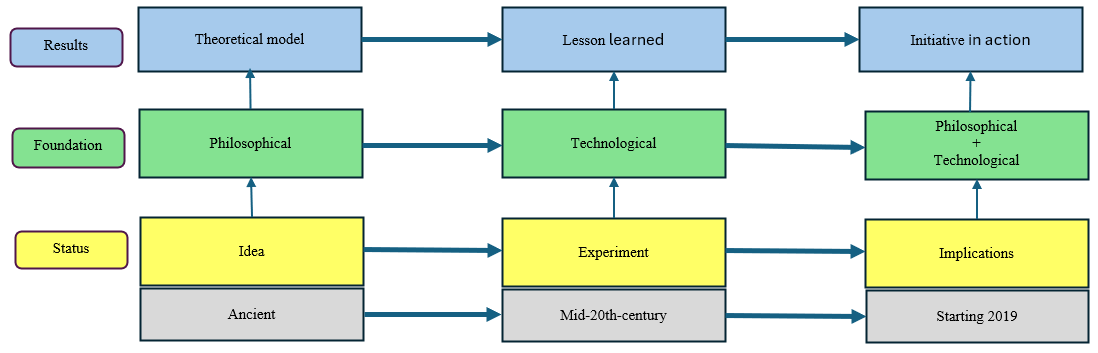
Figure 1. Stages of the Openness Concept. Source: Authors created figure.
Three stages have been highlighted in historical development, which are marked by their significance. Also, each stage is defined by status, foundation, and results. Namely, the first stage - ancient, by which we understand ancient Greece, and Plato. It starts with an idea, the foundation is philosophical, and the result is a theoretical model - open vs. closed society, which has not lost its relevance. The next significant stage is the mid-20th century, which is associated with the experiment to create a European university. The foundation is technological. Although this idea did not become reality, as a result, lessons have been learned. The next stage is the announced European Universities Initiative as part of the European flagship. It combines both technological foundations and philosophical foundations, namely, technological capacities and cultural considerations. As a result, there are 73 university alliances in action (Figure 1.). The phase that began in 2019 represents an experimental initiative for universities, allowing them to explore whether cooperation can move beyond project-based collaboration toward long-term institutional partnerships. This phase emphasizes the development of sustained relationships that extend beyond individual projects, promoting joint research and study programmes, mobility, and deeper integration within university alliances.
5. Discussion and conclusion
The paper examined the development of the concept of openness from ancient philosophical foundations to modern implications. The analysis demonstrates that openness has evolved from an abstract philosophical idea into a multidimensional and practical principle that shapes contemporary higher education practices and university alliances. Features of an open society are evident in universities that operate within university alliances. This indicates that openness is not merely a strategic decision, but a long-term institutional commitment to embedding openness within university strategies. In contrast, features of a closed society are evident in universities that limit international activity and resist participation in such alliances. The findings suggest that a technological foundation alone is not sufficient for participation. Instead, openness requires the integration of both technological and philosophical foundations. The co-creation of university alliances in scientific research and the exchange of teaching practices is more likely to be successful when cultural differences are acknowledged, institutions are ready for change, and openness is embraced as a guiding mindset. These findings contribute to a deeper understanding of openness and support informed strategic decision-making in higher education institutions. Historical developments have expanded the concept of openness, making it broader and more accessible, and increasingly aligned with European values such as accessibility and transparency.
References
Angouri, J., Moriau, L., & Jegers, R. S. (2024). Connected Learning Communities. 17(2), 1–26. https://doi.org/10.3167/latiss.2024.170202
Chiappe, A., & Adame, S. I. (2018). Open Educational Practices: A learning way beyond free access knowledge. Ensaio, 26(98), 213–230. https://doi.org/10.1590/S0104-40362018002601320
Craciun, D, Kaiser, F., Kottmann, A., & Van der Meulen, B. (2023). Research for CULT Committee –The European Universities Initiative, first lessons, main challenges and perspectives.
Curaj, A., Deca, L., & Pricopie, R. (2023). European Higher Education Area: Challenges for a New Decade. https://doi.org/https://doi.org/10.1007/978-3-030-56316-5
Flath, C. M., Friesike, S., Wirth, M., & Thiesse, F. (2017). Copy, transform, combine: Exploring the remix as a form of innovation. Journal of Information Technology, 32(4), 306–325. https://doi.org/10.1057/s41265-017-0043-9
Frame, A., & Curyło, B. (2022). Bringing Erasmus home : the European universities initiative as an example of ‘ Everyday Europeanhood .’ Journal of Contemporary European Studies, 32(2), 334–349. https://doi.org/10.1080/14782804.2022.2134986
Heber, M. (2023). Organising the ERUA Open Science Meet-Ups : Methods , Experiences and Lessons from the First Ten Months. The Journal of the Association of European Research Libraries, 33, 1–12. https://doi.org/10.53377/lq.13319
Hernández-Castellano, P. M., Martínez-Rivero, M. D., Marrero-Alemán, M. D., Suárez-García, L., & Gutiérrez-Barcenilla, A. (2020). Open education through interactive training material. Sustainability (Switzerland), 12(18). https://doi.org/10.3390/su12187645
Kumari, R., Kwon, K. S., Lee, B. H., & Choi, K. (2020). Co-creation for social innovation in the ecosystem context: The role of higher educational institutions. Sustainability (Switzerland), 12(1), 1–21. https://doi.org/10.3390/su12010307
Maassen, P., Stensaker, B., & Rosso, A. (2023). The European university alliances — an examination of organizational potentials and perils. Higher Education, 86(4), 953–968. https://doi.org/10.1007/s10734-022-00951-4
Pervin, L. A., & John, O. P. (1999). Handbook of personality: Theory and research, 2nd ed. (Second edition).
Peters, M. A., & Britez, R. G. (2009). Open Education and Education for Openness.
Popper, K. R. (1945). The Open Society and Its Enemies.
Priavolou, C., & Niaros, V. (2019). Assessing the openness and conviviality of open source technology: The case of the WikiHouse. Sustainability (Switzerland), 11(17). https://doi.org/10.3390/su11174746
Ramdhani, A., Ramdhani, M. A., & Amin, A. S. (2014). Writing a Literature Review Research Paper: A step-by-step approach. International Journal of Basic and Applied Science, 03(01), 47–56.
Sarango-Lapo, C. P., Mena, J., & Ramírez-Montoya, M. S. (2021). Evidence-based educational innovation model linked to digital information competence in the framework of education 4.0. Sustainability (Switzerland), 13(18). https://doi.org/10.3390/su131810034
Schophuizen, M., Kreijns, K., Stoyanov, S., Rosas, S., & Kalz, M. (2021). Does project focus influence challenges and opportunities of open online education? A sub-group analysis of group-concept mapping data. Journal of Computing in Higher Education, 33(2), 255–280. https://doi.org/10.1007/s12528-020-09264-w
Siri, A., Leone, C., & Bencivenga, R. (2022). Equality , Diversity , and Inclusion Strategies Adopted in a.
Ursi, L., Baldacchino, G., Baši, Ž., & Hampel, M. (2022). Factors Influencing Interdisciplinary Research and Industry-Academia Collaborations at Six European Universities : A Qualitative Study. 1–24.
Wiley, D., & Iii, J. H. (2009). Openness, Dynamic Specialization, and the Disaggregated Future of Higher Education The Changing Context of Higher Education. International Review of Research in Open and Distance Learning, 10(5).