Transversal Skills in Future Teachers: Perceived Importance and Self-Assessment
Transversal Skills in Future Teachers: Perceived Importance and Self-Assessment
Transversal Skills in Future Teachers: Perceived Importance and Self-Assessment
Inmaculada
Navarro-González1
 ,
Chunfang Zhou2
,
Connie Svabo2
1Department of Psychology, Universidad de Castilla la Mancha, Spain, 2Department of Mathematics and Computer Science, Southern Denmark University, Denmark.
How to cite: Navarro-González, I.; Zhou, C.; Svabo, C. (2026). Transversal Skills in Future Teachers: Perceived Importance and Self-Assessment. In: 12th International Conference on Higher Education Advances (HEAd’26). Valencia, 15-18 June 2026. https://doi.org/10.4995/HEAd26.2026.21653
Abstract
In the context of the Fourth Industrial Revolution, the development of social skills has become a key educational priority. This study investigates self-perceived proficiency and the perceived importance of transversal competencies among future teachers based on education theory grounded in European policy frameworks and competencies. A quantitative survey was conducted with 110 students enrolled in the Bachelor of Education program at the University of Castilla-La Mancha (UCLM). The instrument, adapted from Direito et al. (2012), assessed thirty social skills on a five-point Likert scale in terms of competence and importance. Nonparametric analyses revealed statistically significant differences between importance and competence. Strengthening these competencies is not only essential for the professional development of future teachers, but also for preparing them to foster similar skills in their future students.
Keywords: Soft skills; teacher education; competences; primary school; teaching practices.
1. Introduction
This section outlines the concept of soft skills and justifies their inclusion in teacher education curricula within the relevant legislative framework. As highlighted by Cinque (2016), the concept of soft skills has been extensively reviewed in the literature; however, arriving at a unanimous definition remains complex, as interpretations vary depending on the defining body. Thus, soft skills can also be called social skills, generic competences, transversal competences, social competences, life competences, non-cognitive skills or interpersonal skills. The concept of competencies is broader than that of knowledge and skills. The fulfilment of these demands requires not only knowledge and skills but also strategies and routines to apply them, as well as appropriate emotions and attitudes and an effective management of all these components.
Independently of the specific curricular programmes implemented in each university for the Bachelor’s Degree in Teaching, European legislative guidelines are grounded in three key frameworks: (a) the Recommendations of the Council of the European Union on Key Competences for Lifelong Learning (European Union, 2018), (b) the European Qualifications Framework (European Union, 2019), and (c) the European Skills Agenda (European Commission, 2020). The Key Competences Framework emphasises the development of soft skills beyond disciplinary knowledge, highlighting individuals’ ability to respond effectively to everyday life demands (European Union, 2018). The European Qualifications Framework organises qualifications into eight levels defined by descriptors related to knowledge, skills, and competences in terms of responsibility and autonomy (European Union, 2019). Finally, the European Skills Agenda promotes lifelong learning through actions aimed at strengthening transversal, entrepreneurial and critical thinking skills, as well as essential life skills such as media, civic, financial, environmental and health literacy (European Commission, 2020).
In the Spanish context, the legislative guidelines revolve around the Spanish Qualifications Framework for Higher Education (MECES) (Government of Spain, 2011) and the new Organic Law of the University System (LOSU) (Government of Spain, 2023).
The Spanish Qualifications Framework for Higher Education (MECES) (Royal Decree 1027/2011) (Government of Spain, 2011) establishes four levels described in terms of knowledge, skills and competences. Each level establishes a set of learning objectives associated with a series of skills, which are in turn linked to learning outcomes.
The new University System Law (LOSU) (Organic Law 2/2023, of 22 March, on the University System) (Government of Spain, 2023) emphasizes that the university space must foster the acquisition of knowledge and skills in order to become a space of intellectual freedom, critical spirit, tolerance, dialogue and debate.
Thus, legislative guidelines, both on the part of the European Community and at national level in the case of Spain, point to the need to develop new competences in the context of a constantly changing society.
A review of the literature reveals a common thread regarding the relevance of including soft skills in teacher training programmes (e.g. Aparicio-Herguedas et al., 2021; Dihn et al., 2014; Karras, 2022; Manso and Garrido-Martos, 2021; Mu, 2024; Orih et al., 2024; Ouchen et al., 2022; Tsibidaki and Vrachna, 2025). Thus, as described above, teaching competences should combine three elements: a) knowledge of daily practice in school, b) cognitive and practical skills, and c) responsibility and autonomy in the effective control of these knowledge and skills.
2. Objectives
This paper highlights the need to train future teachers, during their undergraduate studies, in soft skills.
2.1. General objective
To analyse how teacher training degree students perceive their level of proficiency and the importance attributed to a set of soft skills relevant to their initial training, as well as the existence of possible gaps between these two dimensions.
2.2. Specific objectives
1. Describe the level of self-perceived proficiency of the soft skills assessed by students in the Teacher Training Degree programme.
2. Analyse the importance attributed by students to these soft skills in the context of their initial training as future teachers.
3. Compare self-perceived proficiency and perceived importance in each of the soft skills in order to identify significant differences between the two dimensions.
4. Identify the soft skills that show the greatest gaps between perceived importance and self-perceived level of proficiency.
5. Derive implications for initial teacher training, aimed at improving and strengthening those soft skills that present significant training deficits.
3. Method
This study adopted a quantitative, cross-sectional research design to examine students’ self-perceived competence and the perceived importance of soft skills within teacher education programs. The use of standardized instruments and structured data collection ensured the reliability and validity of the findings, providing a robust empirical foundation for understanding how future teachers evaluate and value their soft skills development during their training. This design facilitates the efficient comparison of self-perceived competence and the perceived importance of soft skills across participants, without requiring long-term follow-up.
3.1. Sample
The sample consisted of a total of 110 students enrolled in the Teacher Training Degree at the UCLM, of whom 72 were women (65.5%) and 38 were men (34.5%), aged between 19 and 30 (mean = 19.97, SD = 1.918).
The sample was selected using non-probabilistic convenience sampling, which is common in exploratory studies in the field of education.
3.2. Instrument
A list of 29 soft skills was designed based on literature and on findings of several studies (e.g.
Dijkgraaf et al., 2009; Spkins, Silburn, & Birchall, 2006)
A list of 30 skills was designed for its proven validity and clarity in measuring students’ self-assessment of soft skills. It is based on literature and on findings of several studies forms in engineering students (e.g. Direito et al., 2012). It aligns with the objectives of this study, which aim to identify perceived competence gaps in teacher education. For each of the skills, importance and proficiency are assessed. Importance refers to the relevance students attach to this skill for their future work as teachers; proficiency refers to the perception of the level of proficiency that students have over the different skills. The list includes 30 items on a five-point Likert scale (1=minimum, 5=maximum) with respect to Proficiency (P) and Importance (I).
The questionnaire was administered online, ensuring the anonymity and confidentiality of participants. Prior to completing the questionnaire, students were informed about the objectives of the study and the voluntary nature of their participation.
3.3. Statistical analysis
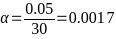
Statistical analysis was performed using SPSS Statistics (version 24). First, descriptive analysis (mean, standard deviation, median, and interquartile range) was performed to examine the level of self-perceived proficiency and the importance attributed to each of the skills. Subsequently, the non-parametric Wilcoxon signed-rank test was applied to compare the self-perceived proficiency and importance scores for each skill, given that the measurements correspond to related samples and come from Likert-type scales. In order to control the type I error derived from performing multiple comparisons (30 tests), the Bonferroni correction was applied, establishing an adjusted significance level of:
 (1)
4. Results
The mean scores of the students on their self-perceived proficiency in the skills and their relevance for their future work as teachers were examined.
4.1. Gaps in proficiency skills
In reference to the self-perceived domain, the mean scores for all skills were above 4 points (except those indicated in the table 1). Table 1 shows the highest scores (equal to or above 4.5 points) and the lowest scores (below 4 points).
Table 1. Descriptive statistics for the self-perceived domain
Competence |
M (SD) |
Med (IQR) |
|
Meeting deadlines |
4.55 (.077) |
5.00 (1) |
|
Pressure tolerance |
3.95 (.092) |
4.00 (2) |
|
Teamwork |
3.96 (.080 |
4.00 (1) |
|
Written communication |
3.93 (.072) |
4.00 (1) |
|
Leadership |
3.90 (.102) |
4.00 (2) |
|
Persuasion |
3.76 (.088) |
4.00 (1) |
|
Oral communication |
3.96 (.099) |
4.00 (2) |
|
Systemic approach |
3.95 (.078) |
4.00 (2) |
|
Creativity and innovation |
3.99 (.089) |
4.00 (2) |
|
Proactivity and initiative |
3.99 (.093) |
4.00 (1) |
|
Notes: M = Mean; SD = Standard deviation; Med = Median; R= Interquartile range (IQR)
4.2. Gaps in perceived importance of skills
In relation to the importance attributed to the different soft skills, all scores are above 4 points, except for Persuasion (M= 3.91; SD = .090; Med= 4.00; IQR=2). The highest scores (equal to or greater than 4.5 points) are shown in Table 2.
Table 2. Descriptive statistics of the importance attributed
Competence |
M (SD) |
Med (IQR) |
Meeting deadlines |
4.53 (.062) |
5.00 (1) |
Reflection on the knowledge acquired |
4.63 (.064) |
5.00 (1) |
Responsibility |
4.51 (.067) |
5.00 (1) |
Work organization |
4.51 (.067) |
5.00 (1) |
Listening |
4.52 (.067) |
5.00 (1) |
Notes: M = Mean; SD = Standard deviation; Med = Median; R= Interquartile range (IQR)
4.3. Differences between importance and self-perceived proficiency
In order to analyse the differences between the importance attributed to soft skills and the level of self-perceived proficiency of these skills, the Wilcoxon signed-rank test for related samples was applied to each of the 30 competencies assessed. This test was selected due to the ordinal nature of the data and the absence of normality in the distribution (Kolmogorov–Smirnov, with Lilliefors correction, D = .367, p < .001).
Based on the conventional significance level (p < .05), the Wilcoxon test showed statistically significant differences between importance and self-perceived proficiency (the statistic was based on negative ranks, indicating that perceived importance exceeds the level of self-perceived proficiency) (Table 1).
Table 3. Analysis of differences between importance and self-perceived competence using the Wilcoxon test
Competence |
Z |
p |
Teamwork |
−5.014 |
< .001 |
Oral communication |
−3.786 |
<.001 |
Written communication |
-2.708 |
.007 |
Networking |
−3.782 |
<.001 |
Listening |
-2.640 |
.008 |
Argumentation |
-2.977 |
.003 |
Time management |
-3.475 |
<.001 |
Work organization |
-3.301 |
<.001 |
Pressure tolerance |
-4.351 |
< .001 |
-3.334 |
<.001 |
|
Creativity and innovation |
-2.274 |
.023 |
Adapting to change |
-2.780 |
.005 |
Proactivity and initiative |
-2.514 |
.012 |
Flexibility |
-2.086 |
.037 |
Leadership |
-4.001 |
<.001 |
Reflection (on the knowledge acquired) |
-6.001 |
< .001 |
1Systemic approach: Inter-relationship between concepts, methodologies and disciplines.
After applying the Bonferroni correction (1), differences that remain significant with p < 0.0017 are shown in italics in Table 3.
5. Discussion
As we have seen in the results, teacher training students perceive that their proficiency of the skills studied is below the importance they attach to them for their future professional performance. Statistically significant differences between importance and self-perceived proficiency were found in Teamwork, Oral communication, Networking, Time management, Work organization, Pressure tolerance, Systemic approach, Leadership and Reflection on the knowledge acquired. This pattern suggests the presence of a significant training gap affecting a wide range of skills.
The differences between self-perceived proficiency and the importance attributed to teamwork can be explained by the lack of meaningful and well-structured experiences within training programmes, where group tasks are often assigned without explicit preparation in collaborative strategies (Aparicio-Herguedas et al., 2021). Integrating experiences into training programmes that expose future teachers to controlled challenges where they have the opportunity to use emotional management tools promotes the development of stress tolerance (Mu, 2024). Pressure tolerance allows teachers not only to respond appropriately to classroom demands, but also, according to the principle of exemplarity mentioned above, to contribute to the well-being of their students and the overall school climate. Regarding to leadership, the differences are consistent with the study by Dinh et al. (2014), in which students in the field of vocational training recognise the value of this skill but feel that they are insufficiently prepared to exercise it. Reflection on learning is a fundamental competence in current student-centred educational models. The active methodologies currently in use are, or should be, an effective tool for creating opportunities for reflection through, for example, learning diaries and portfolios. Other studies, albeit from the perspective of teachers (Karras, 2022), highlight the importance of effective communication in the classroom as the most important skill, followed by critical thinking and problem-solving skills. Regardless of the skills considered, we must reflect on whether teaching programmes are up to the demands of 21st-century society (Manso and Garrido-Martos, 2021). Current legislation, both at European and national level, provides a framework for training programmes in which students take centre stage, where they are involved in their own management with, for example, autonomous choice in terms of content, new knowledge, exchange with social agents, collaboration with other institutions or scaffolding; thus incorporating soft skills into curricula in a realistic way, given that there appears to be a gap between the legal framework, which supports soft skills training at the macro level, and its concrete implementation in educational and organisational contexts at the micro level.
The education system must be configured as an agent of change so that the teaching-learning process transmits not only basic academic skills, but also a set of soft skills. The content of training programmes in education faculties cannot be isolated from these skills, as teachers must be competent in knowledge, skills and attitudes. The principle of exemplarity defines our position and can be summarised as follows: students must master the cross-curricular or soft skills that they will then pass on appropriately to their pupils, establishing continuity between teacher training and the competency level requirements of primary education (Ouchen et al., 2022).
These conclusions assume that the development of soft skills is not a natural process and, therefore, we must be aware that it needs to be transmitted and developed through a systematic procedure that develops the skills and knowledge necessary for their acquisition. Research has shown that the acquisition of interpersonal skills can affect not only the quality of teaching but also the performance of students (Karras, 2022). Orih et al., (2024), in a meta-analytic study on intervention programs for the development of interpersonal skills through workshops, concludes that direct intervention improves interpersonal skills, employability, career planning, social-emotional learning, academic performance and the reduction of problems such as violence, drug abuse, depression and bullying.
For future research, we recommend that these aspects be considered to improve the effectiveness of the development of transversal skills in curricula. Curriculum development should focus on the use of appropriate pedagogical techniques to improve learning and develop these skills, to prepare students in the Bachelor of Education program in their own training and in the effective transmission of soft skills to primary school students.
Limitations
The results should be interpreted with caution, considering that the sample consists of only 110 undergraduate students and that the self-report methodology also limits the generalizability of the present results.
References
Aparicio-Herguedas, J.L., Velázquez-Callado, C., & Fraile-Aranda, A. (2021). El trabajo en equipo en la formación inicial del profesorado. Cultura, Ciencia y Deporte, 16(49), 455-464. http://dx.doi. org/10.12800/ccd.v16i49.1548
Cinque, M. (2016). “Lost in translation”: Soft skills development in European countries. Tuning Journal for Higher Education, 3(2), 389–427. https://doi.org/10.18543/tjhe-3(2)-2016pp389-427
Dijkgraaf, E., van der Zee, F., Gijsbers, G., de Jong, M., Jonkhoff, W., Dieke, A., de Munch, S., &
Dinh, J. E., Lord, R. G., & Hoffman, E. (2014). Leadership perception and information processing: Influences of symbolic, connectionist, emotion, and embodied architectures. In D. V. Day (Ed.). The Oxford Handbook of Leadership and Organizations. Oxford University Press. https://durham-repository.worktribe.com/output/1653030
Direito, I., Pereira, A., & Oliveira Duarte, A. M. de. (2012). Engineering undergraduates’ perceptions of soft skills: Relations with self-efficacy and learning styles. Procedia – Social and Behavioral Sciences, 55, 843–851. https://doi.org/10.1016/j.sbspro.2012.09.571
European Commission (2020). European skills agenda for sustainable competitiveness, social fairness and resilience. https://eur-lex.europa.eu/legal-content/EN/TXT/?uri=celex:52020DC0274
European Union (2018). Key competences for lifelong learning. https://education.ec.europa.eu/focus-topics/improving-quality/key-competences
European Union (2019). The European qualifications framework: Supporting educational, vocational and cross-border mobility. https://ec.europa.eu/social/BlobServlet?docId=19190&langId=en
Government of Spain (2011). Spanish qualifications framework for higher education. Boletín Oficial del Estado. https://www.boe.es/eli/es/rd/2011/07/15/1027/con
Government of Spain (2023). Organic Law 2/2023 of 22 March on the university system. Boletín Oficial del Estado. https://www.boe.es/eli/es/lo/2023/03/22/2/con
Karras, K. (2022). The importance of acquiring soft skills by future primary teachers: A comparative study. In Towards the next epoch of education (Vol. 20, pp.41- 48). In N. Popov, C. Wolhuter, L. de Beer, G. Hilton, J. Ogunleye, E. Achinewhu-Nworgu, & E. Niemczyk (Eds.), Towards the Next Epoch of Education, Bulgarian Comparative Education Society (BCES).
Maier, D. (2009). Investing in the Future of Jobs and Skills. Scenarios, implications and options in anticipation of future skills and knowledge needs. Sector Report Post and Telecommunications. Submitted to the European Commission, DG Employment, Social Affairs and Equal Opportunities. Retrieved from http://ec.europa.eu/social/BlobServlet?docId=3636&langId=en
Manso, J., & Garrido-Martos, R. (2021). Initial training and access to the profession: teachers’ demands. Revista de Educación, 393, 293-319. https://doi.org/10.4438/1988-592X-RE-2021-393-494
Mu, G. M. (2024). A systematic literature review of building resilience for pre-service teachers. International Journal of Educational Research, 128(1), 102476. https://doi.org/10.1016/j.ijer.2024.102476
Orih, D., Heyeres, M., Morgan, R., Udah, H., & Tsey, K. (2024). A systematic review of soft skills interventions within curricula from school to university level. Frontiers in Education, 9, 1383297. https://doi.org/10.3389/feduc.2024.1383297
Ouchen, L., Tifroute, L., & Hariri, K. E. (2022). Soft skills through the prism of primary school teachers. European Journal of Educational Research, 11(4), 2303–2313. https://doi.org/10.12973/eu-jer.11.4.2303
Tsibidaki, A., & Vrachna, A. (2025). Collaboration as a soft skill in special education teachers: A systematic literature review. Education Sciences, 15(1), 22. https://doi.org/10.3390/educsci15010022