Exploring Student Views on the Pilot Implementation of a Metaverse Game in Virtual University Tutorials
Exploring Student Views on the Pilot Implementation of a Metaverse Game
Exploring Student Views on the Pilot Implementation of a Metaverse Game in Virtual University Tutorials
Kim-hung Lam1
 ,
Peter Hiufung Ng2
,
Xiaofeng Huang1, Laura Zhou3
1Department of Applied Biology and Chemical Technology, The Hong Kong Polytechnic University, Hong Kong, China, 2Department of Computing, The Hong Kong Polytechnic University, Hong Kong, China, 3Educational Development Centre, The Hong Kong Polytechnic University, Hong Kong, China.
How to cite: Lam, K. H.; Ng. P. H.; Huang, X.; Zhou, L. (2026). Exploring Student Views on the Pilot Implementation of a Metaverse Game in Virtual University Tutorials. In: 12th International Conference on Higher Education Advances (HEAd’26). Valencia, 15-18 June 2026. https://doi.org/10.4995/HEAd26.2026.21654
Abstract
Metaverse games are transforming higher education by offering immersive, interactive environments that boost student engagement and collaboration. These virtual spaces allow learners to experience activities such as simulated laboratories, historical scenarios, and group tasks, encouraging deeper understanding, creativity, critical thinking, and teamwork. In this study, we implemented a metaverse‑based game to support virtual classroom learning in the foundation subject ABCT1D09 during the 2023/24 Semester Two and 2024/25 Semester One, involving 181 enrolled students. The game focused on improving learning and engagement related to air pollution. Questionnaire responses showed return rates of 39.5% and 75% across the two semesters. Initial results indicated that 75% of students found the experience enjoyable and immersive, and 78% felt it effectively highlighted the importance of air pollutant collection, though these rates dropped to 67% the following semester. Nevertheless, in‑person feedback emphasized increased awareness of greenhouse emissions and active participation. Overall, the findings suggest strong educational potential, with further refinement and research needed.
Keywords: Metaverse; Unity; Gamification; Science Education; STEM Education
1. Introduction
The COVID‑19 pandemic rapidly shifted most face‑to‑face (F2F) teaching into online or hybrid formats, and it also became a new normal for higher education nowadays. To support these evolving learning needs, a wide range of digital resources, such as pre‑class and after‑class activities, online videos (e.g., YouTube, TED Talks), lecture recordings, self‑learning modules hosted on learning management systems (LMS), and various interactive technologies including metaverse platforms and immersive virtual environments, are now commonly integrated to support flipped classroom teaching and help students achieve intended learning outcomes (Yuehchin, 2017; Rungnapeepornphong et al., 2023). Among these emerging approaches, the metaverse has attracted particular attention from educators seeking virtual learning environments that better accommodate students’ expectations and behaviors in the post‑pandemic era (Latino et al., 2024).
The metaverse can be understood as a three‑dimensional online world in which users interact, collaborate, and create through customizable avatars within virtual spaces distinct from physical reality (Ritterbusch and Teichmann, 2023). Scholars argue that such environments enable learners to participate in diverse social, cultural, economic, and scientific activities that can enhance engagement and deepen learning. For example, Ouariachi et al. (2017) demonstrate the effectiveness of online games in improving climate literacy among young people by embedding cooperative mechanics and meaningful gameplay. Similarly, Wu and Lee (2015) and Pfirman et al. (2021) show how climate‑themed games, such as Arctic Crisis, contribute to public education on environmental issues. The Gamified Constructivist Teaching in the Metaverse (GCTM) framework proposed by Ng and colleagues (2023 and 2024) further integrates game design principles with constructivist learning, resulting in improved student engagement and stronger learning communities, as evidenced through its implementation in platforms such as Questverse.
Other immersive learning innovations include the use of Minecraft to foster creativity and collaboration in virtual classrooms (Anastasiadis et al., 2018 and Sánchez-López, 2022) and VR‑supported science education tools such as those presented by Lo and Tsai (2022) and the VoRtex platform developed by Jovanovic and Milosavljevic (2022). Additional studies emphasize the value of interactive storytelling (Spiegel and Wang, 2024) and metaverse‑enhanced flipped classrooms (İbili et al., 2024; Rungrapeepornphong et al., 2023). Subject‑specific applications, including VR/AR for chemistry education (Amirbekova et al., 2024), demonstrate the wide potential of immersive tools despite ongoing technical and pedagogical challenges (Hussain and Qadir, 2024). Collectively, these studies indicated a clear shift toward immersive and game‑based pedagogies that emphasize engagement, collaboration, and authentic learning experiences.
In alignment with these developments, our university requires all undergraduate students to complete a General Education (GE) course in Science, Technology, and Environment. Given the increasing evidence that gamification and immersive technologies can improve learning and help address global issues such as climate change (Pfirman et al., 2021; Ng et al., 2024), we introduced a metaverse‑based game as a virtual learning component in this GE course. The game simulates a modern city environment in which students identify and monitor air pollutants, providing a flexible and accessible "digital active learning environment" that enhances engagement anytime and anywhere (Hussain et al., 2024).
This project represents a collaboration between the Department of Applied Biology and Chemical Technology, the Institute for Higher Education Research and Development, and the Department of Computing at The Hong Kong Polytechnic University during the 2023/24 and 2024/25 academic years. A Unity‑based virtual classroom game was developed and piloted with two student cohorts. To evaluate its impact on motivation and learning in climate change education, we analyzed learning analytics (LA) data from the Spatial.io platform (Ng et al., 2023 and 2024) and collected voluntary student feedback through surveys.
2. Methodology
This study was conducted over two academic semesters, from Semester 2 of 2023/4 to Semester 1 of 2024/5, using the general education course ABCT1D09 Greenhouse Gases and Life as the basis for implementation. The post study survey and students’ participation data was collected before the end of each semester. We have collected the feedback from our students via online survey using MSForm. Table 1 list out the survey questions. In this work, students were invited to complete the online questionnaire in MSForm (Table 1) at week 10. Our students voluntarily participated and gave their feedback with a rating from 1 to 5, where 5 = strongly agreed, 4 = agreed, 3 = neutral, 2 = disagreed, 1 = strongly disagreed, to indicate students’ opinion.
2.1. Data collection and analysis
Online questionnaire survey
Survey questionnaire was prepared in MSForm and distributed to 181 students in total, and we have received around 107 anonymous feedback from students for our survey. Consents from students were being sought before they submitted the volunteer e-survey. Students’ feedback was collected and analyzed (Table 1).
-
Table 1. Post-survey to collect students’ feedback about the use of metaverse game to support their learning
The metaverse game provide enjoyable and immersive gaming experience.
The metaverse game runs smoothly with minimal technical issues.
The game encourages and facilitates interaction and collaboration among players.
The game lets me know the greenhouse emissions from human activities.
The game effectively conveys the importance of tackling air pollutant from human activities.
The metaverse game encourages players to actively engage in reducing air pollution during human activities.
Overall, I will recommend the metaverse game to other students.
The metaverse game was a collaborative product, which was designed and developed by the project team between Department of Applied Biology and Chemical Technology, Department of Computing and Educational Development Centre. For this project, we would like to raise the air pollution awareness of our students. The preparation of the metaverse game via Unity and the game is hosted in spatial.io. Students are volunteer to join the game and they are required to trace the 24 designated sources of air pollutants by looking at the air monitoring meter (Fig 1).
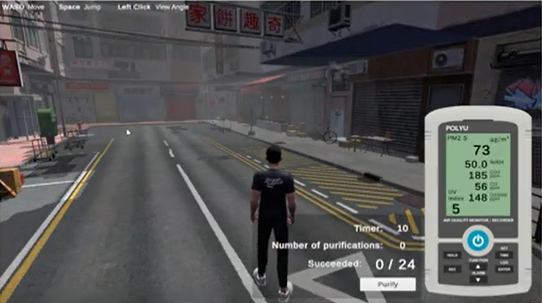
Fig.1 The Unity Game in Saptial.io platform, which was piloted to be used in the science general education subject: ABCT1D09 Greenhouse gases and life. The user guide video refers to this hyperlink
Monitoring the statistics from Spatial.io server
The student engagement statistics for the metaverse game learning will be monitored over the Saptial.io server. To evaluate the quality of learning, we can make use of LA data from the system, including their point of achievement and the time they have joined the game. The data collected will be analysed and compared with the students’ feedback collected over the survey questionnaire.
3. Results and Discussion
3.1. Students’ perception about the pilot gamification introduction
Based on the preliminary results (Table 2), the response rates of the student survey were 39.5% (N = 32) in 2023/24 Semester 2 and 75% (N = 75) in 2024/25 Semester 1. A higher percentage of feedback was obtained in the second pilot semester, indicating improved student participation in the later implementation.
Analysis of students’ perceptions across the two semesters reveals a modest decline in overall satisfaction with the metaverse game. In 2023/24 Semester 2, students reported generally positive experiences, with agreement rates ranging from 72% to 78%. In contrast, agreement rates in 2024/25 Semester 1 decreased by 8%–17%, with the most notable reduction observed in students’ willingness to recommend the game (from 78% to 61%). Although the average ratings across items remained above 3.5, suggesting an overall favorable perception, the decline highlights areas requiring improvement, particularly technical performance (72% to 61%) and engagement (72% to 63%). These quantitative findings are consistent with qualitative feedback provided by a group of students in the second semester.
Overall, both cohorts reported positive perceptions of the metaverse game as a support for learning, though the 2023/24 cohort demonstrated slightly more favorable views. Specifically, students from the 2023/24 cohort rated the game marginally higher in enhancing their learning experience compared with the 2024/25 cohort (2023/24 cohort: M = 3.9, SD = 0.9; 2024/25 cohort: M = 3.8, SD = 0.7). This difference, however, was not statistically significant (t(105) = 1.08, p = 0.28), indicating comparable perceived learning value among cohorts.
Across both semesters, students’ perceptions remained broadly positive, with mean ratings ranging from 3.5 to 4.0 out of 5 and approximately 61% to 78% of students agreed/strongly agreed with the survey items. These results suggest that the metaverse game was generally perceived as enjoyable, educational, and relevant to environmental learning outcomes.
Table 2. Students’ perception about their metaverse game learning
Students’ perception |
% agree/ strongly agree 2023/4 Sem 2 (N=32) |
Mean ± SD |
% agree/ strongly agree 2024/5 Sem 1 (N=75) |
Mean ± SD |
df |
t
|
|
The metaverse game provide enjoyable and immersive gaming experience. |
75% |
3.9±0.9 |
67%
|
3.8±0.7 |
105 |
1.08 |
0.28 |
The metaverse game runs smoothly with minimal technical issues. |
72% |
3.9±1.0 |
61%
|
3.5±0.8
|
105 |
2.01 |
0.05 |
The game encourages and facilitates interaction and collaboration among players. |
75% |
3.9±0.9 |
64%
|
3.6±0.8
|
105 |
1.58 |
0.12 |
The game lets me know the greenhouse emissions from human activities. |
72% |
3.8±0.9 |
64%
|
3.6±0.7
|
105 |
1.28 |
0.20 |
The game effectively conveys the importance of tackling air pollutant from human activities. |
78% |
4.0±0.9 |
67%
|
3.7±0.8
|
105 |
1.47 |
0.14 |
The metaverse game encourages players to actively engage in reducing air pollution during human activities. |
72% |
3.8±1.0 |
63%
|
3.6±0.7
|
105 |
1.24 |
0.22 |
Overall, I will recommend the metaverse game to other students |
78% |
3.9±0.9 |
61%
|
3.7±0.8
|
105 |
3.40 |
0.001 |
Note. Values represent group means (M) and standard deviations (SD). t, df, and p are from independent‑samples t‑tests (equal variances assumed).
Comparative analysis between 2023/24 Semester 2 and 2024/25 Semester 1, findings showed that students in the earlier cohort consistently reported slightly higher agreement levels and mean scores across most dimensions. However, independent‑samples t‑tests indicated that differences in enjoyment and immersion, collaboration, and understanding of air pollutant emission sources and human activities were not statistically significant (p > 0.05). This suggests that the overall learning experience and perceived educational value of the game remained largely stable across cohorts.
An exception was observed in perceived technical performance, where students in 2023/24 reported significantly easier gameplay than 2024/25 cohort (t = 2.01, p = 0.05). This finding suggested that technical limitations became more noticeable in the later implementation, potentially influenced by a larger participant group or differences in students’ digital competence. In addition, a statistically significant decline was found in students’ willingness to recommend the game, with higher ratings in 2023/24 than in 2024/25 (t = 3.40, p = 0.001). Informal student feedback further indicated that the experience could be enhanced by incorporating VR headset compatibility and increased challenge levels.
In summary, the findings demonstrated that the metaverse game was generally well received and effective as a learning tool for promoting environmental awareness, particularly in conveying the importance of reducing air pollution and greenhouse gas emissions. Nevertheless, the results highlighted the importance of maintaining the game technical performance and enhancing challenge to sustain student engagement and willingness to recommend the game, thereby maximizing the long‑term educational impact.
3.2. The statistics from the Spatial.io server and general students’ performance
Table 3 highlights a clear improvement in student engagement and performance between the two semesters. In 2024/5 Semester 1 (second semester), students spent significantly more time interacting with the metaverse game, with total access time increasing from 43,368 to 109,622 seconds and average access time rising from 1,008 to 1,370 seconds.
Table 3. Engagement and performance statistics
-
Statistics
2023/4
Sem 2
2024/5
Sem 1
Total registered students
81
100
Participant number
(% participation)
43
(53.1%)
81
(81%)
Total time access (seconds)
43368
109622
Average time assess (seconds)
1008
1370
Percentage of participants who fully completed the task
44.2%
53.8%
Student performance
(Good to excellent grades)
>80%
>95%
The percentage of participants who fully completed the task also improved, from 44.2% to 53.8%. Moreover, the number of active participants nearly doubled, and the proportion of students achieving good to excellent grades rose from over 80% to over 95%. Interestingly, the 2024/5 cohort not only demonstrated higher engagement (80% vs. 53.1%) but also had a 0.3 higher average grade point improvement. These findings suggest that the increased academic ability and engagement in the later cohort may have contributed to better performance outcomes. However, as noted in perception data, this group reported lower satisfaction with the game. This may be due to their higher expectations and more critical feedback, influenced by their deeper engagement and stronger academic background. The findings suggested the need for continuous refinement of this component to meet the evolving expectations of increasingly capable learners.
4. Conclusion
The implementation of the metaverse game across two academic semesters showed strong educational potential, supported by consistently positive student feedback and noticeable gains in engagement and performance. Although students in 2023/4 Semester 2 reported higher satisfaction than those in 2024/5 Semester 1, the later cohort demonstrated stronger academic performance (GPA 3.48 vs. 3.14) and significantly higher engagement levels (80% vs. 53.1%). Their slightly lower satisfaction may reflect elevated expectations from a more engaged and academically capable group, who may have evaluated the game with greater criticality. Despite this, the 2024/5 cohort achieved substantial improvements in learning outcomes, including higher task completion, longer interaction durations, and a greater proportion of students earning good to excellent grades. Overall, the findings suggest that the metaverse game remains a valuable learning tool, but ongoing updates to its design, technical features, and pedagogical integration are essential. Continued research is needed to validate these preliminary results and examine long‑term impacts.
Ethical Declaration Statement
Ethical approval was obtained from the Institutional Review Board (IRB) of The Hong Kong Polytechnic University (Reference Number: HSEARS20230812001).
Acknowledgments:
The authors would like to thank the financial support from projects from The Hong Kong Polytechnic University (HKPU): (1) Seed fund from Faculty of Science (FS) Teaching Awards 2024 and Department of Applied Biology and Chemical Technology (ABCT); (2) Fund for Innovative Technology-in-Education (FITE) Grant: “Revolutionizing Higher Education through Innovative and Emerging Technologies in Flipped Learning” (FITE/01, 89U1) from Department of Health Technology and Informatics (HTI) and Educational Development Centre (EDC); (3) FLTI seed fund project “Developing a Flipped Learning Signature Showcase” (FLSS2025/IN/07, 48BF); (4) Fund for Innovative Technology-in-Education Grant: “To bridge the education needs and career opportunities for STEM graduates (FITE/07/FS, 89V9); (5) LTC Projects (Project Code: TDG22-25/R2/SEI-4 and TDG22-25/VTL-17) and matching support from Department of Applied Biology and Chemical Technology and Department of Computing.
References
Amirbekova, E., Shertayeva, N., & Mironova, E. (2024). Teaching chemistry in the metaverse: The effectiveness of using virtual and augmented reality for visualization. Frontiers in Education, 8, 1184768. https://doi.org/10.3389/feduc.2023.1184768
Anastasiadis, T., Lampropoulos, G., & Siakas, K. (2018). Digital game-based learning and serious games in education. International Journal of Advances in Scientific Research and Engineering (IJASRE), 4(12), 139–144. https://doi.org/10.31695/IJASRE.2018.33016
Hussain, S., Meehan, K., & Qadir, J. (2024). Editorial: Metaverse in education: Opportunities and challenges. Frontiers in Education, 9, 1411841. https://doi.org/10.3389/feduc.2024.1411841.
İbili, E., Ölmez, M., İbili, A. B., Bilal, F., Cihan, A., & Okumuş, N. (2024). Assessing the effectiveness and student perceptions of synchronous online flipped learning supported by a metaverse-based platform in medical English education: A mixed-methods study. Education and Information Technologies, 29, 18643–18673. https://doi.org/10.1007/s10639-024-12542-0
Jovanović, A., & Milosavljević, A. (2022). VoRtex metaverse platform for gamified collaborative learning. Electronics, 11(3), 317. https://doi.org/10.3390/electronics11030317
Latino, M. E., De Lorenzi, M. C., Arcuti, M., & Corallo, A. (2024). Metaverse in education: What has been done so far? A systematic literature review to map benefits and limitations and to set future research and application directions. In Proceedings of the 16th International Conference on Computer Supported Education (CSEDU 2024), Volume 1 (pp. 735–743). SCITEPRESS – Science and Technology Publications. https://doi.org/10.5220/0012753300003693
Lo, S.-C., & Tsai, H.-H. (2022). Design of 3D virtual reality in the metaverse for environmental conservation education based on cognitive theory. Sensors, 22(21), 8329. https://doi.org/10.3390/s22218329
Ng, P. H. F., Chen, P. Q., Sin, Z. P. T., YeJia, Li, R. C., Baciu, G., Cao, J., & Li, Q. (2023). From classroom to metaverse: A study on gamified constructivist teaching in higher education. In H. Xie et al. (Eds.), Lecture Notes in Computer Science: Vol. 14409. ICWL 2023 (pp. 92–106). Springer. https://doi.org/10.1007/978-981-99-8385-8_8
Ng, P. H. F., Har, F. T. K., Tai, K. S. K., Leung, W. C. L., Chen, P. Q., Zhou, L., Lam, J. K. H., Law, H. K. W., Li, C., Lam, Y. Y., & Li, Q. (2024, August). Gamified constructivist teaching in metaverse: Revolutionizing language learning in university via an immersive experience. In Proceedings of the 2nd Annual IEEE International Conference on Metaverse Computing, Networking, and Applications (MetaCom 2024) (pp. 151–157). Hong Kong SAR, China. https://doi.org/10.1109/MetaCom62920.2024.00035
Ouariachi, T., Olvera-Lobo, M. D., & Gutiérrez-Pérez, J. (2017). (a) Analyzing climate change communication through online games: Development and application of validated criteria. Science Communication, 39(1), 10–44. https://doi.org/10.1177/1075547016687998. (b) Gaming climate change: Assessing online climate change games targeting youth produced in Spanish. Procedia - Social and Behavioral Sciences, 237, 1053–1060. https://doi.org/10.1016/j.sbspro.2017.02.154
Pfirman, S., O’Garra, T., Bachrach Simon, E., Brunacini, J., Reckien, D., Lee, J. J., & Lukasiewicz, E. (2021). “Stickier” learning through gameplay: An effective approach to climate change education. Journal of Geoscience Education, 69(2), 192–206. https://doi.org/10.1080/10899995.2020.1858266
Ritterbusch, G. D., & Teichmann, M. R. (2023). Defining the Metaverse: A systematic literature review. IEEE Access, 11, 12368–12389. https://doi.org/10.1109/ACCESS.2023.3241809
Rungnapeepornphong, P., Kanjug, I., Singma, S., & Moeikao, N. (2023). The development of constructivist flipped classroom learning environments on metaverse to promote problem solving and reasoning skills in mathematics of secondary education grade 10th students. IIAI Letters on Institutional Research, 3, Article LIR142. https://doi.org/10.52731/lir.v003.142
Sánchez-López, I., Roig-Vila, R., & Pérez-Rodríguez, A. (2022). Metaverse and education: The pioneering case of Minecraft in immersive digital learning. Profesional de la Información, 31(6), e310610. https://doi.org/10.3145/epi.2022.nov.10
Spiegel, S., & Wang, H. (2024). Exploring climate science in the metaverse: Interactive storytelling in immersive environments for deep learning and public engagement. In E. Coren & H. Wang (Eds.), Storytelling to accelerate climate solutions (pp. 365–378). Springer. https://doi.org/10.1007/978-3-031-54790-4_17
Wu, J. S., & Lee, J. J. (2015). Climate change games as tools for education and engagement. Nature Climate Change, 5(5), 413–418. https://doi.org/10.1038/nclimate2566
Yuehchin. (2017). Delivering Training with Virtual Classrooms. Available: https://www.uncannyowl.com/delivering-training-virtual-classrooms/