Graduate employment monitoring system at Técnico Lisboa
Graduate employment monitoring system at Técnico Lisboa
Graduate employment monitoring system at Técnico Lisboa
João David Fernandes
Quality Management Area, Instituto Superior Técnico, University of Lisbon, Portugal.
How to cite: Fernandes, J. D. (2026). Graduate employment monitoring system at Técnico Lisboa. In: 12th International Conference on Higher Education Advances (HEAd’26). Valencia, 15-18 June 2026. https://doi.org/10.4995/HEAd26.2026.21655
Abstract
Understanding how graduates transition into working life and their current professional situation, is vital information for any higher education institution. It provides important insight for internal stakeholders to make necessary adjustments to ensure that their graduates are succeeding in terms of employment. Técnico Lisboa, the engineering school of the University of Lisbon has been developing employment monitoring activities since the late 90’s. In recent years, it has consolidated a monitoring system that provides relevant yearly indicators and statistics on graduate employment, for both recent and longer-term graduates. The system also articulates with other dimensions, such as quality management and assurance. This article describes in detail how the system works, how it has evolved and how it relates with other elements in the Técnico structure and its main results. Técnico typically displays exceptional levels of professional placement, usually with over 95% of recent graduates employed.
Keywords: Graduate employment; Graduate surveys; Employability; Labour market; Quality indicators.
1. Introduction
Instituto Superior Técnico, or Técnico Lisboa, is the engineering school of the University of Lisbon. It was founded in 1911 as an independent teaching institution and was later integrated in the Technical University of Lisbon in 1930. After the 2013 merge between the Technical University of Lisbon and University of Lisbon, Técnico Lisboa became one of the constituent institutions of the current University of Lisbon.
Prior to the 1990s, primary data regarding graduate employability was virtually non-existent; all available information on the topic was derived from official government statistics. During the second half of the 1990s, the governing bodies of Técnico Lisboa recognized a need to understand how graduates were transitioning from academia to the professional world. Since then, several management bodies voiced the need to collect solid, reliable and objective information on how such transition was happening and what kind of employment and employment conditions Técnico graduates were meeting. This prompted the first initiatives, which consisted of alumni surveys that did not target a specific timeframe concerning graduation years or periods.
2. Evolution
After a few pilot efforts, the first structured initiative was launched in 1998, with results published the following year. This research was primarily survey-based, which followed all formalities and format of an academic study. Nevertheless, the resulting report – while detailed – was considered interesting but ineffective from a management and decision-making point of view. This critique prompted a period of reflection and sparse similar initiatives. It wasn’t until 2008 that the management board of Técnico decided to centralize all related activities by establishing the IST Employability Observatory (OEIST). Under this new formal structure, graduate monitoring transitioned from occasional surveys to an annual cycle, eventually expanding to include both recent graduates and five-year alumni. During this period, the methodologies, goals, communication and dissemination, cooperation with other services and governing bodies were on a basis of trial and error until a satisfactory, efficient and effective process was reached. This occurred in 2015 when OEIST consolidated its current system of graduate employment monitoring based on graduate trackin surveys that seek to track employment destinations and early careers of higher eduation graduates (Schomburg, 2003).
3. Graduate employment monitoring system at Técnico Lisboa
Despite its name, the OEIST does not focus on the concept of employability. This stems from a common misunderstanding—confusing the personal traits and characteristics that enable an individual to find, keep, and perform a job with the descriptive, situational employment status (e.g., contract type, salary, or location). As a concept, employability commands little consensus. Rather, it is interpreted in the light of each interest group’s concerns (Sin, Neave, 2016) So, the employability observatory focuses on the descriptive, situation employment status, using a set of objective indicators and goals based primarily on questionnaire surveys.
One should point out that no matter how consolidated a certain methodology is, a structure such as OEIST must always be aware that the labour market is in constant turmoil and what once were stable patterns, are now evolving and changing faster. It must also be aware of its own internal context both in terms of how universities are being managed and overall higher education context.
No matter how proven a methodology is, OEIST must adapt to a labor market defined by volatility rather than stability. This requires a dual awareness: keeping pace with rapid external shifts and navigating the internal complexities of modern university management and the evolving higher education sector.
Generally speaking, OEIST activities are based on four principles:
Objectivity: this means that all outputs are produced by eliminating redundancy in order to focus exclusively on the specific needs of the Técnico community. As an advisory and consultancy body rather than a traditional research unit, OEIST prioritizes the collection of robust, representative data over exhaustive datasets. This focus ensures that our insights are both scalable and immediately applicable to the populations we analyze. This is achieved by having significant response rates to the graduate surveys and having short and objective questionnaires is a key element for that goal.
Transparency: by ensuring that all OEIST processes are detailed and specified for public review and consultation, the aim is designed for scrutiny, offering an occasion for feedback and constructive criticism and also as a resource to those wishing to develop similar activities in their own institutions.
Collaboration: dedicated to collaborative excellence, OEIST works alongside similar bodies to facilitate the exchange of best practices and foster continuous mutual learning.
Dissemination: OEIST is responsible for disseminating information, developing the corresponding dissemination channels and ensuring that the information reaches its intended recipients.
The following sections provide a detailed overview of our activities and their corresponding methodologies.
3.1. Target populations
The whole monitoring process is focused mainly on 2nd cycle graduates, because, on average, around 90% of Técnico 1st cycle graduates enroll in a 2nd cycle programme. The transition to an active life therefore typically occurs after obtaining a 2nd cycle degree. 1st cycle surveys exist but are focused on motives for not continuing studies at Técnico. 3rd cycle graduates are not yet monitored in a structured manner, only a few pilot-surveys have been conducted to date. A further relevant stakeholder group consists of employers of Técnico graduates. Although surveyed with less regularity, their feedback is crucial for institutional assessment. An overview of all surveyed populations is provided in figure 1.
3.1.1. 2nd Cycle graduates
As mentioned previously, 2nd cycle graduates constitute the bulk of OEIST’s work, since the large majority of 1st cycle graduates continue directly into a 2nd cycle. To capture a comprehensive snapshot of different career stages, we analyze two different cohorts: recent-graduates (surveyed twelve to sixteen months after graduation) and graduates (surveyed six years after graduation).
The analysis of labour market entry and the initial phase career phase is conducted on cohorts referred to as recent graduates. The timeframe between graduation and the survey allows sufficient time for graduates to enter the labour market ensuring “tangible” and measurable data. These recent graduate cohorts represent the core of OESIST’ workload, as the data from these cohorts respond to all requests for indicators, both internal and external, as well as to evaluation and accreditation processes.
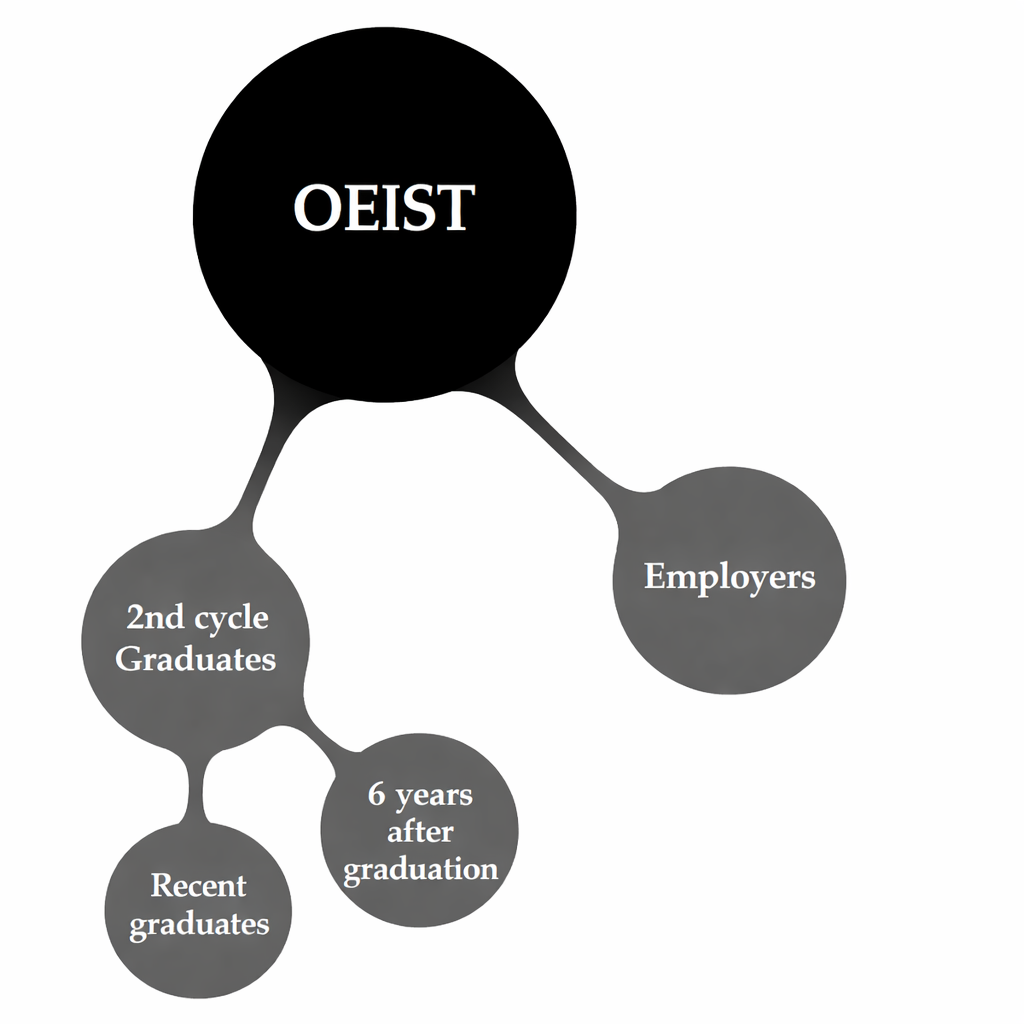
Figure 1: Target-populations at Técnico Lisboa
Previous analyses of cohorts with 2 and 3 years of professional experience indicated that there is no significant difference between them and recent graduates. For this reason, it was decided to survey cohorts that completed their degree 6 earlier, prioritizing career progression over initial labour market entry. In addition to assessing the impact of the time factor on professional status, the analysis of these cohorts also enables a longitudinal analysis which, together with the survey of final-year students, makes it possible to follow the same cohort from the final stage of their degree through to the point at which they are already established in the labour market.
3.1.2. Employers
Employer perspectives are gathered by surveying companies that employ Técnico graduates. The focus of these surveys was exclusively on the average remuneration and salary differences of Téacnico graduates relative to peer institutions. The type of population surveyed and the sensitivity of the subject (remuneration) made the instrument ineffective and of limited applicability. Currently the focus is on the employers’ perceptions of the performance and competencies of Técnico graduates, in order to provide internal stakeholders with valuable insights to drive improvements and corrective measures. These activities are conducted in close collaboration with Técnico’s Transfer Technology Office, which manages all corporate partnerships.
3.2. Dimensions, indicators and application
As mentioned in a previous section, to ensure good response rates, the surveys must be short and must be completed, on average, under 5 minutes. This means the analysis model. with its respective dimensions and indicators, must guarantee a balance between collecting needed information and keeping the surveys short. This model (table 1), consists of 4 main dimensions and a set of fixed indicators. The core indicators used for official monitoring are fixed and consistently applied to generate a reliable snapshot of our graduates' professional situation.
Table 1: Dimensions and indicators
Dimension |
Fixed Indicators |
Applied to |
Professional situation |
|
Recent-graduates & Graduates |
|
||
|
||
|
||
|
|
Recent-graduates |
Transition to working life |
||
Professional career |
|
Graduates |
Performance |
|
Employers |
Satisfaction |
|
Recent-graduates & graduates |
Other indicators are sometimes included, such as the proportion of graduates who are employed in their area of graduation (academia/profession match), but these are done in a rotating basis and to address a specific information need at a specific time. The fixed indicators are the ones that provide the outputs of the monitoring system, made available through short reports, leaflets and online dashboards (Figure 2). These are also some of the most common dimensions used in this sort of analysis, graduate tracking surveys seek to track the employment destinations and early careers of higher education. Graduate surveys are useful tools for a multi-dimensional evaluation of employability in higher education describing the quality of jobs, the time it took to find a job, graduates’ job satisfaction, and the match between graduates’ skills and job requirements (Teichler, 2011).
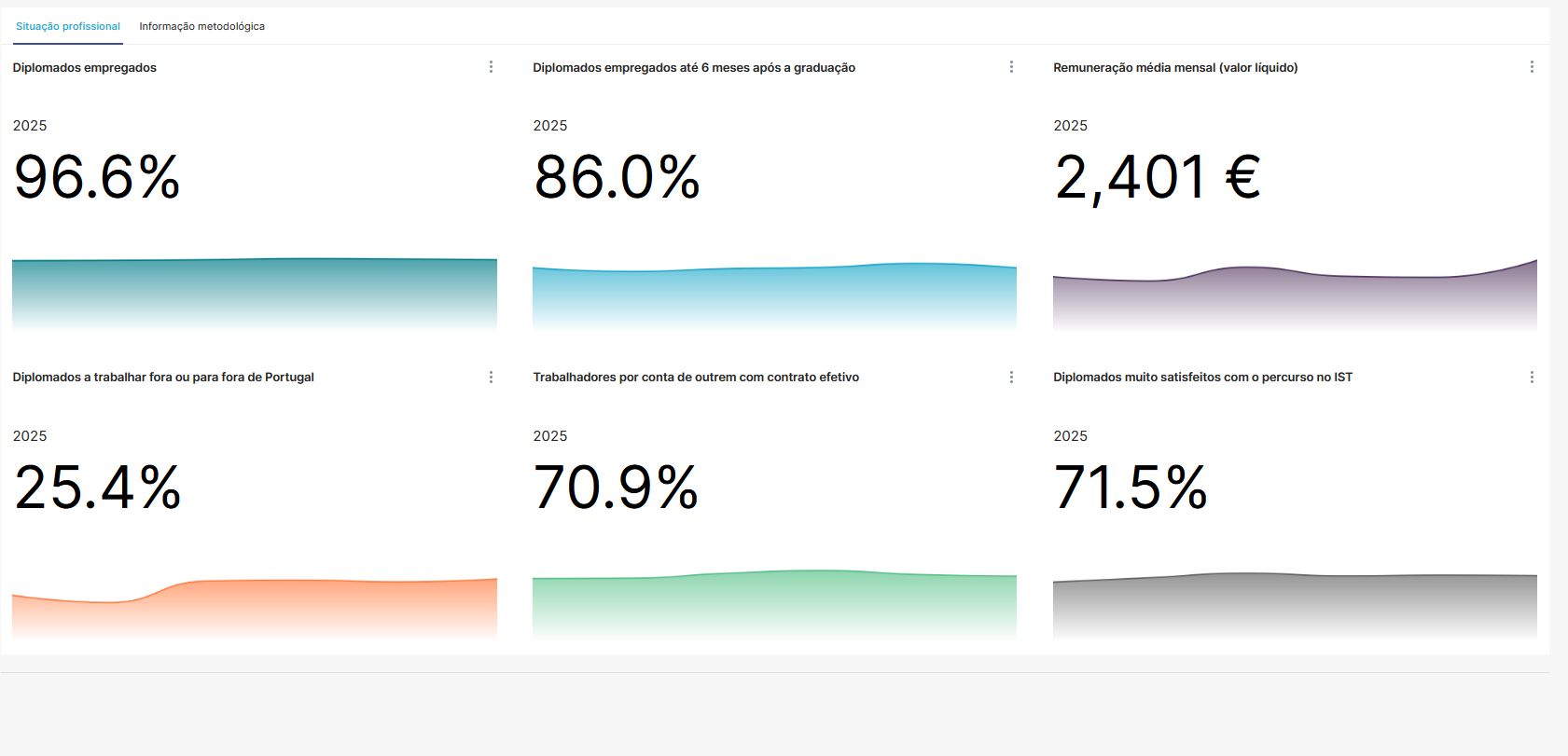
Figure 2: OEIST Data dashboard
Regarding survey frequency, the need to have yearly indicators leads to an annual survey of 2nd cycle recent-graduates. To prevent survey fatigue, the 6 years after graduation survey is conducted every two years, so that these graduates are only surveyed every 4 years. On table 2 it is possible to verify that the 2023 recent graduate cohort that was surveyed in 2025, will only be surveyed again in 2029 as graduates.
Table 2: OEIST Surveys timeline
|
Survey Year |
|||||
Population |
2025 |
2026 |
2027 |
2028 |
2029 |
2030 |
Graduation cohort |
||||||
Recent graduates |
2023 |
2024 |
2025 |
2026 |
2027 |
2028 |
Graduates |
2019 |
- |
2021 |
- |
2023 |
- |
This focus on employment rather than employability must be done cautiosly in order to avoid an absence of acting on student employability attributes improvement. Making inferences from employment rates, and also employment characterization alone, can divert energy from needed corrective and improvement measures (Harvey, 2001). Therefore, this system and overall methodology must be implemented in a way that other relevant studies on employability, in the sense of propensity to exhibit attributes that employers anticipate as necessary (Harvey, 1998), are conducted periodically in a complementary way
4. Conclusion
In summary, although this system is structured and goal-oriented, it is hardly rocket science. Guided by a set of principles, the professional situation monitoring system relies on surveys based on graduates’ self-assessment in order to evaluate their situation (Riihelainen, 2016). These surveys follow proper construction and application methods, adhere to a specific timeline and organizational structure, and ensure the production and dissemination of results aligned with the institution’s strategic goals and legal obligations. This is more than enough to provide objective and structured information to help governing bodies and relevant stakeholders take meaningful action, when needed, regarding how Técnico graduates access and perform in the labor market.
References
Harvey, L. (2001). Defining and measuring employability. Quality in Higher Education, 7(2), 97–109. https://doi.org/10.1080/13538320120059990
Harvey, L., Geall, V., & Moon, S. (1998). Work experience: Expanding opportunities for undergraduates. Centre for Research into Quality.
Riihelainen, J.. (2016). Structural indicators on graduate employability in Europe – 2016. Publications Office of the European Union.
Sin, C., & Neave, G. (2016). Employability deconstructed: Perceptions of Bologna stakeholders. Studies in Higher Education, 41(8), 1447–1462. https://doi.org/10.1080/03075079.2014.977859
Schomburg, H. (2003). Handbook for graduate tracer studies. Centre for Research on Higher Education and Work, University of Kassel. http://www.uni-kassel.de/wz1/proj/edwork/mat/handbook_v2.pdf
Teichler, U. (2011). Bologna – Motor or stumbling block for the mobility and employability of graduates? In H. Schomburg & U. Teichler (Eds.), Employability and mobility of bachelor graduates in Europe: Key results of the Bologna Process (pp. 3–41). Sense Publishers.