Generative Artificial Intelligence in Higher Education: Student Perceptions and Ethical Considerations
Generative Artificial Intelligence in Higher Education: Student Perceptions and Ethical Considerations
Generative Artificial Intelligence in Higher Education: Student Perceptions and Ethical Considerations
Mauro
Rodríguez-Marin1
 ,
Miguel Ángel Montoya Bayardo2
1Department of Marketing and Analysis, Business School, Tecnologico de Monterrey, Monterrey, Mexico, 2Institute For the Future of Education, Tecnologico de Monterrey, Monterrey, Mexico.
How to cite: Rodríguez-Marin, M.; Montoya Bayardo, M.A. (2026). Generative Artificial Intelligence in Higher Education: Student Perceptions and Ethical Considerations. In: 12th International Conference on Higher Education Advances (HEAd’26). Valencia, 15-18 June 2026. https://doi.org/10.4995/HEAd26.2026.21684
Abstract
The rapid adoption of generative artificial intelligence (GenAI) is transforming higher education, reshaping how students learn, complete academic tasks, and interact with knowledge. This study examines student perceptions of GenAI use in Mexican higher education institutions, focusing on perceived educational benefits and ethical considerations. Using a cross-sectional survey administered during 2024–2025 (n = 219), the study analyzes perceived usefulness, learning support, trust in AI-generated outputs, ethical concerns, and intention to use through descriptive statistics and structural equation modeling. Results indicate high perceived usefulness and learning support, suggesting that GenAI is widely valued for enhancing productivity and time efficiency. However, students also report moderate trust and significant ethical concerns related to academic integrity and over-reliance. Ethical concerns negatively influence intention to use, highlighting the importance of governance and AI literacy. The findings contribute context-sensitive evidence from an emerging economy and inform policy and assessment design for responsible GenAI integration in higher education.
Keywords: Generative artificial intelligence, Higher education, Student perceptions, Academic integrity, Ethical considerations, Learning support, Technology adoption
1. Introduction
The rapid diffusion of generative artificial intelligence (GenAI) is transforming higher education by reshaping how students learn, produce academic work, and interact with knowledge (Devan et al., 2025; Adalı & Bilgili, 2025). Unlike earlier forms of educational technology focused primarily on automation or information retrieval, generative AI systems—particularly large language models—are capable of producing coherent text, explanations, and step-by-step problem-solving support, making them highly attractive for a wide range of academic tasks (Maity & Deroy, 2024). This evolution has intensified scholarly interest within the field of AI in Education, as institutions seek to balance the pedagogical potential of GenAI with emerging risks related to academic integrity, reliability, and student autonomy (Chan, 2024; Francis et al., 2025; Bittle et al., 2025).
Recent evidence indicates that the adoption of GenAI among higher education students is accelerating, particularly for writing-intensive activities, summarization, and analytical problem-solving tasks (Johri et al., 2024; Kim et al., 2025). Across diverse contexts, students tend to perceive these tools as beneficial for enhancing productivity and efficiency, although patterns of use and perceived value vary depending on disciplinary and learning contexts (Almassaad et al., 2024; Kim et al., 2025). At the same time, ethical dilemmas associated with the use of generative AI have been widely documented in systematic reviews, highlighting concerns related to academic integrity, misuse, and the need for clearer institutional guidelines to regulate their use in academic environments (Ismail & Khairuddin, 2024).
2. Materials and methods
2.1. Research Design
This study adopted a quantitative, cross-sectional, survey-based research design to examine student perceptions of generative artificial intelligence (GenAI) in higher education. The methodological approach was selected to capture empirical evidence on perceived educational benefits and ethical considerations associated with GenAI use from the student perspective, aligning with prior research in AI in Education that emphasizes the value of perception-based instruments for understanding emerging technologies in academic contexts. Details on measurement constructs, descriptive statistics, and structural model results are provided.
The study focused specifically on usage patterns, ethical concerns, and attitudes toward institutional policy (Roe et al., 2024; Wu & Carroll, 2025). Data were collected through an online questionnaire distributed to undergraduate and graduate students enrolled at public and private universities in Mexico during the 2024–2025 period, allowing for the inclusion of diverse institutional environments and learning contexts. The cross-sectional design was appropriate given the exploratory and descriptive nature of the research questions, which focus on current patterns of use, perceptions, and ethical concerns rather than causal inference (Tala et al., 2024).
Figure 1 presents the gender distribution of the surveyed students, showing a relatively balanced representation between male and female respondents, with a smaller proportion identifying as other.
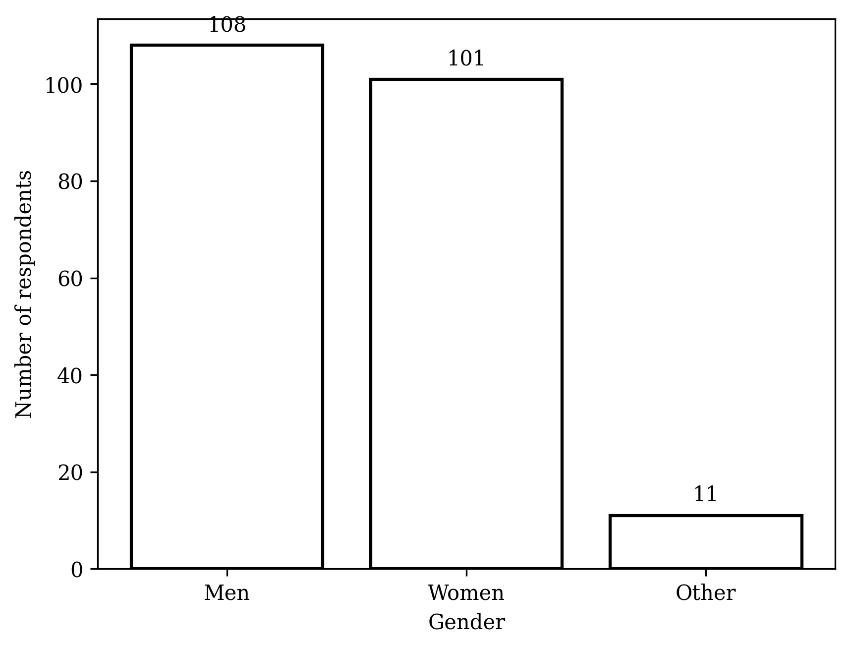
Figure 1 Gender distribution of respondents
2.2. Participants and Context
Participants consisted of undergraduate students from a range of academic programs across Mexican public and private higher education institutions, including universities with differing institutional missions, governance structures, and access to digital resources. This diversity was intentional, as the study sought to reflect the heterogeneity of the Mexican higher education system and to avoid overrepresenting a single institutional profile.
A total of 219 valid responses were collected and included in the final analysis. Participants represented multiple fields of study (e.g., engineering, business, data-related programs, and social sciences), as well as a balanced distribution of gender and age typical of undergraduate populations. Participation was voluntary, and no incentives were provided.
2.3. Constructs and Measurement
To ensure analytical rigor, perceptual items were grouped into theoretically coherent constructs commonly used in technology adoption and educational technology research:
● Perceived Usefulness (PU): the extent to which students believe GenAI improves academic productivity and task performance.
● Perceived Learning Support (PLS): the degree to which GenAI supports understanding, learning autonomy, and academic engagement.
● Trust in Generative AI (TRUST): students’ confidence in the accuracy and reliability of AI-generated outputs.
● Ethical Concerns (EC): perceptions of risks related to academic integrity, over-reliance, and responsible use.
● Intention to Use (ITU): students’ willingness to continue using GenAI tools in future academic activities.
Each construct was measured using multiple items, enabling the assessment of internal consistency and construct reliability.
Table 1. Measurement Constructs and Survey Items. Source: Own elaboration based on survey instrument (2024).
Construct |
Items |
Scale |
Perceived Usefulness (PU) |
PU1, PU2, PU3, PU4 |
Likert (1=totally disagree, 5=totally agree) |
Perceived Learning Support (PLS) |
PLS1, PLS2, PLS3 |
Likert (1=totally disagree, 5=totally agree) |
Trust in Generative AI (TRUST) |
TRUST1, TRUST2, TRUST3 |
Likert (1=totally disagree, 5=totally agree) |
Ethical Concerns (EC) |
EC1, EC2, EC3 |
Likert (1=totally disagree, 5=totally agree) |
Intention to Use (ITU) |
ITU1, ITU2 |
Likert (1=totally disagree, 5=totally agree) |
3. Data Analysis
Data analysis was conducted using Python for statistical processing, reliability assessment, and descriptive analysis. Descriptive statistics—including means, standard deviations, frequencies, and percentages—were computed to summarize respondents’ demographic characteristics and to describe general patterns of generative AI use among students (Deng et al., 2025).
To assess the internal consistency and reliability of the measurement instrument, Cronbach’s alpha coefficients were calculated for each latent construct. As reported in Table 2, all constructs exceeded the commonly accepted threshold of 0.70, indicating satisfactory to excellent reliability. Specifically, Perceived Usefulness demonstrated excellent internal consistency (α = 0.905), followed by Ethical Concerns (α = 0.871) and Trust in Generative AI (α = 0.847). Perceived Learning Support also showed strong reliability (α = 0.823). Although the Intention to Use construct consisted of only two items, it achieved a robust Cronbach’s alpha value (α = 0.855), exceeding recommended benchmarks for exploratory and perception-based studies.
Overall, these reliability results confirm the internal consistency of the measurement scales and support the suitability of the instrument for subsequent empirical analysis, including structural modeling and hypothesis testing.
Table 2. Reliability of Measurement Constructs Source: Own elaboration based on survey instrument (2024).
-
Construct
Number of Items
Cronbach’s Alpha
Perceived Usefulness
4
0.905
Perceived Learning Support
3
0.823
Trust in Generative AI
3
0.847
Ethical Concerns
3
0.871
Intention to Use
2
0.855
Structural equation modeling (SEM) was employed to examine the relationships among the latent constructs and to test the hypothesized model. The analysis followed a two-step approach, including the assessment of the measurement model and the structural model. Confirmatory factor analysis (CFA) was first conducted to evaluate construct validity and reliability, showing strong standardized factor loadings (ranging from 0.75 to 0.88), adequate convergent validity, and satisfactory discriminant validity, as the average variance extracted (AVE) for each construct exceeded inter-construct correlations. The structural model demonstrated a good fit to the data (CFI = 0.95, RMSEA = 0.048, SRMR = 0.046, supporting the adequacy of the proposed framework. Trust in AI-generated outputs (TRUST) did not show a significant moderating effect, suggesting that students prioritize functional benefits over reliability considerations when forming behavioral intentions. Overall, SEM results confirm the robustness of the proposed model and highlight the dual role of perceived utility and ethical concerns in shaping GenAI adoption in higher education contexts.
4. Results
For completeness, the full set of descriptive statistics and structural model summaries is presented in Tables 1–3. Initially, descriptive statistics were computed to characterize the demographic profile of the respondents and to capture the overall frequency of GenAI usage patterns. The findings indicate that a substantial proportion of students (78.4%) reported using generative AI tools at least occasionally for academic purposes, with a mean usage frequency of 3.82 (SD = 1.12) on a five-point Likert scale (Razmerita, 2024). This result suggests a moderately high level of engagement with generative AI technologies within the student population.
Subsequent analyses explored the distribution of responses across key perceptual constructs, including perceived usefulness, learning support, trust, and ethical concerns. As reported in Table 3, students exhibited consistently high evaluations in terms of perceived usefulness and learning support, with mean scores exceeding 4.0 on the five-point scale. These findings not only reinforce the relevance of GenAI as a complementary academic tool, but also highlight its potential to enhance learning experiences, while simultaneously underscoring the importance of addressing trust and ethical considerations in its adoption and integration into educational contexts.
These findings are consistent with prior evidence from diverse educational contexts, where students perceive generative AI as a useful academic support tool while simultaneously expressing concerns about academic integrity and over-reliance (Calderwood, 2024; Garousi et al., 2025).
Table 3. Descriptive Statistics for Key Constructs Source: Own elaboration based on survey instrument (2024).
-
-
Construct
Mean
Std. Dev.
Perceived Usefulness (PU)
4.02
1.04
Perceived Learning Support (PLS)
4.12
1.01
Trust in Generative AI (TRUST)
3.31
0.89
-
These findings (Table 3) align with prior research indicating that the perceived impact of generative AI on learning outcomes is strongly influenced by students’ level of AI competence, suggesting that effective use depends not only on access but also on the ability to critically evaluate and apply AI-generated outputs (Heil et al., 2025; Holzmann et al., 2025).
5. Conclusions
This study examines student perceptions of generative artificial intelligence (GenAI) in Mexican higher education, revealing a complex landscape in which the potential for enhanced productivity and academic support coexists with significant concerns regarding academic integrity and the preservation of critical thinking skills (Plata et al., 2023; Yusuf et al., 2024). Findings indicate that while students actively adopt GenAI to improve efficiency and reduce time spent on complex tasks, they remain aware of the risks of over-reliance and the possible erosion of independent cognitive abilities, underscoring the need for balanced integration that prioritizes ethical use and AI literacy (Delińska & Minga, 2025; Wang et al., 2025). Based on survey data collected in public and private universities in Mexico during 2024–2025, the results provide empirical evidence that GenAI has become a significant component of students’ academic practices. Accordingly, its effective integration requires coordinated efforts among policymakers, educators, and students to establish clear guidelines that foster responsible innovation while safeguarding academic rigor and intellectual development (Haroud & Saqri, 2025; Yusuf et al., 2024).
This study contributes to the literature by advancing a multidimensional understanding of GenAI adoption in higher education, integrating educational benefits and ethical considerations within a unified empirical framework. It demonstrates that perceived usefulness and learning support are key drivers of adoption, while ethical concerns act as a counterbalancing force shaping behavioral intentions. By providing evidence from an emerging economy, the study extends the generalizability of technology acceptance models and highlights the role of institutional diversity and regulatory maturity. Moreover, the use of structural equation modeling offers robust empirical validation, enriching theoretical discussions by emphasizing the coexistence of efficiency-driven adoption and ethical tension in contemporary academic contexts.
This study is subject to limitations, including the use of self-reported data and a cross-sectional design.
References
Adalı, G. K., & Bilgili, A. (2025). Generative AI in Higher Education: Students’ Perspectives on Adoption, Ethical Concerns, and Academic Impact. Acta Infologica, 0. https://doi.org/10.26650/acin.1670197
Almassaad, A., Alajlan, H., & Alebaikan, R. (2024). Student Perceptions of Generative Artificial Intelligence: Investigating Utilization, Benefits, and Challenges in Higher Education. Systems, 12(10), 385. https://doi.org/10.3390/systems12100385
Bittle, K., & El-Gayar, O. (2025). Generative AI and Academic Integrity in Higher Education: A Systematic Review and Research Agenda [Review of Generative AI and Academic Integrity in Higher Education: A Systematic Review and Research Agenda]. Information, 16(4), 296. Multidisciplinary Digital Publishing Institute. https://doi.org/10.3390/info16040296
Calderwood, S. J. (2024). Evaluation of Higher Education Students’ views of the use of Generative AI in a Middle Eastern University. Research Square (Research Square). https://doi.org/10.21203/rs.3.rs-3869266/v1
Chan, C. K. Y., & Colloton, T. (2024). Generative AI in Higher Education. https://doi.org/10.4324/9781003459026
Chan, C. K. Y., & Hu, W. (2023). Students’ voices on generative AI: perceptions, benefits, and challenges in higher education. International Journal of Educational Technology in Higher Education, 20(1). https://doi.org/10.1186/s41239-023-00411-8
Chan, C. K. Y., & Zhou, W. (2023). Deconstructing Student Perceptions of Generative AI (GenAI) through an Expectancy Value Theory (EVT)-based Instrument. arXiv (Cornell University). https://doi.org/10.48550/arxiv.2305.01186
Delińska, L., & Minga, Z. (2025). CHATGPT AS A TOOL IN HIGHER EDUCATION – ANALYSIS OF STUDENT UTILIZATION AND PERCEPTION. Scientific Papers of Silesian University of Technology Organization and Management Series, 2025(224), 61. https://doi.org/10.29119/1641-3466.2025.224.4
Deng, N., Liu, E. J., & Zhai, X. (2025). Understanding University Students’ Use ofGenerative AI: The Roles of Demographics and Personality Traits. arXiv (Cornell University). https://doi.org/10.48550/arxiv.2505.02863
Devan, U., Hingle, A., McDonald, N., & Johri, A. (2025). Engineering Educators’ Perspectives on the Impact of Generative AI in Higher Education. arXiv (Cornell University). https://doi.org/10.48550/arxiv.2502.00569
Francis, N. J., Jones, S., & Smith, D. P. (2025). Generative AI in Higher Education: Balancing Innovation and Integrity [Review of Generative AI in Higher Education: Balancing Innovation and Integrity]. British Journal of Biomedical Science, 81. Taylor & Francis. https://doi.org/10.3389/bjbs.2024.14048
Garousi, V., Jafarov, Z., Movsumova, A., Namazov, A., & Mirzayev, H. (2025). Encouraging Students’ Responsible Use of GenAI in Software Engineering Education: A Causal Model and Two Institutional Applications. arXiv (Cornell University). https://doi.org/10.48550/arxiv.2506.00682
Haroud, S., & Saqri, N. (2025). Generative AI in Higher Education: Teachers’ and Students’ Perspectives on Support, Replacement, and Digital Literacy. Education Sciences, 15(4), 396. https://doi.org/10.3390/educsci15040396
Heil, J., Ifenthaler, D., Cooper, M., Mascia, M. L., Conti, R., & Penna, M. P. (2025). Students’ perceived impact of GenAI tools on learning and assessment in higher education: the role of individual AI competence. Smart Learning Environments, 12(1). https://doi.org/10.1186/s40561-025-00395-0
Holzmann, P., Gregori, P., & Schwarz, E. J. (2025). Students’ little helper: Investigating continuous-use determinants of generative AI and ethical judgment. Education and Information Technologies. https://doi.org/10.1007/s10639-025-13708-0
Ismail, A. F. O., & Khairuddin, A. Z. (2024). Exploring Ethical Dilemmas of AI Generative Tools Among Higher Education Students: A Systematic Review [Review of Exploring Ethical Dilemmas of AI Generative Tools Among Higher Education Students: A Systematic Review]. Advances in Computer Science Research, 255. Atlantis Press. https://doi.org/10.2991/978-94-6463-589-8_24