Evolution of Mathematics Students’ Educational Strategies in the Digital Era: Autonomy, AI Support, and the Crisis of Critical Thinking
Evolution of Mathematics Students’ Educational Strategies in the Digital Era
Evolution of Mathematics Students’ Educational Strategies in the Digital Era: Autonomy, AI Support, and the Crisis of Critical Thinking
Iwona
Krzyżanowska
 ,
Aleksandra Nowel
Faculty of Mathematics, Physics and Informatics of the University of Gdańsk, Poland.
How to cite: Krzyżanowska, I.; Nowel, A. (2026). Evolution of Mathematics Students’ Educational Strategies in the Digital Era: Autonomy, AI Support, and the Crisis of Critical Thinking. In: 12th International Conference on Higher Education Advances (HEAd’26). Valencia, 15-18 June 2026. https://doi.org/10.4995/HEAd26.2026.21695
Abstract
Academic mathematics education is undergoing a profound transformation driven by digitalization and the rapid diffusion of artificial intelligence (AI). Empirical research conducted among students of Mathematics and Mathematical Modelling and Data Analysis at the University of Gdańsk reveals the predominance of autonomous learning strategies supported by digital tools and AI, accompanied by a declining role of the academic lecturer. While these strategies enhance efficiency and accessibility, the findings also expose substantial deficits in students’ ability to critically verify mathematical proofs. The analysis highlights an emerging crisis of critical thinking and underscores the urgent need to reconceptualize the role of the educator in higher mathematics education.
Keywords: Mathematics education; artificial intelligence; critical thinking; learning autonomy.
1. Introduction
Academic mathematics education is currently experiencing a paradigmatic shift in which traditional master–apprentice models of instruction are increasingly displaced by autonomous, technology-mediated learning strategies (Siemens, 2005). Within this evolving landscape, digital platforms and AI-based tools have become integral components of students’ everyday study practices. An analysis of the attitudes and behaviors of students enrolled in Mathematics and Mathematical Modelling and Data Analysis (MMAD) programs at the University of Gdańsk allows for the delineation of a contemporary learner profile characterized by strong affective engagement with the discipline and a pragmatic, efficiency-oriented approach to knowledge acquisition.
A substantial majority of students (87–92%) report a pronounced affinity for mathematics, motivated by the internal logic of the discipline, the intellectual satisfaction derived from problem solving, and the limited reliance on rote memorization. At the same time, the transition from secondary to academic mathematics presents significant adaptive challenges, particularly with respect to abstraction and theoretical reasoning. Empirical data indicate that independent work constitutes the core of students’ learning process related to class preparation: approximately 81% of respondents identify self-study as their primary mode of work. Within this paradigm, AI tools such as ChatGPT, Gemini, and Copilot have emerged as the preferred “first line of support,” largely due to their immediate availability and responsiveness.
The result is a hybrid learner profile—highly autonomous, technologically oriented, and embedded in horizontal peer networks—accompanied by a progressive weakening of the academic teacher’s role as a guide in problem solving. However, while digital optimization accelerates the pace of work, it also entails the risk of weakening the deep cognitive structures required for the rigorous verification of mathematical proofs. Drawing on empirical evidence, this paper examines these dynamics and situates them within a broader discussion of critical thinking in the age of AI (Selwyn, 2021).
2. Research Methodology
To capture the complexity of students’ educational strategies, a mixed-methods research design was employed, integrating quantitative survey data with qualitative case analysis and the examination of open-ended responses. This triangulated approach enabled the systematic comparison of students’ self-reported practices with their demonstrated verification competencies.
2.1. Research Sample and Organization
The study was conducted during the academic years 2024/2025 and 2025/2026 at the Faculty of Mathematics, Physics and Informatics of the University of Gdańsk. The research population comprised first-year students enrolled in Mathematics and MMAD programs. Detailed analyses were performed for 58 Mathematics students and 74 MMAD students, yielding a total sample of 132 participants. The sampling strategy was purposive, focusing on students actively engaged in the didactic process through regular participation in lectures and classes.
2.2. Research Tools
The principal research instrument was an original questionnaire consisting of seven items with a mixed structure, combining closed multiple-choice questions with open-ended prompts. The questionnaire addressed three core analytical dimensions:
Motivational and Affective Profile (Questions 1, 2, 6). These items examined students’ reasons for choosing their field of study (nominal scale), their level of fondness for mathematics (ordinal scale ranging from “very high” to “none”), and their reflections on the discrepancy between expectations and academic reality. Together, these measures provided insight into the emotional context of the learning process.
Learning Strategies and Resource Utilization (Questions 3, 4). Students reported the amount of time devoted to self-study (quantitative variable) and identified their preferred learning methods. Question 4 combined a predefined list of options (e.g., lecture notes, self-study, office hours) with an open-ended component that allowed respondents to specify particular digital platforms and AI tools, thereby enabling the identification of dominant technological resources.
Didactic Support and Perceived Barriers (Questions 5, 7). These items explored the frequency and motivations underlying students’ use—or avoidance—of office hours, as well as their perceived needs for improving the organization and effectiveness of the educational process.
2.3. Case Study Design
To complement
declarative data, a didactic experiment was embedded within the
Topology I course. Students were presented with an erroneous proof
generated by an AI system (ChatGPT) concerning the closedness of a
set in the space
 endowed with the supremum metric. Their task was to assess the
validity of the argument. This exercise was designed to test the
hypothesis of cognitive offloading and to evaluate students’
critical verification skills in a concrete mathematical context.
3. Educational Strategies: Autonomy and the Dominance of Digital Resources
Independent work constitutes the foundation of contemporary study practices among Mathematics and MMAD students. Self-study is identified as the primary method of preparation by 80.8% of Mathematics students and 80.9% of MMAD students, typically supplemented by the analysis of lecture notes (65.4% and 57.4%, respectively). Importantly, this autonomy does not imply isolation from external informational resources. On the contrary, it is closely intertwined with intensive reliance on digital platforms, which students perceive as their most accessible and efficient sources of support.
Digital resources are favored primarily because of their immediacy and flexibility. Students most frequently report using platforms such as YouTube (including channels like 3Blue1Brown), eTrapez, Matemaks, Khan Academy, and StackExchange. The role of AI tools is expanding rapidly: beyond result verification, students increasingly treat AI systems as interactive partners that facilitate learning in private, without the perceived pressure of direct interaction with academic staff. Survey responses explicitly describe AI-assisted learning as a substitute for office hours, justified by the belief that “if something is unclear, it can be learned at home with AI.”
This model of learning fosters a sense of psychological safety but simultaneously exemplifies the phenomenon of cognitive offloading, whereby responsibility for analytical processing is delegated to technological systems (Risko & Gilbert, 2016). In higher mathematics—where rigorous proof is central—such offloading risks eroding deep conceptual understanding and the ability to critically evaluate logical arguments (Hanna & de Villiers, 2012).
4. Transformation of the Lecturer’s Role and Peer Collaboration
The data reveal a striking disparity between students’ declared evaluations of academic support and their actual engagement with teaching staff. The academic lecturer increasingly functions as an “authority of last resort,” consulted only sporadically. Office hours, in particular, are markedly underutilized: only 15.4% of Mathematics students and 21.3% of MMAD students report attending them, typically in high-stakes situations such as immediately prior to examinations.
Students attribute their avoidance of office hours primarily to psychological and organizational barriers, including shyness, stress, scheduling conflicts, and commuting constraints. In contrast, horizontal peer collaboration emerges as a highly valued and frequently utilized learning strategy. Between 30% and 60% of respondents, depending on the program, identify joint problem solving with peers as one of the most effective forms of study. Peer groups offer a low-threshold, non-hierarchical environment conducive to open exchange and mutual support—features that students often perceive as lacking in formal consultations with lecturers.
Notably, students who do attend office hours almost unanimously rate them as highly effective, citing improved understanding of complex material and more efficient use of study time. This juxtaposition points to a clear paradox: a form of support widely recognized as pedagogically valuable remains largely avoided in practice.
5. Crisis of Critical Thinking: Evidence from Metric Topology
Despite widespread enthusiasm for AI-assisted learning, uncritical reliance on such tools exposes significant deficiencies in students’ analytical competencies. While digital systems dramatically accelerate the generation of potential solutions, they also encourage a shift in focus from the proving process to the final result. In practice, AI is often treated as a collaborator in problem solving, yet this collaboration frequently degenerates into the unexamined acceptance of algorithmically generated reasoning.
This tendency is particularly problematic in advanced mathematics, where correctness is inseparable from the meticulous validation of each logical step. Observations of students’ learning processes indicate a limited capacity to critically assess machine-generated arguments, which are often perceived as inherently authoritative. Consequently, AI “hallucinations” may be accepted as valid proofs, undermining the development of rigorous mathematical reasoning.
6. Case Study:
Closedness of a Set in
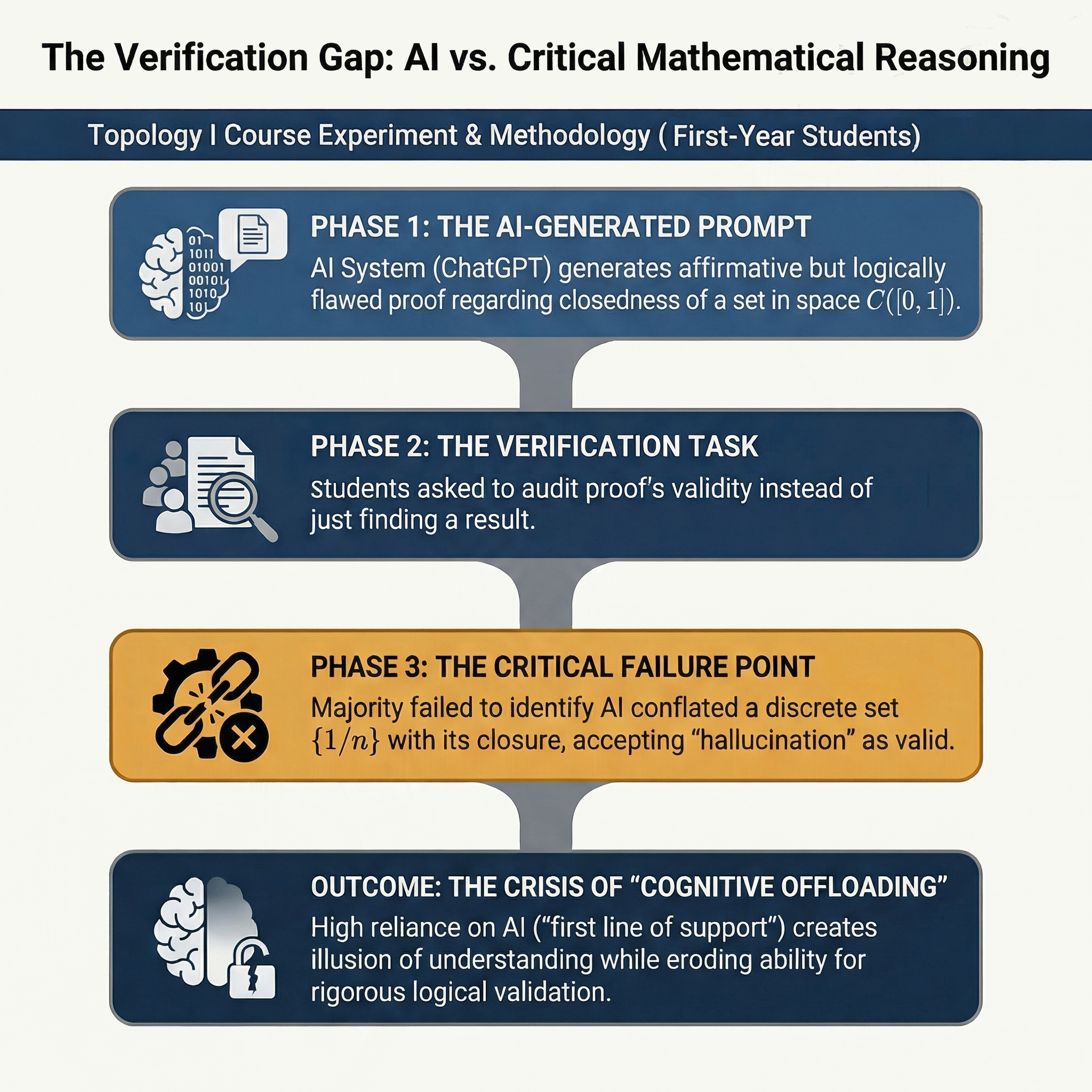
Figure 1. The Verification Gap: AI vs. Mathematical Critical Reasoning
6.1. Context and Definitions
Consider the
metric space
 of continuous functions on the interval
 ,
equipped with the supremum metric
 .
Define the subset
 .
The question is
whether
 is closed in
 .
6.2. Erroneous AI-Generated Proof
An AI system
(ChatGPT) produced an affirmative answer, arguing that if a sequence
 converges uniformly to
 ,
then the zeros
 converge to zero, implying—by continuity—that
must also vanish at some point of the form
 .
This conclusion is logically flawed: convergence of the points
 to
 does not imply that the limit function vanishes at any element of the
discrete set
 .
The argument erroneously conflates this set with its closure.
6.3. Students’ Verification
The experiment involved two groups of second-year undergraduate mathematics students, totaling 42 participants. After the initial reading, not a single student identified the logical fallacy. The participants accepted the proof as mathematically sound, despite it contradicting fundamental principles they had previously studied. The error was only brought to light during a structured discussion with an academic teacher. After the error was identified and understood, the students struggled to formulate a correct version of the proof. This difficulty suggests that the AI’s "ready-made" reasoning acted as a cognitive anchor, making it challenging for students to abandon the flawed logic and reconstruct a rigorous mathematical argument from scratch. This outcome illustrates how the perceived authority of “ready-made” AI-generated text can suppress independent analytical judgment.
7. From Generation to Validation: Implications for Didactics
The deficits revealed by the topology case study suggest that traditional instructional models focused on reproducing correct solution schemas are no longer adequate in an environment saturated with AI-generated content. As students increasingly rely on AI as a form of cognitive prosthesis, mathematics education must deliberately promote cognitive onloading—systematic engagement with verification and justification.
Three interrelated pedagogical directions emerge:
AI-generated false proofs should be incorporated as standard instructional materials. Tasks requiring students to identify and explain errors reposition them from passive recipients to active auditors of reasoning.
Assessment should prioritize the quality of justification over the correctness of results. Oral defenses, reflective commentaries, and metamathematical explanations can counteract superficial acceptance of AI outputs.
Given the low utilization but high perceived value of office hours, alternative formats—such as brief post-class consultations and formally supported peer groups—should be integrated into the didactic structure.
8. Conclusion
While mathematics education cannot rival AI in the speed of solution generation, it must assert its authority in the domain of verification. The capacity to identify errors in algorithmically generated proofs is a fundamental indicator of genuine mathematical competence. Without systematic cultivation of critical verification skills, students risk acquiring only a digital simulacrum of understanding.
The integration of digital technologies into mathematics education is both inevitable and, from the students’ perspective, desirable. Nevertheless, the central challenge remains the illusion of understanding fostered by rapid and polished AI-generated solutions. The topology case study serves as a cautionary example: without sustained emphasis on rigor, critical thinking, and validation, students may become passive consumers of results, forfeiting the very precision of thought that defines mathematics.
References
Bond, M., Khosravi, H., De Laat, M., Bergdahl, N., Negrea, V., Oxley, E., Pham, P., Chong, S. W., & Siemens, G. (2024). A meta systematic review of artificial intelligence in higher education: A call for increased ethics, collaboration, and rigour. International Journal of Educational Technology in Higher Education, 21, Article 4. https://doi.org/10.1186/s41239-023-00436-z
Hanna, G., & de Villiers, M. (Eds.). (2012). Proof and proving in mathematics education: The 19th ICMI study. Springer. https://doi.org/10.1007/978-94-007-2129-6
Risko, E. F., & Gilbert, S. J. (2016). Cognitive offloading. Trends in Cognitive Sciences, 20(9), 676–688. https://doi.org/10.1016/j.tics.2016.07.002
Selwyn, N. (2021). Education and technology: Key issues and debates (3rd ed.). Bloomsbury Academic. https://www.bloomsbury.com/uk/education-and-technology-9781350145559/
Siemens, G. (2005). Connectivism: A learning theory for the digital age. International Journal of Instructional Technology and Distance Learning, 2(1), 3–10. http://www.itdl.org/Journal/Jan_05/article01.htm