EU vs. Extra-EU Erasmus Mobility: Evidence from Italian Students
EU vs. Extra-EU Erasmus Mobility
EU vs. Extra-EU Erasmus Mobility: Evidence from Italian Students
Valeria Caviezel1, Anna Maria Falzoni2, Mara Grasseni2
1Department of Management, University of Bergamo, Italy, 2Department of Economics, University of Bergamo, Italy.
How to cite: Caviezel, V.; Falzoni, A.M..; Grasseni, M. (2026). EU vs. Extra-EU Erasmus Mobility: Evidence from Italian Students In: 12th International Conference on Higher Education Advances (HEAd’26). Valencia, 15-18 June 2026. https://doi.org/10.4995/HEAd26.2026.21704
Abstract
Students’ engagement in Erasmus programmes is driven by a multifaceted combination of motivations, including academic interests, personal development, language acquisition, socio-cultural experiences, and future career prospects. Early exposure to international travel and tourism may increase students’ inclination toward Extra-EU destinations, which can be perceived as appealing not only for their educational opportunities but also for the richness of their cultural experiences. This study investigates how students’ motivations, worries, family background, and individual characteristics influence the decision to apply for Erasmus mobility in Extra-EU countries rather than within the EU. The empirical analysis is based on survey data collected in 2024 and 2025 from students enrolled in degree programmes at the University of Bergamo.
Keywords: Erasmus+ KA171 program; study abroad motivations; study abroad worries; higher education.
1. Introduction
Student participation in Erasmus programmes reflects a complex set of motivations that encompass academic, personal, linguistic, socio-cultural, and career-oriented dimensions. Early empirical research grounded in the push-pull framework highlights that mobility decisions are driven by both “push” forces originating in the home environment and “pull” factors associated with host environments (Mazzarol and Soutar, 2002; González et al.2011; Gutema at al. 2024). Motivational analyses of Erasmus students have consistently identified academic and professional development as principal drivers of mobility, but even students’ desire for personal growth and intercultural competence emerges as a salient intrinsic incentive (Van Mol and Timmerman, 2014; Lesjak et al. 2015; Cuzzocrea, V.; Krzaklewska, 2023). However, international students’ mobility may be hampered by the presence of barriers that higher education students face. Therefore, it is important to look at the fears and apprehension of students that retain them in their home country (Souto-Otero et al. 2013).
Research on international student mobility identifies distance between home and host countries as a key factor influencing the intensity of mobility flows, reflecting transport costs, psychological barriers and cultural affinities (Rodríguez González et al., 2011). In the classical intra-European Erasmus context, shorter geographic distances and cultural proximity have historically facilitated student choices of nearby host countries, reducing logistical and financial frictions associated with mobility. However, as the Erasmus+ KA171 program broaden the range of eligible destinations to include extra-European partners, the geography of student choices becomes more heterogeneous, and a broad strand of literature focused on the factors that prompt students to choose one particular country and avoid others (Barnett et al. 2016; Kondakci et al. 2018). For Italian students in particular, broader structural changes in travel behaviour, such as the proliferation of low-cost airlines and changing preferences towards global experiential learning, can mitigate the “distance cost” traditionally associated with non-European destinations. Increased exposure to international travel and tourism at a young age may render extra EU destinations more attractive, both for their academic offerings and cultural enrichment potential.
To the best of our knowledge, in the literature there are no studies that have directly examined the factors that encourage or discourage participation in mobility programs in more distant destinations. The existing studies have largely treated destination choice as a homogeneous process, without systematically distinguishing between intra-European and extra-European mobility. Our paper contributes to the debate by investigating whether, and to what extent, the factors commonly recognized as key determinants of studying abroad remain valid when the chosen destination is geographically and culturally distant from the country of origin. In doing so, we examine the role of students’ motivations, perceived risks, family background, and individual characteristics in shaping the choice between applying for Erasmus mobility to EU destinations (all EU countries, Norway, Iceland, Liechtenstein, North Macedonia, Turkey, Serbia, United Kingdom and Switzerland) versus Extra-EU (other countries). The empirical analysis relies on survey data collected in 2024 and 2025 among students enrolled in degree programmes at the University of Bergamo.
2. Survey and Data on International Study Mobility
To investigate whether, and to what extent, students’ individual characteristics and background factors influence the propensity to apply for an Extra-EU Erasmus programme, which involves destinations that are geographically and culturally more distant from Italy than those within the European Union, we use data collected by an on-line survey administered to students who apply to international mobility. We collected data on 809 students at a medium size Italian university, the University of Bergamo, that applied for an Erasmus+ or Extra-EU Program in the last two academic years (2024/25 and 2025/26 a.y.).
2.1. The Questionnaire
Our questionnaire consists of two sections: “Decision to apply for a study period abroad” (section B) and “Concerns before the departure” (section C). In addition, we ask a few questions (section A) regarding the student’s personal details: gender, field and degree (bachelor or master) of study, parents’ level of education, parents’ occupation, own or family’s previous experience abroad, number of semesters abroad and Erasmus+ or Extra-EU Program.
In section B Decision to apply for a study period abroad, we ask students to account for their decision to apply to study abroad, i.e., to increase employment opportunities in Italy or abroad, to enrich their CV, to experience something new (curiosity), to improve foreign language proficiency, to get in touch with the culture of the host country, external influence (family or friends) and own/family's ability to fund study abroad.
In section C Concerns before the departure, we ask students to express their concerns about different teaching methodologies, attending classes and taking exams in a foreign language, to get in relationship with foreign students ; also, in aligning their progresses and the average marks in the home university, to complete all bureaucratic procedures within the required timeframe. We ask about the cost of living in the host country and living away from home and friends.
2.2. Data Description
Our survey involves 809 students (62.4% females, 37.6% males) who applied to spend one or two semesters abroad for an Erasmus+ (68.4%) or Extra-EU (31.6%) Program during the a.y. from 2024/2025 to 2025/26. Students belong to all five fields of study offered by the University of Bergamo: Foreign Languages (25.2%), Economics & Management (30.7%), Engineering (16%), Humanities & Social Sciences (23.6%), Law (4.4%). They are mainly Italian (more than 95.6%) and apply to study abroad during the bachelor (59.4%) or the master (40.6%).
Furthermore, a quarter of the responding students had previous experiences abroad (26.5%), 22.2% had an indirect knowledge of it through family members (mother, father, sisters or brothers) and the others (51.3%) had not previously carried out study experiences abroad.
Concerning parents’ level of education and parents’ employment status, in Table 1 we can see the distribution for each response category in percentage. Just about 25% of mothers and 19% of fathers have a university degree, about half have a level of education equal to the high school and the remaining parents a lower level.
Table 1. Parents’ level of education: distribution of response categories (%)
Level of education |
Mother |
Father |
Primary school |
2.3 |
2.6 |
Lower secondary school |
22.4 |
28.8 |
Upper secondary school |
50.6 |
49.6 |
University degree |
24.7 |
19.0 |
From the point of view of the economic condition, almost all fathers receive an income from work or pension (93.9%); for mothers, however, only 73.4%.
Table 2. How important were the following factors in the decision to apply for a period of study abroad? Distribution of response categories (%)
Item |
1 |
2 |
3 |
4 |
Curiosity / desire to experience something new |
0 |
5.3 |
21.9 |
72.8 |
Desire to challenge yourself |
0.7 |
8.0 |
27.5 |
63.8 |
Desire to meet people of other nationalities |
1.2 |
15.3 |
32.6 |
50.9 |
Desire to learn about a foreign culture |
1.2 |
12.1 |
34.9 |
51.8 |
Improvement of foreign-language proficiency |
1.6 |
6.4 |
22.0 |
70.0 |
Desire to experience new teaching methods |
4.6 |
28.8 |
34.4 |
32.2 |
Opportunity to explore new topics |
9.5 |
29.5 |
32.6 |
28.4 |
Enhancement of CV |
3.1 |
13.2 |
32.0 |
51.7 |
Increased employment opportunities abroad |
5.0 |
16.7 |
28.7 |
49.6 |
Regarding the items of the section B of the questionnaire used to describe motivations to study abroad and the choice of the host university, Tables 2 shows the percentages for each response category where 1=not at all/slightly, 2=fairly, 3=very and 4=extremely. The most important factors in the decision to apply for a period of study abroad are the desire to live a new experience (72.8% extremely agree) and improving language skills (70.0% extremely agree); furthermore, the desire to challenge yourself (63.8% extremely agree), the desire to learn a foreign culture (51.8%) and improving CV (51.7%).
Table 3 shows the percentage for each response category (where 1=not at all/slightly, 2=moderately and 3=extremely) on the items regarding concerns about a period of study abroad. In 4 items does the highest percentage respond to level 3: finding suitable accommodation (45.1%), being assigned to a host institution of your preference (38.7%), ensuring compatibility of your study plan (34.4%) and managing the experience at financial level (30.0%).
Table 3. With the upcoming period abroad in mind, how concerned are you about the following factors? Distribution of response categories (%)
Item |
1 |
2 |
3 |
Attending classes in a foreign language |
55.6 |
35.2 |
9.2 |
Taking exams in a foreign language |
41.0 |
43.0 |
16.0 |
Adapting to a different teaching methodology |
59.1 |
33.9 |
7.0 |
Adjusting to a different university organization |
46.0 |
41.4 |
12.6 |
Ensuring compatibility of your study plan |
21.2 |
44.4 |
34.4 |
Interacting with international students |
58.0 |
31.8 |
10.2 |
Keeping up with the requirements of your home study plan |
36.3 |
38.1 |
25.6 |
Being assigned to a host institution of your preference |
22.6 |
38.7 |
38.7 |
Finding suitable accommodation |
15.2 |
39.7 |
45.1 |
Managing the experience at financial level |
35.4 |
34.6 |
30.0 |
Living away from your family |
55.7 |
31.3 |
13.0 |
Living away from your circle of friends |
53.1 |
32.4 |
14.5 |
3. Methodology
The analysis is grounded in the hypothesis that stronger motivations – both personal and learning-relate – are positively associated with the probability of choosing an Extra-EU destination, while higher levels of perceived worries are expected to deter students from selecting mobility options outside the European Union. To empirically test these hypotheses, we estimate the following model:

The dependent variable is a binary
indicator equal to one if student i applied for the Extra-EU call,
either exclusively or jointly with the EU call, and zero otherwise.
Personal Motivations and Learning Motivations are composite
indicators constructed as the average of questionnaire items
capturing motivations related to personal characteristics and
academic or learning objectives, respectively. Analogously, Personal
Worries and Learning Worries measure perceived concerns associated
with an international experience and are defined as the average of
items referring to personal and academic-related worries. The vector
 includes a set of control variables commonly identified as key
determinants of student mobility choices, namely department of
enrolment, gender, citizenship, previous international experience,
place of residence, academic ranking score, income bracket, level of
study (bachelor or master), and mother’s educational attainment.
Time fixed effects are included to account for cohort-specific
factors, while
 denotes
the idiosyncratic error term. Given the binary nature of the
dependent variable, equation (1) is estimated using a probit
specification.
4. Results
Table 4 presents the estimated marginal effects obtained from the probit specification in equation (1). Student mobility towards more geographically and culturally distant destinations appears to be driven primarily by personal motivations rather than by learning-related motivations. Higher levels of personal motivation are associated with an increase of approximately 11 percentage points in the probability of applying for an Extra-EU mobility programme relative to applying for an Erasmus experience within the European Union. By contrast, learning-related motivations do not significantly affect the likelihood of choosing destinations that are geographically and culturally distant from Italy. Focusing on perceived worries, the results reveal a different pattern. In this case, learning-related worries are negatively correlated with the outcome variable. Concerns about difficulties in adapting to different teaching methodologies, completing examinations, or the risk of delaying or downgrading academic performance upon return to Italy reduce the probability of choosing an Extra-EU Erasmus programme by approximately 9 percentage points compared to an EU destination.
Turning to the other control variables, we find a strong association between the field of study and the outcome variable. Our results indicate that, relative to students enrolled in Humanities departments, students in all other fields at the University of Bergamo display a higher probability of applying for an Extra-EU Erasmus programme. Students who have already undertaken a study or mobility experience abroad exhibit a probability of choosing an Extra-EU Erasmus programme that is approximately 7 percentage points higher than that of their counterparts without prior international experience. Regarding the area in which the students live, the results indicate that only students originating from other Italian provinces display a higher willingness to undertake an Erasmus experience in a non-EU country. Finally, the other control variables related to family background and financial constraints, as well as gender, level of study and ranking score are not significantly correlated with our outcome. A possible explanation for the lack of significance of some of these factors, such as income or grade point average, is that they likely influence the ex-ante decision to undertake a study abroad experience, but not the ex-post choice of destination.
Table 4. Marginal effects of estimation
Variables Extra-EU Program |
dy/dx |
std error |
|
|
|
Personal_Worries |
-0.0186 |
(0.0423) |
Learning_Worries |
-0.0923 |
(0.0452) |
Personal_Motivations |
0.107 |
(0.0375) |
Learning_Motivations |
-0.0171 |
(0.0330) |
2. Engineering |
0.124 |
(0.0544) |
3. Business & Economics |
0.0750 |
(0.0421) |
4. Foreign Languages |
0.201 |
(0.0439) |
2. Yes, other relatives |
0.0662 |
(0.0419) |
3. Yes, myself |
0.0727 |
(0.0397) |
2. Female |
0.0467 |
(0.0372) |
2. Bachelor |
0.0127 |
(0.0380) |
2. Province of Bergamo |
0.00269 |
(0.0516) |
3. Other Italian province |
0.169 |
(0.0826) |
4. Foreign country |
-0.0296 |
(0.141) |
5. Other Lombardy province |
0.0566 |
(0.0541) |
2. Italian citizenship |
0.0948 |
(0.106) |
2. Mother’s education (Diploma) |
-0.0175 |
(0.0397) |
3. Mother’s education (Degree) |
-0.0370 |
(0.0461) |
Ranking score |
0.000562 |
(0.000995) |
2. Middle income brackets |
0.0379 |
(0.0474) |
3. High income brackets |
-0.00244 |
(0.0482) |
2025. Year dummy |
0.00105 |
(0.0349) |
Observations |
809 |
|
Note: Marginal effects of probabilistic regressions are reported. Dependent variable: dummy variable equal to 1 if the student applies for an Extra-EU programme, and 0 otherwise. Robust Standard errors in parentheses. *** p<0.01, ** p<0.05, * p<0.1
To further investigate the relationship between students’ motivations and concerns and the choice of an Extra-EU Erasmus programme, we interact the variables capturing personal motivations and learning-related worries with selected individual characteristics. In particular, we interact motivations and concerns with variables that are not statistically significant in the estimates of equation (1).
Figure 1 reports the marginal effects of the interaction between these two explanatory variables and the field of study in which the student is enrolled. The results show that, for students enrolled in Engineering and Foreign Languages, personal motivations are positively and significantly associated with the probability of choosing an Extra-EU destination. In contrast, students in Business and Economics and in the Humanities appear to be more strongly influenced by learning-related concerns when considering an Extra-EU mobility experience.
Another noteworthy finding emerges when disaggregating the results by gender (Figure 2). Personal motivations are associated with an increase of approximately 18% in the probability of applying for an Extra-EU destination rather than an EU one, but this effect is observed exclusively among male students. In contrast, learning-related concerns exhibit a negative association with the probability of applying for an Extra-EU mobility programme only among female students, leading to a reduction of about 13% in the likelihood of applying to an Extra-EU destination.
The results of the interaction between motivational and concern-related variables and the mother’s level of education are reported in Figure 3. Personal motivations are associated with a higher probability of applying to the Extra-EU call rather than the EU call, but this effect emerges exclusively among students whose mothers have a high level of education. Moreover, the magnitude of this association increases with the mother’s educational attainment. Conversely, learning-related concerns are negatively associated with the probability of applying for an Extra-EU mobility experience only among students whose mothers hold a university degree or higher.
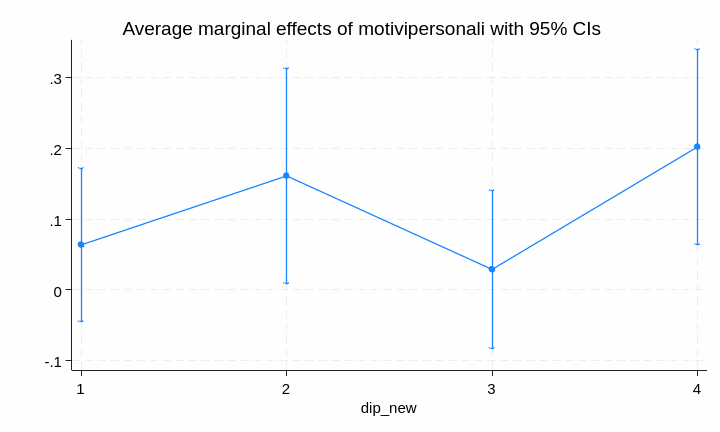
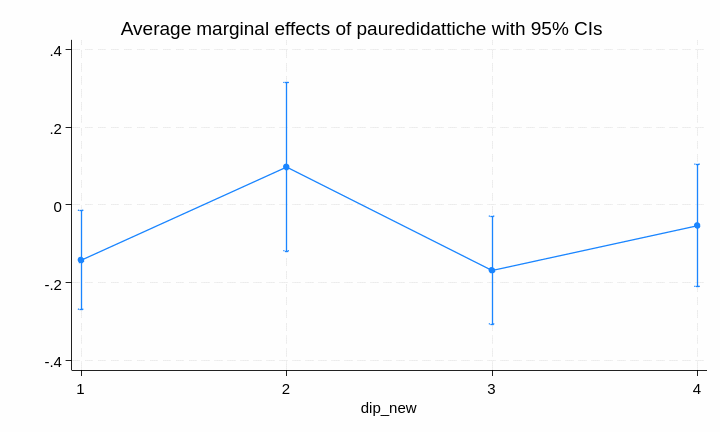
Figure 1. Personal Motivation and learning worries by field of study
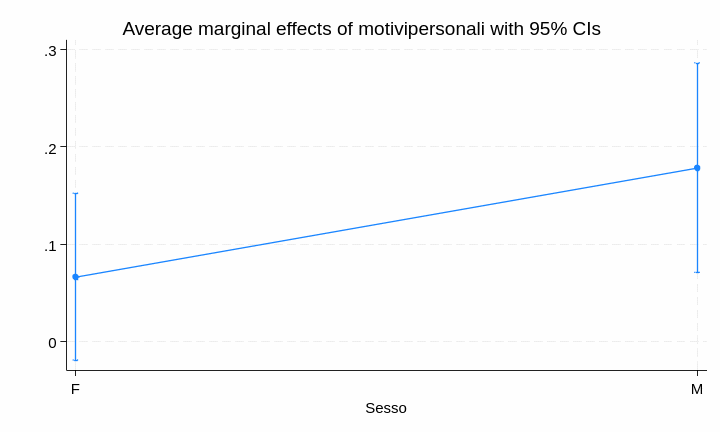
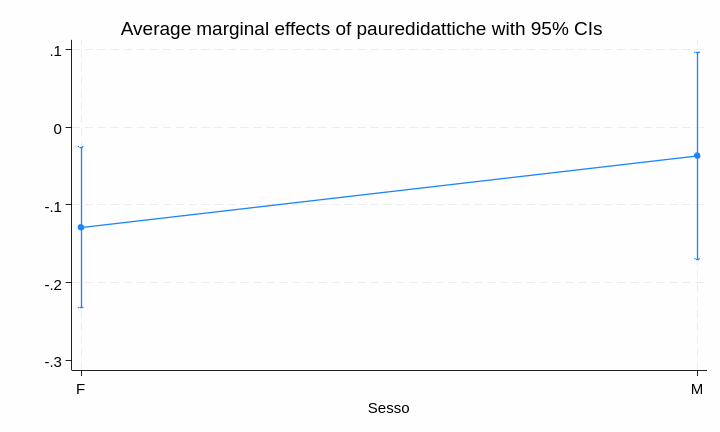
Figure 2. Personal Motivation and learning worries by gender
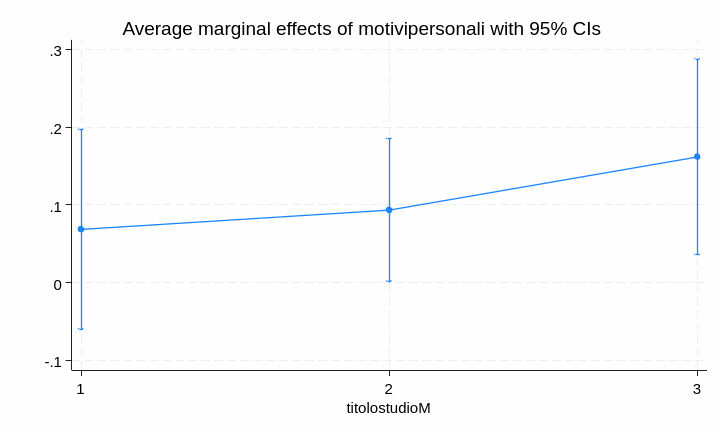
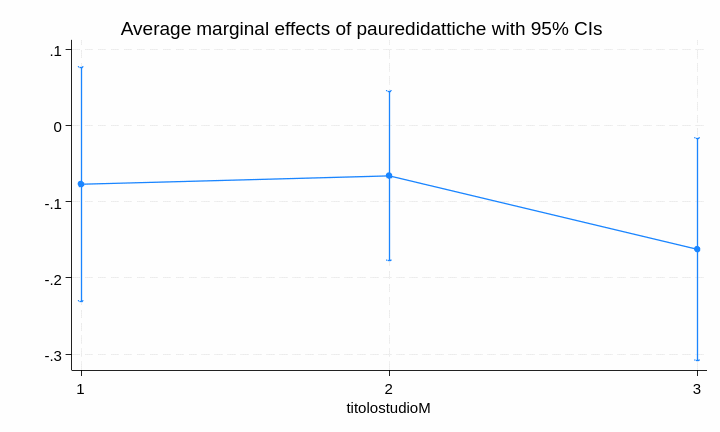
Figure 3. Personal Motivation and learning worries by mother’s education
5. Conclusions
The paper focuses on the role of students’ motivations and perceived worries, in shaping the choice between applying for Erasmus mobility to Extra-EU versus EU destinations. Focusing on data collected in 2024 and 2025 among students enrolled in degree programmes at the University of Bergamo, our findings, in line with the literature (Souto-Otero et al. 2013; Daly, 2011; Schnepf, 2022), suggest that, ceteris paribus, study experiences in countries outside Europe are primarily driven by strong personal motivations, while they are discouraged by concerns related to academic performance and learning outcomes. A better understanding of the phenomenon can support universities and policymakers in designing more effective student support initiatives and fostering broader global engagement, as well as in guiding decisions on international agreements. This is particularly relevant for small and medium sized universities, such as the University of Bergamo, where internationalization beyond the EU entails greater demands on institutional resources. Unfortunately, the data were collected only at the University of Bergamo. However, the Bergamo context is comparable to that of many provinces in Northern Italy, and the findings, albeit with caution, may also reflect the preferences of students in similar provincial settings. Future research should extend the period of analysis and include a survey administered to students upon their return from their mobility experience.
References
Barnett, G. A., Lee, M., Jiang, K., Park, H. W. (2016). The flow of international students from a macroperspective: a network analysis. Journal of Comparative and International Education, 46(4), 533–559.
Cuzzocrea, V., Krzaklewska, E. (2023). Erasmus students’ motivations in motion: understanding super-mobility in higher education. Higher Education, 85, 571–585.
Daly, A. (2011). Determinants of participating in Australian university student exchange programs. Journal of Research in International Education, 10(1), 58-70.
González, C. R., Mesanza, R. B., Mariel, P. (2011). The determinants of international student mobility flows: An empirical study on the Erasmus programme. Higher Education, 62(4), 413–430.
Gutema, D. M., Pant, S., Nikou, S. (2024). Exploring key themes and trends in international student mobility research —A systematic literature review. Journal of Applied Research in Higher Education, 16(3), 843–861.
Kondakci, Y., Bedenlier, S., Zawacki-Richter, O. (2018). Social network analysis of international student mobility: uncovering the rise of regional hubs. Higher Education 75, 517–535.
Lesjak, M., Juvan, E., Ineson, E.M. et al. (2015). Erasmus student motivation: Why and where to go? Higher Education 70, 845–865.
Mazzarol, T., Soutar, G.N. (2002), “Push‐pull” factors influencing international student destination choice. International Journal of Educational Management, 16(2), 82–90.
Rodríguez González, C., Bustillo Mesanza, R., Mariel, P. (2011). The determinants of international student mobility flows: an empirical study on the Erasmus programme. Higher Education 62, 413–430.
Schnepf, S. V., Bastianelli, E., Blasko, Z. (2022). What can explain the socioeconomic gap in international student mobility uptake? Similarities between Germany, Hungary, Italy, and the UK. European Educational Research Journal, 23(4), 479–502.
Souto-Otero, M., Huisman, J., Beerkens, M., de Wit, H., VujiĆ, S. (2013). Barriers to International Student Mobility: Evidence from the Erasmus Program. Educational Researcher, 42(2), 70-77. https://doi.org/10.3102/0013189X12466696.
Van Mol, C., Timmerman, C. (2014). Should I Stay or Should I Go? An Analysis of the Determinants of Intra-European Student Mobility. Population, Space and Place, 20(5), 465-479.