A novel integrated multi-stakeholder Digital Health Academy advancing Digital Health Capability and Systems Transformation
A novel multi-stakeholder Digital Health Academy
A novel integrated multi-stakeholder Digital Health Academy advancing Digital Health Capability and Systems Transformation.
Innovation Value Institute, Maynooth University, Ireland.
How to cite: Curley, M. (2026). A novel integrated multi-stakeholder Digital Health Academy advancing Digital Health Capability and Systems Transformation. In: 12th International Conference on Higher Education Advances (HEAd’26). Valencia, 15-18 June 2026. https://doi.org/10.4995/HEAd26.2026.21765
Abstract
This paper discusses the initiation, progression and impact of a novel multi-stakeholder national digital academy established to catalyse and drive the digital transformation of Ireland’s Health System and its subsequent extension to an international focus. An open collaborative ecosystem of stakeholders such as Universities, large multinationals, the Health Service and SMEs coalesced together to educate clinicians, leaders, policy makers and entrepreneurs so that a critical mass of informed and empowered collaborators could be created to accelerate a digital transformation of Health Systems. Using the breakthrough paradigm Stay Left, Shift Left-10X (SL2-10X) as the guiding strategy for the academy, a portfolio of complimentary digital health education offerings were developed and made available creating the awareness, conditions and trained workforce to enable a transformation to a digitally enabled health service providing significant benefits for patients, clinicians, healthcare providers and the countries.
Keywords: Digital Health, Education, Digital Transformation, Open Innovation2.0, Artificial Intelligence, Stay Left, Shift Left-10X.
1. Health System Challenges and the role of Education as a change catalyst
Across the world many health systems struggled to meet demand, rising costs and workforce shortages and in order to address these challenges many countries are turning to digital transformation as a key response. Ireland’s Health system was no different. In 2017 a cross political party health committee in the Irish Parliament (Dail) introduced a new health strategy Slaintecare with the goal of introducing a universal health and social care system in Ireland. The ten year strategy aimed to improve patient outcomes and experience, lower overall cost and also provide a better working environment for clinicians. The Health Service executive (HSE), as Ireland’s National Health Service with over 120,000 employees was chartered to deliver Slaintecare with assistance from Ireland’s Department of Health.
A key goal of Slaintecare was to enhance integrated care through digital tools and digital transformation. A strategic action plan to “put in place a modern eHealth infrastructure and improve data, research and evaluation capabilities” was a core part of Slaintecare. In this context education was seen as a potential catalyst to drive the Digital Transformation of the Irish Health System.
2. Health Systems as Complex Adaptive Systems
Healthcare systems are increasingly recognized as Complex Adaptive Systems (Norwitz et al,2025). A complex adaptive system is a collection of diverse, independent and sometimes interdependent components, which interact with each other and their environment to deliver value. The collective action of these components, or agents, lead to system wise patterns, sometimes called clinical pathways in health and functionalities. To transform such systems, traditional innovation and change processes are not adequate often leading to just local improvements. What was needed is a systems innovation approach and methodology.
Open Innovation 2.0 (OI2) is a systems innovation paradigm and practice providing a methodology of transforming industries using Digital Technologies (Curley and Salmelin, 2013). It seemed that the Health Industry could especially take advantage of OI2 due to the high information intensity of the industry and cardiologist Eric Topol (2012) pointed to this when he said, “a new model of medicine is being induced by the digital era and the altered way information will be flowing”.
A core construct of OI2 is an Open Collaborative Ecosystem (OCE). According to Gastaldi et al. (2015), OCEs represent a fundamental shift in the competitive landscape of business. An OCE is characterised by a high level of trust and capability, where intensive interaction and innovation occur among participants across the quadruple helix—government, industry, academia and citizens/patients. All actors work interdependently to achieve aligned, amplified and accelerated transformation and results and this construct formed the basis of a newly proposed HSE Digital Academy. Paavola et al (2025) advise that ‘every ecosystem must align its members around its value proposition. In Ireland we chose to align the participants in the ecosystem to the Stay Left, Shift Left-10X (SL2-10X) paradigm and thus had to educate all participants in this concept and how to apply it.
3. Digital Academy
In 2019 a new national Digital Academy was established and led by Prof Martin Curley at the HSE in collaboration with multiple stakeholders including Maynooth University, the University of Limerick, Dell, Cisco and others in the configuration of an OCE. The vision was to develop and unleash the digital capability of the HSE and associated ecosystem to drive breakthrough improvements in health service efficiency, effectiveness and experience. It was supported by a mission to pioneer, promote and power HSE organizational and ecosystem digital capability to enable better patient/citizen outcomes.
3.1. Building the HSE Digital Academy
Education is the first step on any transformation journey and accordingly the first step was the establishment of a National HSE Digital Health Academy in Ireland to educate, enable and empower clinicians to embrace, adopt and drive digital health innovations. Using an OI2 quadruple helix approach, stakeholders from Academia, Industry, Government and Patient Associations were recruited to partner, creating a multi-layer architecture for digital health offerings spanning all the way from easy access eLearning classes to a National master’s in digital health Transformation co-designed and co-delivered by the eight Irish Research Universities.
To begin the journey a two-day workshop on Digital Transformation was held at Maynooth University in April 2019 with HSE HR leaders followed by a workshop with all National Digital Health Academics in May 2019 at the Innovation Value Institute. These two workshops were seminal in defining the strategic direction and also the multi-stakeholder approach to defining, designing and delivering a digital academy that could help propel Ireland’s health system to a transformative state.
3.2. HSE Digital Academy Architecture
To deliver an integrated digital training program that could educate the HSE and ecosystem workforce at multiple levels, an architecture for the Digital Academy was created as shown in figure 1.
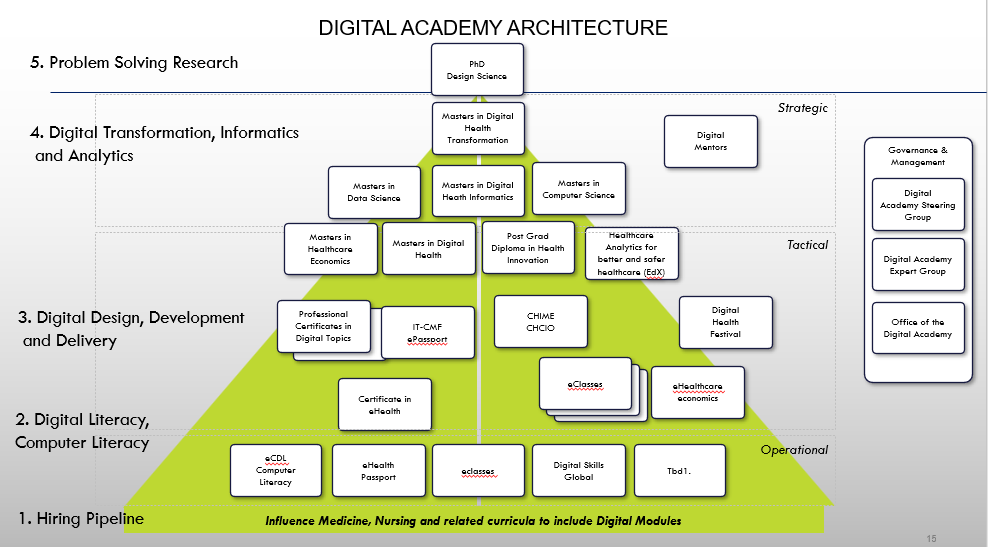
Figure 1 HSE Digital Academy Architecture - source M Curley
The author’s conversations with Rachel Dunscome, who was the head of the NHS Digital Academy in the UK were very helpful. The architecture of the Digital Academy was proposed to have five layers with the bottom layer focusing on basic digital literacy and digital health literacy as shown in figure one below. The aspiration for the fifth and top layer was to establish a cohort of PhD students doing problem solving research leading to evidence informed teaching was not achieved until the Academy transitioned to Maynooth University in 2023. In starting the Academy, the founder immediately felt that the most important critical success factor would be to establish a critical mass of digital health leaders who could then subsequently drive the transformation and leads others.
Thus, to spearhead the digital transformation of the Irish Health system, a national master’s in digital health Transformation was co-designed between the Irish Health Service (HSE) and the eight Irish research universities and this is described in detail in the Curley and McElligott (2024) paper.
3.3. Core Pedagogical Approach
The core pedagogical approach for the Academy is Praxis (Mayo, 2017) with the goal of learning and followed by the translation of theory into practice. Based on constructivism, the underpinning framework for the academy was the learning pyramid or more properly known as the Edgar Dale (1954) cone of learning. While lectures are of course a necessary way of imparting core theory and knowledge, and use of graphics and audiovisuals were emphasized, the bias of the academy was more towards demonstration, group discussion and work, simulation and doing. A core shared value of the guided OCE which supports the digital health academy is ‘seeing is believing’. The core learning construct of the Academy’s flagship program, the master’s in digital health Transformation is a digital change project, emphasising learning by doing and while also providing a very effective systemic stealth change mechanism for health systems (Curley and McElligott, 2024). In addition, each module of the Masters includes significant group work/discussions and assignments to increase learning. The use of simulations such as those provided in the Cisco Networking Academy have proven useful and increasingly the use of vibe coding will be deployed to enable student quickly to turn their concepts into prototypes and even minimum viable products.
3.4. Educating and Exciting the Ecosystem: Digital Academy Forum
To educate the entire ecosystem a novel kind of forum modelled on Ted talks, called the Digital Academy Forum (DAF) was launched where on a quarterly basis the ecosystem was convened together and eight TED talks were given to stimulate and share across the ecosystem. The Digital Academy Forum was a place where ideas and views on digital health issues, digital transformation and innovations across the Health Service could be shared and discussed by medical staff, academics, industry leaders, and patients.
When Covid came the DAF moved to a virtual forum and it became an even more crucial mechanism for orchestrating and educating ecosystem. Recognizing the contribution of the DAF to Irish Healthcare, the HSE DAF received the best educational initiative of the year award at the 2020 Irish Healthcare Awards. A YouTube channel hosting over 65 Ted style talks provided a persistent repository for others to learn from the recorded talks and catch up.
3.5. Academic Collaboration
The central platform of the Digital Academy Architecture was the National master’s in digital health Transformation which was launched by the HSE’s Chief Clinical Officer, Dr Colm Henry and the chair of the parliamentary Health committee Dr Michael Harty. The eight research universities in Ireland came together to create and deliver the masters. A key feature of the master’s was that the main student deliverable was a digital change project in the health service instead of the traditional 30,000-word dissertation. The Digital Change project, while an extremely valuable learning process, also created a cohesive wave of digital change across the health system. An important innovation was the use of a patient jury to guide project selection.
As well as the flagship national master’s program described in Curley & McElligott (2024) other academic partnerships also flourished. A great example of alignment and collaboration was with the Galway Mayo Institute of Technology (GMIT) and their Level 8 special purpose awards on ehealth which were fully aligned with Slaintecare and the Digital Strategy SL2-10X.
3.6. Industry Collaboration
Recognising the very fast pace of change in the industry, the HSE Digital Health academy also partnered with major technology companies such as Cisco, Dell, Microsoft, UiPath and Checkpoint. To address the fast-moving changes in the Digital Health industry a joint HSE and Dell Industry diploma in Digital Health was created. With lectures once a month for a six-month period, the first enrolment was 1500 clinicians against a target of 300 clinicians demonstrating the need, appetite and value of such an offering.
In December 2020 CISCO announced a collaboration with the Digital Academy making available the full contents of the Cisco Networking Academy to all 120,000 HSE employees. Microsoft subsequently followed suit and made the full suite of their educational offerings available for free to all HSE employees with Cloud Computing a popular class. Other education collaborations followed including on robotic process automation and cyber security with the UiPath and Checkpoint Academies respectively.
4.Transition to the Digital Health Academy
As the HSE Digital Academy evolved,
a group of cross sector leaders in the Irish Health system came
together to form the Irish Digital Health Leadership Steering Group
(IDHLSG) to provide guidance and light-touch governance of the OCE.
In Q1 2023 the directed OCE transitioned to a Guided-OCE (Curley,
2025) as responsibility for leadership and orchestration of the OCE
transitioned to Maynooth University. This transition was driven by
the logic that academics are well positioned to be orchestrators of
OCEs (Gastaldi et al, 201, but a catalyst was also the extreme
resistance to digital progress that was encountered from the HSE
Strategy organization. The academy was renamed to the Digital Health
Academy and additional new constructs/offerings were created to
educate and orchestrate the ecosystem. A new architecture for the
Academy was created as shown in figure 2 and is described in the
following sections.
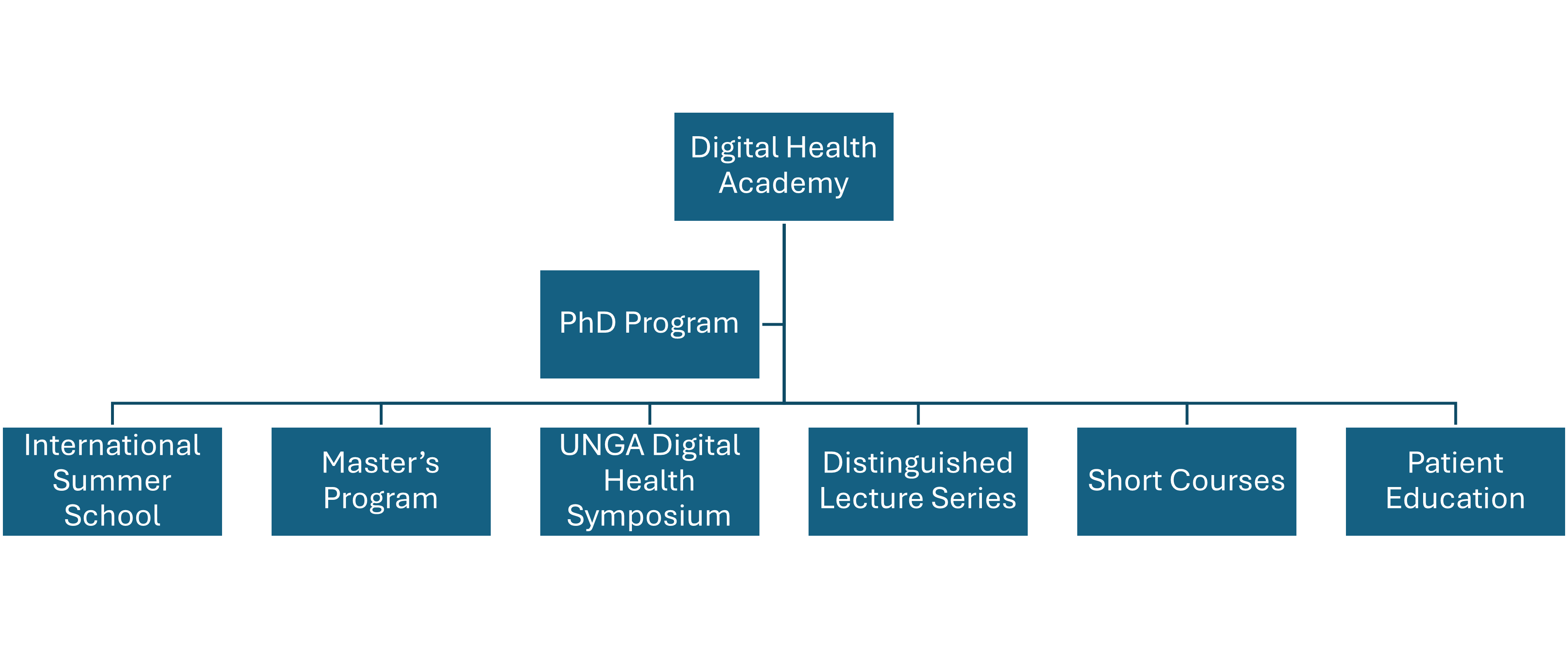
Figure 2 Digital Health Academy Architecture V2 – source M Curley
4.1. International Digital Health Summer School
To begin to mobilize the broader global clinical and leadership community an international digital health Summer School was created in 2023 The school was not organized as a conference but as an intellectual supercollider and focused learning opportunity using the SL2-10X doctrine as the lens and canvas. The Summer School allows clinicians and attendees to listen and interact with world leading thought leaders and practitioners in an intimate setting to help learn and co-create a new ‘win-win’ healthcare future for all.
4.2. International Digital Health Distinguished Lecture Series
A distinguished lecture series featuring both international and national health leaders was established in 2024 supported by Astra Zeneca. This distinguished lecture series replaced the Digital Academy Forum and again afforded the attendees the chance to physically network and exchange ideas regularly, continuing to maintain the vibrancy of the ecosystem. Key distinguished lecturers have included Prof Dan Lasserson, President of the UK Hospital at Home Society, Lucy Nugent, President of the European Association of Hospital Managers and Dr Jerome Adams, 20th US Surgeon General.
4.3. UNGA Digital Health Symposium
Recognising that Ireland was just one player in a global digital health ecosystem, the author founded the UNGA Digital Health Symposium in 2021. Modelled on the original Solvay summit of 1911, this annual symposium functions as an intellectual supercollider which stewards the overall direction of SL2-10X and shares cutting edge education talks for the health industry. In 2022 the collective fifty attendees developed the Manhattan Manifesto (Curley et al, 2023), a call for cooperation, championing and collaboration in Digital Health accompanies with a new vision of a health and wellness system. In 2024 the symposium attracted over 150 leaders from the field of Medicine, Tech, Pharma and Medtech to participate in a three-day symposium co-hosted at Northwell Health and at Fordham University in New York, all aligned around the focal proposition of SL2-10X.
4.4. Patient Education and Short Courses
Recognizing the critical role of patient education in achieving better outcomes and efficiencies, research was performed to develop a patient capability maturity framework (P-CMF) which featured patient education as a key enabling capability for patients to excel (Curley & Wyatt Haines, 2022). The first instantiation of the patient education was an app for patients with pulmonary arterial hypertension at Dublin’s Mater hospital with great feedback on how it helped them better manage their condition. A number of short courses were developed and delivered including a MiniMD which was developed and delivered by Prof Ogan Gurel of UTA to teach non-clinical people the fundamentals of Medicine.
5. AI adoption in Digital Health Education and Next Steps
AI is recognized as a disruptive force in Education enabling personalized learning paths and 24/7 availability and tutoring as well as easier administration. With the accelerating emergence of AI, the digital health academy had to make a pedagogical shift from traditional teaching to managing AI integrated critical thinking-based learning. The emergence of high-quality teaching Avatars can enable universal high fidelity quality education with the opportunity for all learners to learn from the best educators available. Of particular interest is the emergence of vibe coding, an AI-assisted software development approach where a clinician or indeed a patient can use natural language prompts to generate programming code and solutions, rather than using the manual syntax of traditional programming languages. Vibe coding helps democratize solution development empowering the entire health community to quick develop functional solutions.
6. Conclusions
Education is the first step towards any transformation journey. This paper has described the initiation of a national digital health academy in the Irish Health service in the HSE, and the subsequent expansion of the academy into a broader international force multiplier for change. The paper describes the role of the Digital Academy as both the lead educator and orchestrator of the multilateral ecosystem composed of players from all four dimensions of the quadruple helix. The paper notes that due to the complexity of health systems, a multi-stakeholder and multi-facetted Academy was necessary to assist with the non-linear change required to transform health systems. The paper also describes the transition of the academy from the HSE to Maynooth University and with new constructs how the Academy continues to evolve to educate, align and energise the Digital Health Ecosystem to deliver better health and a better health system.
References
Curley, M & Wyatt- Haines, R (2022) The Patient Capability Maturity Framework, 2nd UNGA Digital Health Symposium
Curley, M (2025) Guided Open Collaborative Ecosystems as Major Disruption in Health systems. Healthmanagement.org
Curley, M and Salmelin, B (2013), Open Innovation 2.0, a new paradigm. European Commission.
Curley, M et al (2022) Stay Left, Shift Left, The Digital Transition of Healthcare, 2nd UNGA Digital Health Symposium.
Curley, M., Carbajal, M., Gullery, C., Larkin, C., & Morris, D. (2023). Stay Left, Shift Left, 10x Digital Health Manhattan Manifesto Zenodo. https://doi.org/10.5281/zenodo.7643644
Curley, M.; McElligott, A. 2024. A Novel National master’s in digital health Transformation: driving cohesive systemic digital change. In: 10th International Conference on Higher Education Advances (HEAd’24). Valencia, 18-21 June 2024.
Dale, E. (1954). Audiovisual Methods in Teaching (Revised ed.). New York: Dryden Press. N
Gastaldi L., Appio F.P., Martini A., Corso M. (2013), “Academics as orchestrators of continuous innovation ecosystems: towards a fourth generation of CI initiatives”, IJTM
Mayo, P. (2017). Praxis. In: Peters, M.A. (eds) Encyclopedia of Educational Philosophy and Theory. Springer, Singapore. https://doi.org/10.1007/978-981-287-588-4_100
Norwitz, E.R., Rubin, G. & Reed-Tsochas, F. (2025) Healthcare as a Complex Adaptive System Curr Obstet Gynecol Rep
Paavola, L., Gawer, A., & Hänninen, M. (2025). Alignment in Mature Ecosystems: An Iterative Process of Interorganizational Influence. Journal of Management, 0(0).
Topol, E (2012) The Creative Destruction of Medicine: How the Digital Revolution Will Create Better Health Care, Basic Books