An Andragogical Journey through an Irish Higher Education Setting: A Case Study Mapping Graduates Transformative Learning Experiences
An Andragogical Journey through an Irish Higher Education Setting
An Andragogical Journey through an Irish Higher Education Setting: A Case Study Mapping Graduates Transformative Learning Experiences
Helen
Casey

Discipline of Applied Social Sciences, School of Political Science and Sociology, University of Galway, Ireland.
How to cite: Casey, H. (2026). An Andragogical Journey through an Irish Higher Education Setting: A Case Study Mapping Graduates Transformative Learning Experiences. In: 12th International Conference on Higher Education Advances (HEAd’26). Valencia, 15-18 June 2026. https://doi.org/10.4995/HEAd26.2026.21774
Abstract
This paper examined how Transformative Learning (TL) theory offered a framework to map a case study of part-time adult learner experiences retrospectively as graduates of two higher education part time degree programme, the BA in Community and Family Studies (BCFS) and the BA in Early Childhood Studies (BCP). A doctoral study mapping the Transformative Learning (TL) experiences among part-time adult learner graduates formed the foundation for this paper. Twenty-six semi-structured interviews were held with university graduates of BCP and BCFS programmes. The experiences noted by the interviewees were recorded based on Mezirow's (1991) Transformative Learning (TL) theory. The findings indicated that all 26 adult learner participants experienced TL across the three thematic levels: historical, social and emotional. The life changing impact of the degree programmes denoted them as a model of andragogical good practice within Higher Education in Ireland for learners seeking to re-path their educational journey.
Keywords: Transformative Learning Experiences; Andragogical Model; Personal and Societal Impact; Community and Higher Education
1. Introduction
This paper sets out to explore whether adult learner graduates of two distance learning degree programme, the BA in Community and Family Studies programme (BCFS) and BA in Early Childhood Studies (BCP) experienced Transformative Learning during their studies or on completion of the programme. This paper is based on data collated from the researcher’s doctoral study. ‘Transformative Learning’(TL) in the context of this paper refers to the life changes in adult learners' perspective or outlook as a result of a specific learning experience or a series of learning experiences. Transformative Learning is shaped by the personal interactions and communication adult learners have with other adults throughout their adulthood.
Dirkx (1998, p. 8) argues that: ‘Transformative Learning is essentially a way of understanding adult learning as a meaning-making process aimed at fostering a democratic vision of society and self-actualization of individuals’.
The importance of fostering a positive learning environment, especially for adult learners, is posited as a crucial factor to generate greater emotional maturity among learners, educators and wider society. Adult, Community and Higher Education engagement approaches in the BCFS and BCP programmes is considered as a model of good practice in the Irish Higher Education sector. The research hypothesis considered in this paper will be explored through the summative analysis of twenty-six (N=26) semi structured interviews used to explore Transformative Learning Experiences among this cohort of part-time adult learner graduates.
2. Background
The BA in Community and Family Studies (BCFS) degree programme (180 ECTS) was designed in University of Galway ( formerly known as NUI Galway) in response to the identified need among part-time learners who wished to progress from other part-time accredited programmes such as the Diploma in Community Development Practice (CDP) into a part-time degree programme (Casey, 2018). The BCFS was created as an interdisciplinary programme which offers a flexible, blended learning four-year part-time degree in Community and Family Studies to adult learners. Correspondingly, graduates of the Diploma in CDP are offered credit exemptions to progress onto the BCFS degree programme which opens up Higher Education to a much more diverse part-time adult learner cohort than previously. In addition, the BCFS pedagogical process is bench marked on a community education style and andragogy, where the lecturer is the facilitator of the adult learner’s knowledge, enabling a more non-hierarchical learning process. (Casey, 2018). The BCP degree programme (180 ECTS) was developed in the late 2000s in NUI Galway as a part time four year blended degree programme for early years practitioners to attain academic accreditation in the field and modelled on the BCFS andragogical process.
3. Theoretical Framework
Mezirow (1997, p. 5) describes ‘Transformative Learning’ as: ‘The process of effecting change in a frame of reference. Adults have acquired a coherent body of experience—associations, concepts, values, feelings, conditioned responses—frames of reference that define their life world’. He posits that meaning perspectives or frames of reference which are the ways in which one interprets experiences from one’s daily life and/or which assist one in reflecting upon the cultural assumptions, beliefs, or values which determine the way one interprets the world and related experiences. Transformative Learning, is centred on a subjective review by adult learners of any changes that occur in one’s personal frame of reference; the lens through which one views one’s life experiences. However, Mezirow (1997) embeds the personal learning process associated with ‘Transformative Learning’ into a wider community and societal context as he purports that ‘Transformative Learning’ forms part of a wider learning experience. Mezirow (ibid.) posits that Transformative Learning can only occur in adults, as pre-adulthood learning processes do not have the capacity to allow learners to reflect critically on their learning experiences. This critical thinking characteristic is designated by Mezirow as an essential dimension in the assessment of the transformation process. In essence, creating an adult learner friendly learning environment and supportive pedagogical relationships with adult learners is crucial to facilitating the conditions for Transformative Learning to evolve (Dirkx, et al. 2006). In addition, identity development comes about through a process of self-reflection and emotional intelligence, which can lead to critical reflection skills, and a greater sense of emotional maturity (Schutte et al. 1998). According to Mezirow (2000) many adult learners find it difficult to work through certain stages of the Transformative Learning process in comparison to other learners. However, he concludes that, once perspective transformation, is complete it is irreversible. So, Mezirow (1991, 2000) and colleagues (Dirks et al. 2006; Millar et al 2025) emphasise that educators need to be aware of how and what students are learning, either directly or indirectly, as all learning and teaching can have an impact on the whole pedagogical experience (see figure 1).
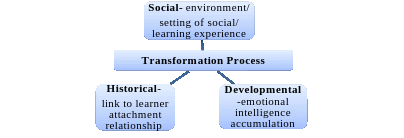
Figure 1: Transformation Context: Mezirow, 2000 (adapted model by Casey, 2018)
4. Process: Participants, Methodology and Ethical Considerations
4.1. Adult Learner Participants and Sampling Strategy
Twenty-six part-time adult learner graduates were selected on a non-random basis to participate in the semi-structured interviews as part of the author’s doctoral study on Transformative Learning Experiences. A quota sampling process was applied to the non-probability sampling to capture graduates from the two part time NUI Galway degree programmes and to ensure gender and geographic diversity in the population sample selected. Eighteen BCFS graduates (n=18) and eight (n=8) BCP graduates were selected based on their willingness to participate in this interview process.
4.2. Design and Methodology
An in-depth case study design, was applied to this study given that case study design is particularly suited to examining complex social processes where multiple interacting factors influence outcomes (Bryman, 2016). The semi-structured interview method was chosen as it enables the researcher to propose prompt questions for the scheduled interviews and it permits the researcher to adapt the interview schedule during the process to pursue arising themes within the discussion (Bryman, 2016). The interview data was analysed using Braun and Clarke (2006) thematic analysis whilst additional primary data collection instruments (online survey questionnaire and interactive management processes) were triangulated with in the researcher’s doctoral study but are not considered in-depth in this paper. The findings of the interview data were mapped using the five research objectives which were generated from the literature review of transformative learning reflected in Figure 1.
4.3. Ethical Considerations
The semi-structured interviews and accompanying methodologies (IM and online surveys) that informed the doctoral study were informed by ethical precepts and approved by the University Research Ethics Committee (Casey, 2018). Each interview was recorded with informed consent from participants, which varied in length from forty-five minutes to two hours. As interviewees comprised of graduates who lived in various geographic locations in Ireland, the researcher travelled to interview the participants in their respective community to ease any potential participation limitations for the interviewees. Each interview was fully transcribed and then analysed using a coding tree of themes and mapped to interview data as noted in figure 2 (Braun and Clarke, 2006).
5. Findings
The findings from the twenty-six semi-structured interviews (n=26) are presented as themes: sense of identity/ belonging; community engagement; social support/ networks; advocate for change; empathy for others and agency to act/ partake (see purple block in figure 2). The themes from other primary data collection processes (online survey and interactive management) with the graduate cohort are reflected in respective themes in red and green blocks in figure 2. However, this paper is focusing on the interview data theme findings. The findings are mapped through research objective headings and related to the transformative learning theoretical constructs, in figure 1 and the themes arising from the interview data as noted in the purple block of figure 2.
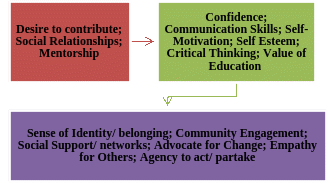
Figure 2: Coding Tree for Thematic Analysis of Interview Data (Casey, 2018)
5.1. Experience of TL- social, developmental, historical
The 26 Graduates experienced TL based on Mezirow’s (2000) theoretical analysis of three domains; social, developmental and historical as denoted in figure 1. Some graduates reflected on shifts across all three domains whilst others denoted more evidential TL on one domain more. However, the developmental /emotional growth experiences of transformation from a personal growth perspective were the most self-professed of all three domains. The transformative learning theme of agency to act/ partake is evidenced in one interviewee’s words- “It’s feel the fear and do it anyway”.
5.2. Sustainability of TL Post Programme Completion- social, developmental, historical
The study cohort were adamant that the TL experiences that had incrementally been acquired during the programme have sustained on completion. The development of life skills such as recognising social capital and creating a work-life balance were designated as key learning benefits that have improved the graduates’ lives since commencement of the respective programmes. The ‘value of education’ became increasingly evident to the interviewees as adult learners and especially as graduates as they wanted to gain a degree and join the ‘club’.
Empathy for others is evident in this quote from interviewee - “Education is a foremost for me in relation to my children and because I’ve done my diploma and degree in NUI, this is going to help me with my children”. The social support network theme is evident in the interviewee’s voices -“they (family) wouldn’t put much emphasis on education before I did the degree. But since two nieces and a nephew have degrees now”.
5.3. El Levels among Graduates- developmental
The Emotional Intelligence (EI) levels were collated based on Schutte et al. (1998) EI Scale which has four subscales- perception of emotions, managing one’s own, managing others and utilizing emotions. Therefore, the self-awareness among graduates of the growth in their own emotional development was evident in the interview process across all graduates. Equally, all interviewees shared significant life experiences which reflected their critical awareness of using those emotions and managing others emotions equally. Therefore, the EI levels and experiences demonstrated a heightened awareness and growth among graduates of their own and fellow learner’s EI development. The theme of advocacy for change is evident here- “I got stick ability, I will not allow somebody to treat me wrongly now”. Whilst the Empathy for others theme is evidenced here -“I think the bonds of friendship helped each other’s emotions to keep going”.
5.4. Pedagogical Approach’s Influence on EI Skills- social and developmental
It was evident from the interview process that the Community Education ethos and andragogical process positively influenced all BCFS graduates to gain confidence and critical thinking skills, which enabled their EI attributes. Whilst in the BCP cohort, the teaching methodology was not remarked upon as significantly as a key influencer in their EI development. However, the peer support among fellow learners during and on completion of the BCP programme among that cohort was noted as a definite influence on EI development and fundamental to the social support network created by graduates of that programme. The theme of community engagement is reflected by an interviewee-, “it is not what they taught you, it is how they made you feel”. The agency to act theme is evident here- “Being emotionally mature and being aware of other’s emotions definitely would be of help, if you are emotionally mature you can get yourself through it”.
5.5. Relationship between Graduates Attachment and EI Skills- historical and developmental
All participants noted that early life attachment experiences significantly influence one’s happiness and emotional wellbeing. Equally, all graduates (n=26) reflected that the existence of one significant adult in their lives enabled them to reconsider education in adulthood despite previous life experiences even in incidences of poor early life experiences of attachment. However, all graduates reflected upon their own experiences and considered that emotional intelligence growth was a greater life enabler than attachment bonds. Additionally, all twenty-six graduates interviewed agreed that access to part-time, flexible models of adult education and specifically the BCFS, programme offered by University of Galway was an enabler of emotional intelligence growth in their lives, which alleviated and rebalanced any of their earlier life educational inequalities. The sense of identity/ belonging theme is evident in this interviewee’s voice-“I used to think that society had changed but it was me who had changed”. The Social support/ network theme noted here- “yes you definitely need a good support system”.
6. Discussion and Conclusion
The Transformative Learning themes deduced from the interview process with graduates evidently shaped their perspective on what and how Transformative Learning Experiences have evolved through their engagement on the respective BCFS and BCP degree programmes. The learner-centred ethos is fundamentally linked to the Community Education ethos and approach promoted and adopted by BCFS in its design, teaching and assessment of programmes. The BCFS programme was created from a Community Education approach where the learner needs and outcomes remain pivotal to the programme development (Casey, 2018; Fleming and Finnegan, 2011; Fitzsimons, 2017). A BCFS programme interviewee sums up the value of the community education andragogic process, “(BCFS) created a safe, inclusive and respectful learning environment” (Casey, 2018). This collective view presented by the graduates reflects the Adult and Community Education ethos, which espouses a student, centred approach to education and learning. Equally, the BCP interviewees reflected in their interviews that the peer and social support network was the transformative factor for them in their retention and success on the BCP programme.
Theorists posit that learners due to their individual and different life experiences can experience Transformative Learning in a more ‘incremental’ form which contributes to their individual and societal view of the world in a more gradual or paced manner to benefit the learner and wider society across their lifecycle (Mezirow 2000; Mezirow & Taylor, 2009; Cranton &Taylor, 2011). As noted in the findings, all interviewees (n=26) denoted ‘incremental’ experiences of TL during and sustainment of same post completion of their degree studies. These collective outcomes, displayed in themes from the interviews that the twenty six adult learner graduates of the blended learning programmes have presented, complement the Transformative Learning theory advocated by Mezirow (2000) whilst Cranton & Taylor posit that Transformative Learning ‘occurs when people critically examine their habitual expectations, revise them, and act on the revised point of view’ (2011, p.19). The expressed interview quotes and perspectives of the BCP and BCFS interviewees outlined in the findings and evolved from figure 2 themes are reflective of Transformative Learning theory factors and characteristics. According to adult learning theorists, the process of transformation within an educational setting is a symbiotic process in which both the educator and learner should both be free to engage in a dual learning experience to transform their epistemologies (Mezirow, 1991; Cranton &Taylor, 2011; Fleming and Finnegan, 2011; Millar et al, 2025). This final graduate interview quote captures this transformation of learning experience; “You have to climb the mountain to experience the view”.
Therefore, the process of engagement with adult learners is pivotal to the success of the learning journey as all experiences are deemed to be ‘meaning-forming’ and influential in the holistic development of the learner as outlined above in figure 1. The study findings and figure 2 thematic evidence re-iterate the emotional and supportive andragogic process offered to the adult learner BCP and BCFS degree graduates and how that triggered change in their individual and collective perspectives and life outcomes.
References
Bryman, A. (2016). Social research methods (Fifth edition.). Oxford University Press.
Braun, V., & Clarke, V. (2006). Using thematic analysis in psychology. Qualitative Research in Psychology, 3(2), 77–101. https://doi.org/10.1191/1478088706qp063oa
Casey, H. (2018). Transformative learning: An exploration of the BA in Community and Family Studies graduates’ experiences. NUI Galway.
Cranton, P., & Taylor, E. W. (2011). Transformative learning. In The Routledge international handbook of learnin (pp. 214-223). Routledge.
Dirkx, J. M. (1998). Transformative learning theory in the practice of adult education: An overview. PAACE journal of lifelong learning, 7, 1-14.
Dirkx, J. M., Mezirow, J., & Cranton, P. (2006). Musings and Reflections on the Meaning, Context, and Process of Transformative Learning: A Dialogue Between John M. Dirkx and Jack Mezirow. Journal of Transformative Education, 4(2), 123–139. https://doi.org/10.1177/1541344606287503
Fitzsimons, C. (2017). Community education and neoliberalism : philosophies, practices and policies in ireland (1st ed.). Palgrave Macmillan. https://doi.org/10.1007/978-3-319-45937-0
Fleming, T. (2011). Non-traditional students in Irish higher education: A research report. Fleming, T. & Finnegan, F. (2011). Non-Traditional Students in Irish Higher Education: A Research Report. URL: Http://Www.ranlhe.dsw.edu.pl/ Contract Number: 135230-LLP-1-2007-1-UK-KA1-KA1SCR.
Mezirow, J. (1991). Transformative dimensions of adult learning. Jossey-Bass.
Mezirow, J. (1997). Transformative Learning: Theory to Practice. New Directions for Adult and Continuing Education, 1997(74), 5–12. https://doi.org/10.1002/ace.7401Mezirow, J. (2000). Learning as transformation : critical perspectives on a theory in progress (1st ed.). Jossey-Bass.
Mezirow, J. (2000). Learning as transformation : critical perspectives on a theory in progress (1st ed.). Jossey-Bass.
Mezirow, J., & Taylor, E. W. (2009). Transformative learning in practice: insights from community, workplace, and higher education (1st Edition). Jossey-Bass.
Millar, M., Hall, T. and Atif, A. (2025). ‘Designing the Curriculum for Proactive Resilience in Higher Education: Students’ Experience of a University Student Success Coaching (SSC) Programme’. Conference: Eleventh International Conference on Higher Education Advances. https://doi.org/10.4995/HEAd25.2025.20145
Schutte, N. S., Malouff, J. M., Hall, L. E., Haggerty, D. J., Cooper, J. T., Golden, C. J., & Dornheim, L. (1998). Development and validation of a measure of emotional intelligence. Personality and Individual Differences, 25(2), 167–177. https://doi.org/10.1016/S0191-8869(98)00001-4