Resonant Pedagogies: Performativity as a Critical Framework for Higher Education in Design
Resonant Pedagogies: Performativity as a Critical Framework for Higher Education in Design
Resonant Pedagogies: Performativity as a Critical Framework for Higher Education in Design
Fernando
Palma1,
Tània Costa2

1,2Department of Applied Economics, Universitat Autònoma de Barcelona, Spain.
How to cite: Palma, F.; Costa, T. (2026). Resonant Pedagogies: Performativity as a Critical Framework for Higher Education in Design In: 12th International Conference on Higher Education Advances (HEAd’26). Valencia, 15-18 June 2026. https://doi.org/10.4995/HEAd26.2026.21780
Abstract
This article introduces "Resonancias" (Resonances), a pedagogical tool developed for design education that embodies the theoretical framework of performative design. Comprising a three-category system (Crises, Agencies, Principles), this tool facilitates the translation of abstract theoretical frameworks into concrete design interventions, fostering ethical practice, critical political awareness, and systemic thinking. Developed as an empirical research instrument, "Resonances" transforms what is usually dense and distant theory into applied experience. It operates simultaneously as a pedagogical device and a tool for observing how students mobilize critical knowledge within projective practice contexts. An initial exploratory verification with students confirmed the tool's viability and refined its methodological structure. This work describes the conceptual development of "Resonances" and discusses how performative pedagogies can bridge the gap between theoretical knowledge and practical application in both design higher education and professional practice.
Keywords: performative pedagogy; design education; critical design; situated learning; wicked problems; innovation in higher education.
1. Introduction: Towards a Performative Pedagogy of Design
Contemporary design education faces the challenge of articulating complex theoretical frameworks with pedagogical methodologies that allow for their meaningful incorporation into formative processes, particularly at graduate and research levels. Students frequently experience a disconnect between the philosophical and socio-political concepts addressed in theoretical subjects and their ability to mobilize this knowledge within their own design projects. This gap is not merely technical but epistemological. Critical frameworks regarding performativity, design ontology, decolonial thinking, feminisms, or political ecology are often presented as abstract declarative knowledge, making their translation into concrete methodological tools difficult.
This article addresses this issue through the development and analysis of "Resonances," a card game that emerged as an intermediate product of broader research into the performativity of design. The term "Resonances" alludes to the capacity of design and its pedagogy to generate effects that transcend immediate intention, effects that "resonate" within the contexts where they act, challenging participants and generating new understandings. As Willis (2006) notes in her conception of ontological design, we design tools and then tools design us, establishing a recursive relationship where projective practice shapes, consciously or unconsciously, both the objects and the subjects who use them.
"Resonances" operates simultaneously in two dimensions: as a pedagogical device that allows students to actively experiment with complex philosophical concepts, transforming them from distant theoretical content into applicable methodological tools; and as an empirical research instrument that creates observable conditions to study how students mobilize, combine, and translate critical frameworks into concrete intervention proposals. Its development follows a research-through-design methodology, where the creation of the artifact constitutes both a research process and an intermediate investigative result.
2. Theoretical Framework: Performativity and Design
The notion of performativity, developed by Austin (1982) in the philosophy of language, distinguishes between constative utterances, which describe states of affairs, and performative ones, which perform actions when spoken. Transferred to design, this distinction allows for the understanding that designed objects do not merely represent the world but actively shape it, constructing realities. Butler (2001) expands this understanding by showing how identity is not something we "are" but something we "do" through the iterative repetition of acts. Applied to design, this perspective reveals how artifacts materialize and stabilize certain ways of being and relating through their repeated use.
Research on performative design identifies three interpretations as methodological approaches: (1) Interactive performative design, centered on the object's capacity for self-modification in reaction to the environment, connecting with Kolarevic's (2005) performative architecture; (2) Processual performative design, which emphasizes the processual nature of design integrated into the context through co-creation, aligning with Manzini (2015) and Illich (1973); (3) Systemic performative design, understood as an expanded design practice with systemic transformation impact, connecting with Transition Design and Escobar’s (2018) pluriverse thinking.
The performativity of design necessarily implies a political dimension. Fry (2020) distinguishes between "defuturing" design, that which destroys possible futures, and "futuring" design, that which enables them. DiSalvo (2012) develops the concept of "Adversarial Design" as a tool to reveal political controversies. From actor-network theory, Latour (2008) argues that objects are "actants" with agency that mediate relationships, allowing design to be understood as a form of world composition where, as Latour (2011) points out, "there is no common world: it has to be composed." These frameworks provide the conceptual architecture for "Resonances," offering a bridge between theoretical reflection and material practice in educational contexts.
3. "Resonances" as a Pedagogical-Investigative Device
3.1. Game Structure and Components
"Resonances" materializes these theoretical frameworks through a system of three interconnected card decks, where the cards operate as mediators between theory and practice.
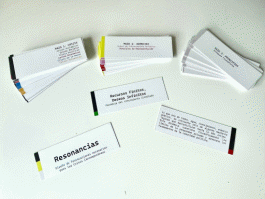
Figure 1: Resonances, pedagogical tool for Higer education in design
> DECK 1: CRISES (24 cards): Organized into six thematic categories reflecting contemporary issues: ecological, social, political, economic, cultural, and crises of reason. These cards materialize the understanding that design operates in contexts of crisis and complexity, where we face "wicked problems" (Buchanan, 1992). Each card names a specific crisis, such as "Biodiversity Collapse" or "Collective Loneliness," and includes a philosophical analysis on its back that situates the crisis within broader conceptual frameworks.
> DECK 2: AGENCIES (16 cards): Divided into "Modes of Political Intervention" and "Vehicles of Representation." This deck materializes the active and transformative dimension of performative design, offering both intervention strategies (e.g., "Making the Invisible Visible" or "Creating Meaningful Frictions") and concrete formats to materialize them (e.g., "Speculative Artifact" or "Toolkit"). The cards operate as "actants" (Latour, 2008), elements that mediate relationships and distribute capacities for action.
> DECK 3: PRINCIPLES (12 cards): Philosophical approaches that guide design intervention: "From the Margins," "Body as Territory," "Non-Linear Time," "Ethics of Care," among others. These cards materialize ethical and epistemological frameworks that orient projective practice, connecting with Haraway’s (2019) "situated knowledges" and the ethics of care as an alternative to instrumental logics.
3.2. Game Dynamics: Five-Phase Workshop Process
The game structures a collaborative workshop that replicates, in a compressed and playful format, the development process of a performative design project:
• Phase 1: Situated Diagnosis (15 min). Each group selects a CRISIS card and develops a collective analysis of how this crisis manifests in specific contexts, materializing the need to situate the analysis (Ahmed, 2019).
• Phase 2: Methodological Positioning (20 min). By combining an AGENCY (mode) card and another (vehicle), groups define their research stance: "How can research in art and design intervene politically in this crisis?" This phase operates as a performative iteration where agency emerges from repetition with difference (Butler, 2001).
• Phase 3: Epistemological Framework (15 min). Through a PRINCIPLE card, they establish the ethical and epistemological foundations of their research proposal, materializing Rancière’s (2014) "distribution of the sensible."
• Phase 4: Investigative Materialization (40 min). Groups develop concrete research-intervention proposals, connecting with Dunne and Raby’s (2013) speculative design and Bleecker’s (2009) design fiction.
• Phase 5: Critical Socialization (30 min). Collective presentation of proposals and discussion on the relationships between theoretical framework, methodology, and results, creating an "agonistic space" where dissent is recognized as constitutive of the political.
3.3. "Resonances" as an Empirical Research Instrument
Beyond its immediate pedagogical function, "Resonances" is conceived as a research instrument that allows for the observation and documentation of translation processes between critical theory and projective practice. By structuring a controlled environment where students must articulate specific combinations of conceptual frameworks (Crisis-Agency-Principle), the tool creates conditions to study: strategies for operationalizing abstract philosophical concepts into concrete methodologies; processes of interdisciplinary negotiation of conceptual frameworks; the development of relational and systemic thinking; and modes of articulation between ethical, political, and methodological dimensions in intervention proposals. This dual dimension, both pedagogical and investigative, responds to the logic of research through design, where the designed artifact not only transmits knowledge but also generates new understandings of the phenomena it studies.
4. Exploratory Verification and Methodological Refinement
An initial exploratory verification was conducted in November 2025 with 12 students from the Master’s Degree in Research in Art and Design (MURAD) at EINA, University Center of Design and Art affiliated with the Universitat Autònoma de Barcelona. Participants had diverse backgrounds in graphic and industrial design, art, architecture, and sociology. The 2.5-hour workshop followed the five-phase structure described above. The main objective of this first implementation was to verify the tool's operational viability and refine its methodological structure, rather than generating systematic empirical data on learning outcomes.
The exploratory implementation confirmed several aspects of the functioning of "Resonances" that informed design adjustments. Students noted that "the specific combination of cards worked as a scaffolding that allowed us to be creative without losing conceptual rigor" and that "the game's constraints seemed to liberate rather than limit our ability to think innovatively." These observations confirmed the hypothesis that productive constraints can channel creativity within rigorous conceptual frameworks. It was also observed that "some card combinations proved more difficult to integrate coherently than others, which generated fruitful discussions about theoretical compatibilities." This tension proved productive by forcing conceptual negotiations that materialized what Latour would call "ontological diplomacy." The comment that "the total workshop time allowed for an initial exploration but was insufficient for developing fully elaborated proposals" led to the reconceptualization of the tool not as a generator of final products, but as a catalyst for thought processes that can extend beyond the workshop itself.
Based on these observations, adjustments were made: (1) content on the back of some CRISIS cards was expanded to include additional conceptual references to facilitate their articulation with more diverse PRINCIPLE frameworks; (2) the distinction between "Modes of Intervention" and "Vehicles of Representation" in the AGENCIES deck was clarified, adding combination examples; (3) supplementary facilitation material was developed to specify strategies for supporting groups during transitions between phases, particularly between theoretical analysis and practical materialization. These refinements position "Resonances" for future, more systematic implementations that will allow for the collection of robust empirical data on design learning processes.
The next activation of the system is already confirmed for March, in the Performative Design course of a University Degree in Design. In this case, the practice will be carried out with four groups of 20 students each, in their third year of the degree, generating an extensive record of results to re-evaluate the methodological tool and its capacity to generate value for its users.
5. Discussion: Implications for Design Education and Research
The development of "Resonances" proposes what could be called "materialized pedagogies", educational approaches that translate abstract theoretical concepts into manipulable interfaces and experiential situations. This approach resonates with Barad’s (2007) "intra-action," where knowledge does not pre-exist practice but emerges from material encounters between bodies, artifacts, and concepts. As Schön (1983) points out, expertise in projective fields develops through reflective doing rather than through the accumulation of propositional knowledge. "Resonances" offers a format that facilitates this reflection-in-action applied to complex philosophical concepts that usually remain purely declarative content.
The playful format creates a "protected space" for methodological experimentation in design research. In academic contexts where formal research projects carry high expectations and risks, the game allows for testing innovative approaches, combining unusual perspectives, and failing productively. This function connects with the speculative design of Dunne and Raby (2013) and Bleecker (2009): "Resonances" does not seek to generate immediate practical solutions but to create the conditions for second-order reflective practices that enable critical distancing and open us to modifying our habits. The game allows for experimentation with conceptual combinations that might not be proposed in a formal project, paradoxically generating insights applicable to real research projects.
Although developed specifically for design education, the structural logic of "Resonances" articulating complex issues (Crises), modes of intervention (Agencies), and epistemological frameworks (Principles) is potentially transferable to other higher education disciplines facing the challenge of integrating critical thinking and practical application. Disciplines such as architecture, social work, education, environmental studies, public health, or social innovation could adapt this ludic-pedagogical format to their own conceptual frameworks, maintaining the tripartite structure while adapting the specific contents of each deck to their particular disciplinary contexts.
The current development of "Resonances" as an empirical research instrument opens multiple directions for future, more systematic studies: longitudinal studies exploring how understandings developed during the game transfer to formal research projects; analysis of specific strategies students use to operationalize abstract philosophical concepts; research on how different disciplinary backgrounds influence the interpretation and application of conceptual frameworks; comparative analyses between different implementations of the game in various educational contexts; studies on format scalability; and the development of specific assessment instruments for complex philosophical-methodological learning. These directions position "Resonances" not as a closed pedagogical product, but as a continuously developing instrument that can generate empirical knowledge about critical pedagogies in design and related disciplines.
6. Conclusions
The development of "Resonances" as a pedagogical-investigative tool suggests that performative pedagogies, those that recognize learning as a situated, material, and transformative practice, offer promising paths for higher education in design in times of complexity and uncertainty. By materializing complex theoretical concepts in collaborative workshop dynamics, the game facilitates the integration of philosophical knowledge and investigative practice that characterizes quality research in art and design.
The term "Resonances" refers precisely to this capacity of design, and pedagogy, to generate effects that transcend immediate intention, reverberating in the contexts where they act and transforming both the participants and their understandings of the practice itself. In this sense, the game seeks not only to transmit knowledge about the performativity of design but to create the conditions for this understanding to "resonate" in the pedagogical and investigative practices of those who use it.
As an intermediate research product, "Resonances" represents both a provisional endpoint and a starting point for new empirical research. Its development will continue to be refined as it is used in different contexts and with different communities of practice, generating systematic data on how theoretical frameworks regarding performativity can be materialized into effective pedagogical tools and, conversely, how these tools can generate new knowledge about the performative nature of design and learning processes in higher education.
Ultimately, "Resonances" embodies the central premise guiding our research: that design is fundamentally a performative practice that does not represent or illustrate change, but materializes, realizes, and embodies it in every intervention. In this sense, the game is an act of design that actively performs the type of investigative practice we advocate: situated, material research that is deeply aware of its capacity to intervene in the worlds it studies. In a historical moment characterized by what Fry (2020) calls "defuturing" -the systematic destruction of possible futures- pedagogical tools like "Resonances" can contribute to training designer-researchers capable of imagining, materializing, and promoting alternative futures as concrete possibilities emerging from reflective practice, interdisciplinary collaboration, and ethical commitment to the worlds we help create through design.
References
Ahmed, S. (2019). Fenomenología queer: Orientaciones, objetos, otros. Barcelona: Bellaterra
Austin, J. L. (1982). Cómo hacer cosas con palabras: palabras y acciones. Barcelona: Paidós
Barad, K. (2007). Meeting the universe halfway: Quantum physics and the entanglement of matter and meaning. Duke University Press
Bourdieu, P. (1991). El sentido práctico. Madrid: Taurus
Buchanan, R. (1992). Wicked Problems in Design Thinking. Design Issues, 8(2), 5-21, MIT Press
Butler, J. (2001). El género en disputa. Barcelona: Paidós
DiSalvo, C. (2012). Adversarial design. Massachusetts: MIT Press
Dunne, A., & Raby, F. (2013). Speculative everything: Design, fiction, and social dreaming. Massachusetts: MIT Press
Escobar, A. (2018). Autonomía y diseño: La realización de lo comunal. Buenos Aires: Editorial Tinta Limón
Fry, T. (2020). Defuturing: A new design philosophy. London: Bloomsbury Academic
Goffman, E. (1959). The presentation of self in everyday life. New York: Anchor Books
Haraway, D. J. (2019). Seguir con el problema: Generar parentesco en el Chthuluceno. Bilbao: Consonni
Illich, I. (1973). Tools for conviviality. New York: Harper & Row
Kolarevic, B. (2005). Performative Architecture: beyond Instrumentality. London: Routledge
Latour, B. (2008). Reensamblar lo social: Una introducción a la teoría del actor-red. Buenos Aires: Manantial
Latour, B. (2011). Il n'y a pas de monde commun : il faut le composer. Multitudes, 45(2), 38-41. ISSN digital: 1777-5841 Paris
Manzini, E. (2015). Cuando todos diseñan. Una introducción al diseño para la innovación social. Barcelona: Gustavo Gili
Noë, A. (2015). Strange tools: Art and human nature. New York: Hill and Wang
Rancière, J. (2014). El reparto de lo sensible: estética y política. Valencia: Prometeo Libros
Schön, D. A. (1983). The reflective practitioner: How professionals think in action. New York: Basic Books
Sloterdijk, P. (2012). Has de cambiar tu vida. Sobre antropotécnia. Valencia: Pre-Textos