A cross-disciplinary approach for critically reflecting traditional disciplines in the context of sustainability
A cross-disciplinary approach for critically reflecting traditional disciplines
A cross-disciplinary approach for critically reflecting traditional disciplines in the context of sustainability
Veronika Thurner1
 ,
Georg Zollner2
1Department of Computer Science and Mathematics, Munich University of Applied Sciences, Germany, 2HM Business School, Munich University of Applied Sciences, Germany.
How to cite: Thurner, V.; Zollner, G. (2026). A cross-disciplinary approach for critically reflecting traditional disciplines in the context of sustainability. In: 12th International Conference on Higher Education Advances (HEAd’26). Valencia, 15-18 June 2026. https://doi.org/10.4995/HEAd26.2026.21798
Abstract
Even though it is rather common knowledge by now that the major challenges of our time require multidisciplinary solutions, many university degree programs still focus mostly just one single discipline, thus addressing a rather narrow perspective. To supplement this traditional approach, we introduce a concept for an interdisciplinary course that reflects traditional disciplines from a sustainability perspective. Specifically, participating students critically examine the strengths, weaknesses, and limitations of their discipline and place them within the context of a holistic, multidisciplinary solution process for the major challenges of our days and age. The experience of the first three runs of this course indicate that by deliberately "zooming out" and mutually questioning their own discipline, participants gain valuable new insights into their field of study. At the same time, the various faculties receive important indications of potential areas for improvement regarding the promotion of sustainability competencies through their degree programs.
Keywords: Education for Sustainable Development; transdisciplinary teaching and learning; team teaching; learning diary.
1. Introduction
The major challenges of our time cannot be solved by a single discipline alone. Nevertheless, traditional university degree programs are still predominantly structured into specific disciplines, often with little consideration for broader disciplinary perspectives.
A frequently cited justification for this approach (Lehner, 2020) is the high complexity of one's own discipline, which necessitates focusing all available teaching and learning time on that discipline to achieve the required expertise. In contrast, the job market generally demands the ability to work in multidisciplinary teams, and the global transformation towards a sustainable society can only be achieved through a multi-perspective approach.
At the same time, every discipline is not only a potential part of the solution but also part of the problem. While the contribution to the solution may be addressed in degree programs, the problematic aspects of the disciplines are often simply ignored—or transferred to other disciplines. For example, computer science tacitly assumes the existence of sufficient hardware, power, and network infrastructure, and assigns responsibility for the consumption of rare earth elements and electricity primarily to electrical engineering. Similarly, business administration, in its classical approaches to cost calculation, does include the depletion of raw materials and production costs, but ignores, for example, the resulting environmental consequences, which then fall to the community as externalities. Finally, the discipline of technology assessment is considered a subfield of the philosophy and sociology of technology, rather than a subfield of the technical disciplines themselves. This means that the responsibility of those responsible for technology for its consequences disappears from the perception of their own sphere of influence.
Therefore, it is crucial to make students aware of these limitations of the perspective learned during their studies and to encourage them to critically examine their own discipline. Our concept for a course that contextualizes traditional disciplines from the perspective of sustainability contributes to this effort. Specifically, this course addresses the following core questions:
What characterizes and defines my discipline?
What are the strengths and weaknesses of my discipline?
Where are the crucial blind spots of my discipline?
What can and must my discipline contribute to solving the major challenges of our day and age?
How do the various traditional disciplines integrate into a holistic solution process, and how does my discipline contribute to this?
2. Didactic Concept
The didactic concept of the course adheres to the principle of Constructive Alignment (Biggs & Tang, 2011), as the basis of a modern, constructivist didactics. Accordingly, we first define competences as intended learning outcomes and establish a corresponding assessment type. On this basis, we then describe selected teaching and learning methods that align with both the learning objectives and the assessment. As well, we outline the formal framework of the course.
2.1. Intended Learning Outcomes
Students who successfully completed this class …
describe different dimensions of sustainability and specify the notion of sustainability of their discipline.
ciritically reflect in how far sustainability is addressed as part of their degree program.
describe both the scope and the limitations of their discipline.
analyze issues from different perspectives.
explain the added value of interdisciplinary collaboration.
reflect on their own attitude and their own professional contribution with regard to sustainability.
In addition, students improve several non-technical, cross-disciplinary sustainability skills, such as holistic thinking, foresight and awareness of consequences, critical thinking and reflection, problem solving in interdisciplinary team settings, and normative competences including ethical literacy. These five sustainability skills are inspired by a variety of competence models for sustainability from literature, such as (Wiek, Withycombe, & Redman, 2011), (Rieckmann, 2012), (Lozano, Merrill, Sammalisto, Ceulemans, & Lozano, 2017) or (Bundiers, Barth, Cebrián, & Cohen, 2021). The competence of critical thinking is a prerequisite for transformative learning (Sterling, 2010), which challenges, reflects and maybe even modifies the paradigms of one’s discipline or one’s own ways of thinking.
2.2. Assessment
Throughout the course, students document their thoughts and the insights they gain within an learning journal. On the basis of these notes from their learning journal, they then create a reflection report in which they document their most prominent take aways. In addition, students specify in a second document their wishes and suggestions on what our university or the heads of departments and study programs should do to improve education for sustainable development.
Both documents together should cover approximately five to eight pages in length. The primary evaluation criteria are the breadth and depth of the student's reflection and its relevance to sustainability and their own discipline.
2.3. Teaching Mode
In order to credibly promote a change of perspective and interdisciplinary collaboration, the course is taught in a team-teaching mode by two or more instructors from different disciplinary fields. The more diverse the individual disciplines involved are, the more pronounced the change of perspective will be for the participants. In addition to their respective subject expertise, each of the participating teachers should bring an interest in and openness to multidisciplinary exchange and critical reflection on their own discipline. Furthermore, the team of teachers should have overall expertise in sustainability, didactic methods, and systematic competence development.
The course was designed and run by two lecturers, one from the field of computer science, the other from business administration. In addition to their different areas of expertise, both lecturers contribute complementary expertise: the business economist has extensive expertise in sustainability itself and a large toolbox of relevant exercises, while the computer scientist contributes her analytical and problem-solving skills as well as in-depth expertise in competence measurement, self-reflection, motivational psychology, and value reflection.
The course itself has a highly workshop-like character in the sense that students and teachers actively shape it together. Content-related input in plenary sessions alternates with practical tasks based on concrete examples, changes of perspective, discussion, reflection, and the derivation of insights. The practical tasks are usually worked on in teams. Depending on requirements, students either form teams with members from the same subject area in order to examine the characteristics of the disciplines from the perspective of their own subject culture, or they form teams with members from different subject areas in order to consciously leave their familiar subject culture bubble and enable a change of perspective. By subject culture, we mean the practices, values, norms, and traditions behind the respective subject discipline.
2.4. Structural Overview
The first day is devoted to getting to know each other and determining the students' disciplinary backgrounds. This step is very important for the success of the course, as it lays the foundation for a culture of cooperation and discussion throughout the rest of the course. In addition, the students develop a general (i.e., not yet disciplinary) understanding of sustainability, supplemented by input from the instructors.
On this basis, on the second day, students approach the topic of sustainability from their specific professional perspective. In doing so, they reflect in particular on which competencies are most important within their discipline and compare these with the fundamental sustainability competencies. As well, they view their respective disciplines from a systemic perspective, reflect on the limitations of the fields of consideration of the individual disciplines, and discuss the added value of interdisciplinary.
The second block of the event focuses the topic of values. On the third day of the course, students examine their personal values, both rationally and on a somatic-emotional level, see e.g. (Damasio, 1994) and (Storch, 2004), i.e. via feelings and bodily sensations, in order to validate the extent to which the identified values are truly “real” and not merely a socially desirable decision. In doing so, students first identify values that they consider to be crucial to themselves and then validate the perceived relevance of these values for themselves by spatially approaching or moving away from their individual value cards which are lying on the floor. The fourth and last day of the event then deals with the core values of the various disciplines.
2.5. Selected Teaching and Learning Methods
As an essential methodological element, students document their learnings throughout the course in a journal. Right at the beginning of the class, they document the starting point with which they began the course. Then, they continuously record what they find important, new, contradictory, or otherwise valuable, relevant, or moving about the course. This learning journal remains private to the students, i.e., it is not part of the assessment documents that students hand in as their deliverables. However, the journal is an essential basis for the preparation of the term paper.
In the activity buzzword bingo, students document sixteen terms or concepts which they deem to be most frequent or most relevant within their domain. In a subsequent gallery walk, the other students then try to identify the corresponding degree program and department of their fellow students. This helps students not only to reflect on the focus of their own discipline, but also to realize the broad variety of topics and content that other disciplines have to offer.
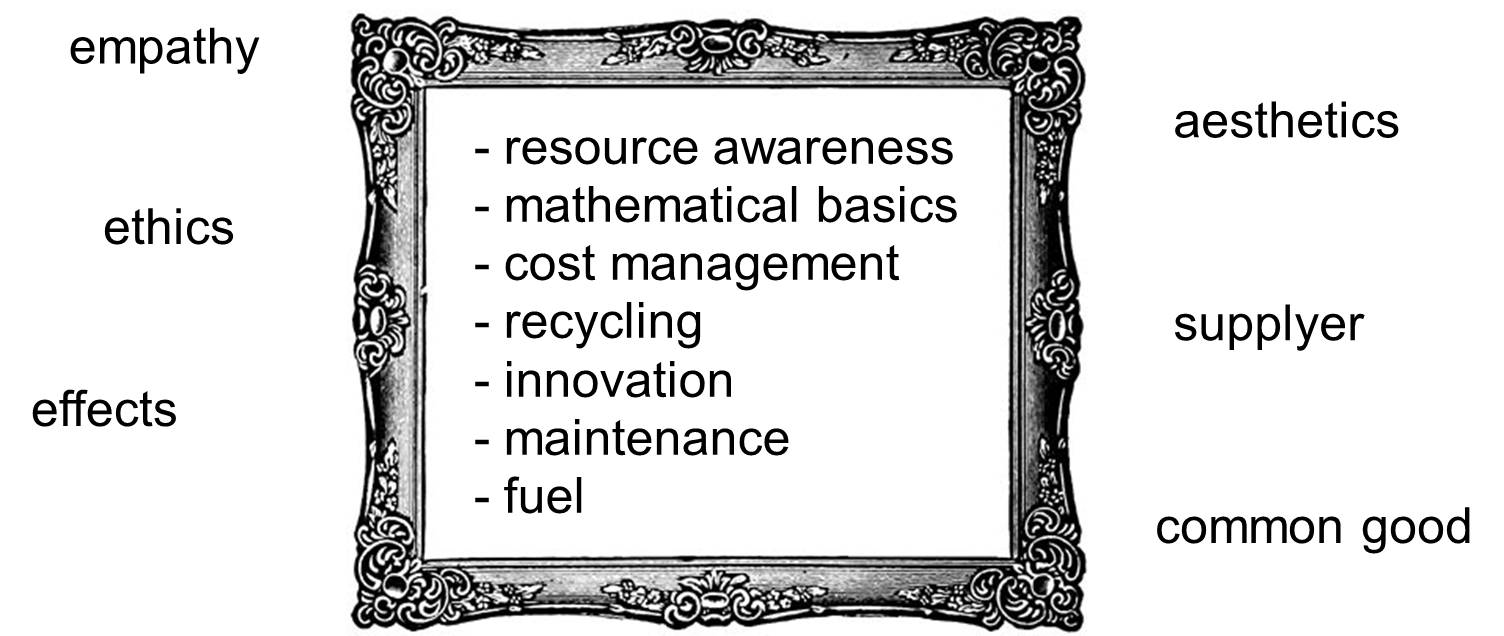
Figure 1. Picture frame exercise – what’s in the focus of our discipline, and what is excluded?
Within the picture frame exercise, students reflect on which aspects their discipline focuses on (which are placed within the picture frame), and which related and maybe even relevant aspects are excluded, thus removing them from the responsibility of the discipline in question. For the example of an engineering discipline as depicted in Figure 1, the discipline focusses on technological aspects, while issues such as empathy, ethics, aesthetics, or the effects of technological development on the common good, are considered as being out of scope.
2.6. Organizational Issues
To achieve its intended learning outcomes, the class requires a cross-faculty group of students, to facilitate the reflection on disciplines from different perspectives. As well, the class requires a teaching team that is as diverse as possible in terms of professional background and approaches, but still works constructively and with a shared vision. Note that this requires some preparatory time and effort, to allow the teaching team to grow together and develop some kind of symbiosis.
For participating students, the course comprises 20 contact hours and an additional 40 hours of self study, which in total amounts to 2 ECTS Points. To foster an emotional connection among students and to create an intensive atmosphere, contact hours are organized as two blocks of 1.5 days each, approximately four weeks apart. To give students of different degree programs the opportunity to participate in the course despite their very different schedules, the course is held during off-peak hours, i.e., Friday afternoons and Saturdays.
3. First Experiences
So far, the class has run three times, on an annual basis, starting from winter semester 2023/2024. Each run attracted a bit more than 20 students, covering most of our institution’s departments (see Fig. 2). Thus, it was possible to group students deliberately into either homogeneous or heterogeneous teams, as needed for the different tasks and group challenges according to our didactic concept. Note that most students were on a bachelor level.
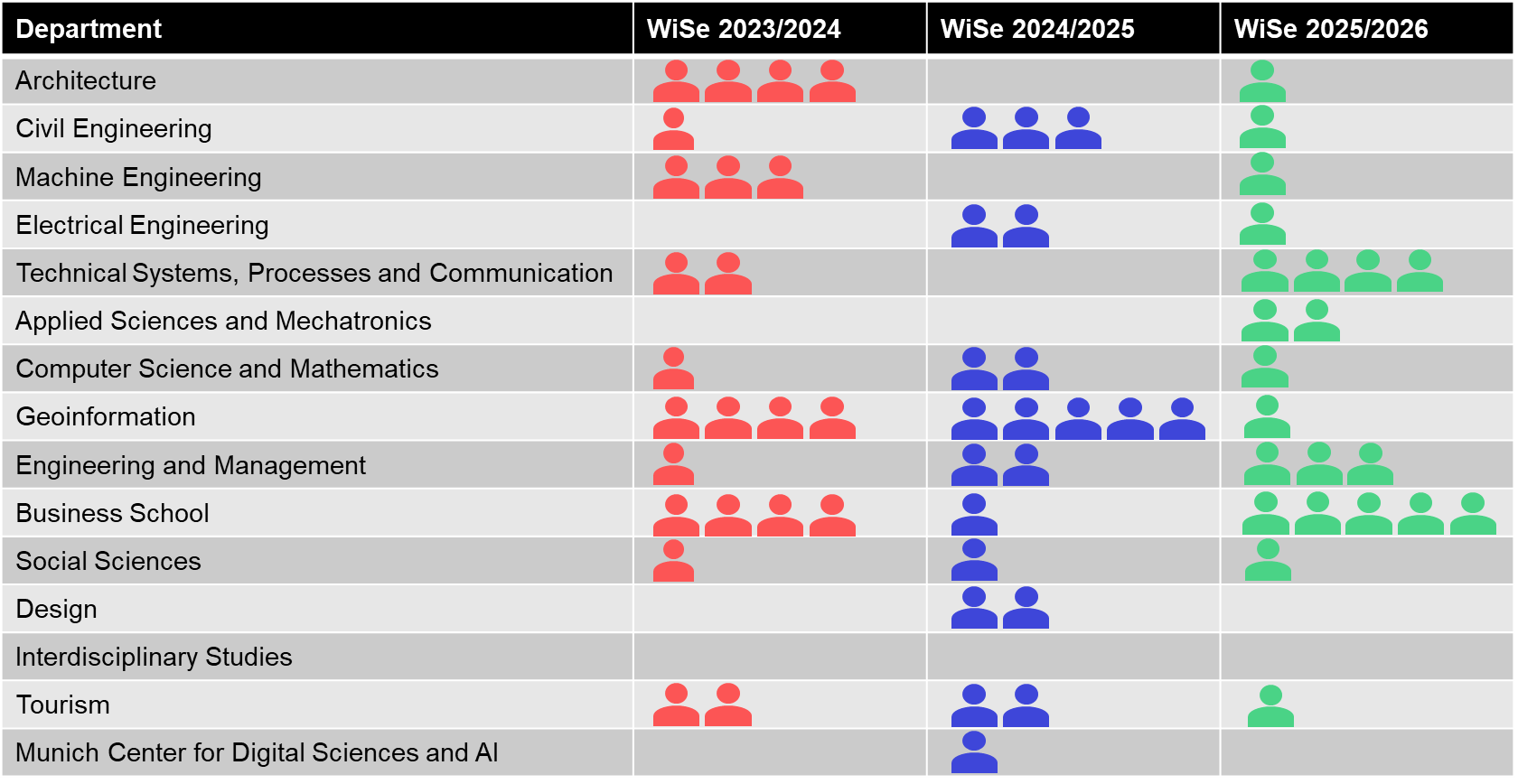
Figure 2. Participating students and their home department
Evaluation results indicate that as a major take-away, students realize the importance of critical reflection (of themselves, their habits and beliefs, their disciplines, …) and to consciously leave their own customary bubble. Furthermore, students gained eye-opening insights on their own personal values, disciplinary values, and the competencies primarily fostered by their respective disciplines.
As well, students particularly appreciate the interdisciplinary exchange that transcends the silo boundaries of their own familiar fields of expertise, and the associated opportunity to broaden their own horizons. They also praise the high degree of interactivity, the intensive discussions in the group work and in plenary sessions, and the various methods for reflection, especially the learning journal. Furthermore, students praise the constructive and appreciative atmosphere and the high level of motivation of both the participating students and the teachers for the topic of sustainability.
Towards the end of the course’s contact hours, students were requested to self assess their increase in their factual knowledge of sustainability, their critical reflection of their own discipline, and their competence level regarding the five sustainability competencies that were addressed during the course. Students outline their increase in competence on a scale from 0% to 100% using arrows, with the starting point of an arrow marking the initial level of competence at the beginning of the course and the tip of the arrow marking the level of competence achieved at the end of the course (see Fig. 3).
4. Conclusions and Outlook
Through it multidisciplinary approach, our module on discipline and sustainability helps students to change perspective and thus gain a deeper and more realistic understanding of both the strengths and limitations of their chosen degree program. By deliberately “zooming out” and mutually questioning the assumptions of their own discipline, students learn to place their studies into a broader, systemic context – often for the first time in their study process.
Since students leave their familiar disciplinary bubble and thus their comfort zone, this course is challenging for participants in many ways. During this class, students acquire not only basic knowledge about sustainability, but learn to critically assess their own discipline. As well, students practice five key competencies for sustainability: holistic thinking, awareness of consequences, (self-)reflection, problem-solving skills in interdisciplinary teams, and value orientation. Self-reflection and value orientation, in particular, are crucial for ensuring that students continue to consciously engage with the topic of sustainability after the course and take action in their private and professional spheres of influence.
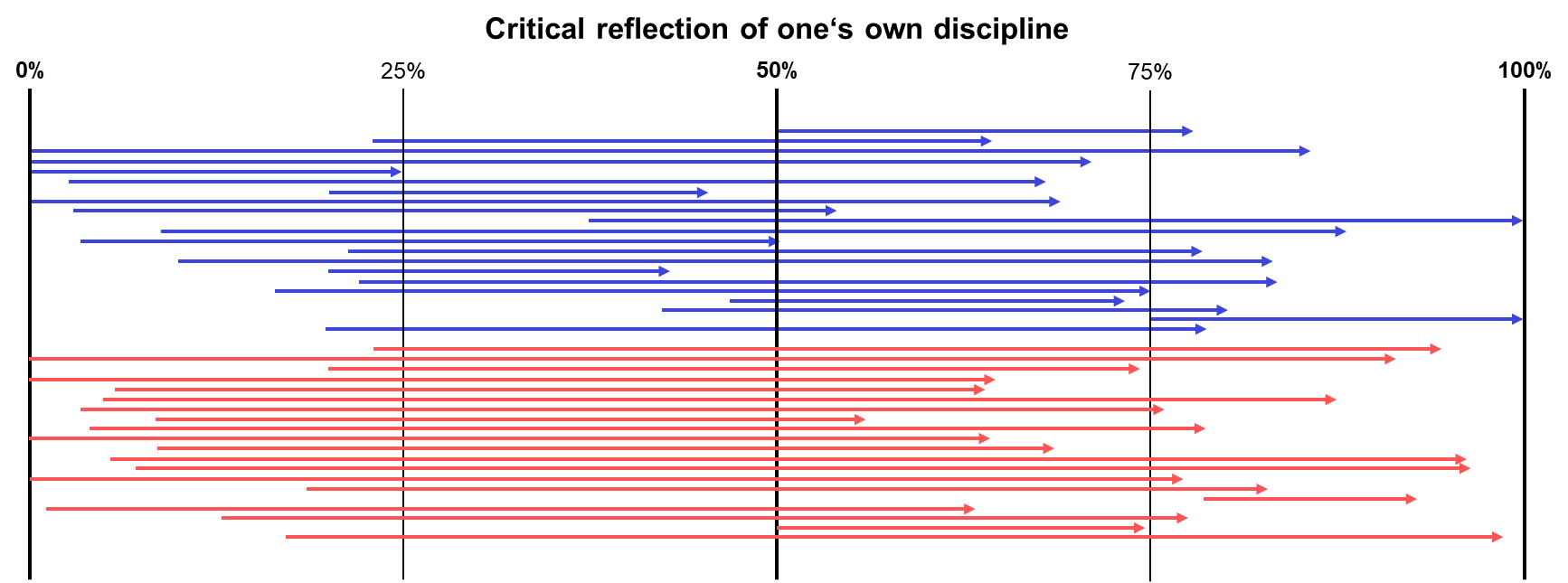
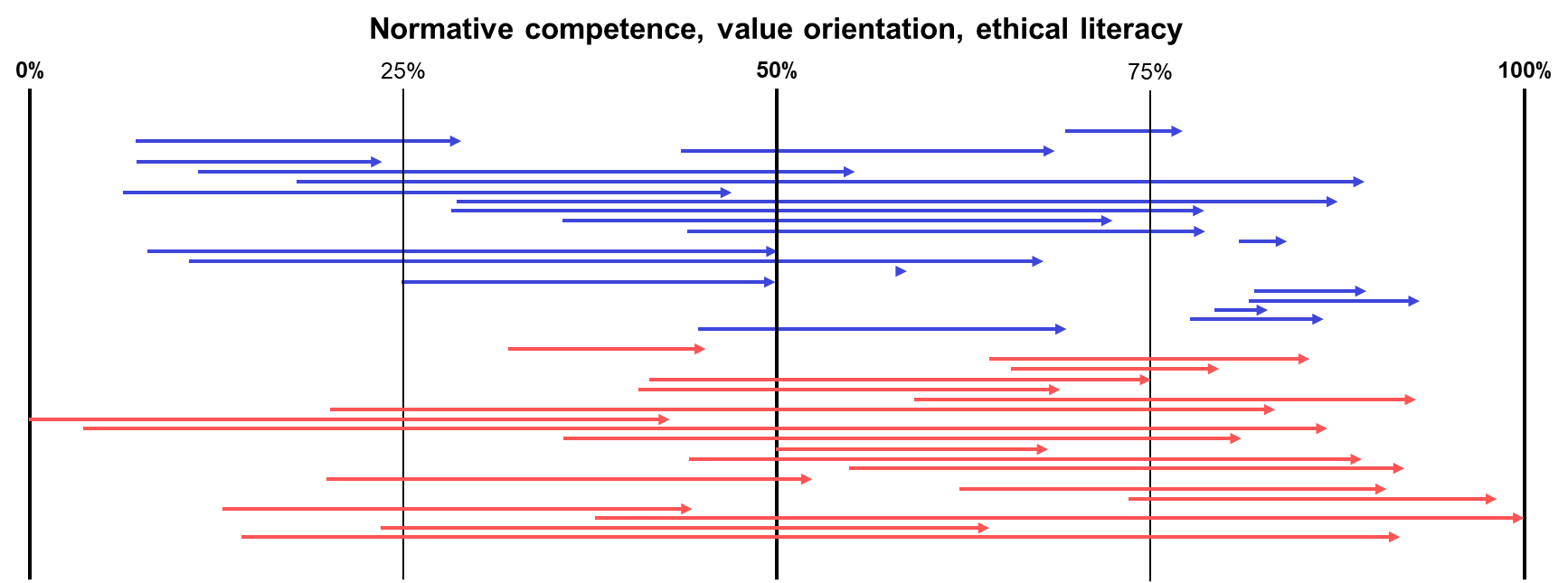
Figure 3. Students’ self assessment of their increase in selected sustainability competences (red: winter term 2023/2024, blue: winter term 2024/2025)
References
Biggs, J., & Tang, C. (2011). Teaching for Quality Learning at University. Maidenhead, England: Open University Press.
Bundiers, K., Barth, M., Cebrián, G., & Cohen, M. (2021). Key competencies in sustainability in higher education – toward an agreed-upon reference framework. Sustain Sci, 16, S. 13–29. doi:10.1007/s11625-020-00838-2
Damasio, A. (1994). Descartes’ Irrtum. Fühlen, Denken und das menschliche Gehirn. München: List.
Lehner, M. (2020). Viel Stoff – wenig Zeit: Wege aus der Vollständigkeitsfalle (5. Auflage Ausg.). Bern: Haupt Verlag.
Lozano, R., Merrill, M. Y., Sammalisto, K., Ceulemans, K., & Lozano, F. J. (2017). Connecting Competences and Pedagogical Approaches for Sustainable Development in Higher Education: A Literature Review and Framework Proposal. Sustainability, 2017(9 (10)). doi:10.3390/su9101889
Rieckmann, M. (2012). Future-oriented higher education: Which key competencies should be fostered through university teaching and learning? Futures, 44(2), S. 127–135. doi:10.1016/j.futures.2011.09.005
Sterling, S. (2010). Transformative Learning and. Learning and Teaching in Higher Education, 2010–11(5), S. 17–33.
Storch, M. (2004). Gute Entscheidungen treffen – Die Pizza-Probe. Gehirn & Geist(1/2004), S. 86–88.
Wiek, A., Withycombe, L., & Redman, C. L. (2011). Key competencies in sustainability: a reference framework for academic program development. Sustain Sci, 6, S. 203–218. doi:10.1007/s11625-011-0132-6