Knowledge Translation for Interdisciplinary STEM Learning: A Trauma-Informed UX Collaboration in a War Context
Knowledge Translation for Interdisciplinary STEM Learning
Knowledge Translation for Interdisciplinary STEM Learning: A Trauma-Informed UX Collaboration in a War Context
Jami L. Cotler1, TJ Mychack1, Donevan Mysliwiec1, Maxim Kril1, Jeremy Bult1, Dmitry Burshteyn2, Svitlana Kuzmina3
1Computer Science Department, Siena University, USA, 2Psychology Department, Siena University, USA 3Education Department, Vinnytsia Mykhailo Kotsiubunskyi State Pedagogical University, Ukraine.
How to cite: Cotler, J. L.; Mychack, TJ.; Mysliwiec, D.; Kril, M.; Bult, J.; Burshteyn, D.; Kuzmina, S. (2026). Knowledge Translation for Interdisciplinary STEM Learning: A Trauma-Informed UX Collaboration in a War Context. In: 12th International Conference on Higher Education Advances (HEAd’26). Valencia, 15-18 June 2026. https://doi.org/10.4995/HEAd26.2026.21809
Abstract
Interdisciplinary STEM courses often divide work by specialty, allowing students to complete tasks without engaging other fields. This study examines a learning structure in which progress depended on continuous knowledge translation across disciplinary perspectives. American psychology and computer science students collaborated with Ukrainian pre-service teachers supporting war-affected children to develop trauma-support classroom strategies and transform them into a teacher-facing digital resource. The artifact served as the medium of reasoning: psychological concepts had to become classroom actions and then interface behavior. The lightweight prototype is in pre-deployment, with Phase 2 evaluation planned to use cognitive walkthroughs and surveys. We analyze learning through revision traces and documented stakeholder feedback across iterative cycles. The analysis indicates that interdisciplinary STEM learning emerges when the instructional structure makes progress impossible without translating knowledge across domains.
Keywords: Interdisciplinary STEM learning; Knowledge translation; Boundary-crossing learning; Project-based learning; Humanitarian education; Trauma-informed UX design
1. Introduction
Armed conflict disrupts children’s learning environments and heightens anxiety, emotional dysregulation, and trauma-related behaviors (Goto et al., 2024; Kadir et al., 2018). Teachers often serve as frontline responders despite limited mental health training, and scalable psychosocial support is difficult to implement in rapidly changing classrooms. Digital tools may help, but poorly designed systems can increase confusion or cognitive burden (Gray et al., 2018). Trauma-informed practice therefore emphasizes safety, transparency, empowerment, and cultural responsiveness in educational technologies (SAMHSA, 2014).
While interdisciplinary projects are common in STEM education, many rely on parallel task division rather than epistemic integration. Students contribute discipline-specific components without needing to interpret knowledge across domains. This paper examines an interdisciplinary learning structure in which progress requires continuous translation between psychological theory, pedagogical practice, and technical implementation. We argue interdisciplinary learning is most likely when advancement depends on knowledge translation across disciplinary perspectives rather than coordinated specialization. This paper focuses on the instructional structure and interdisciplinary processes observed during project development rather than on post-deployment evaluation outcomes. The study examines how knowledge translation operated as a requirement for task completion across disciplines.
2. Related Work
Trauma-informed frameworks emphasize safety, trustworthiness, empowerment, and collaboration within support systems (SAMHSA, 2014). Human-centered computing research similarly shows that interface design shapes emotional experience and can unintentionally cause harm when it misaligns with user context (Pater et al., 2017; Gray et al., 2018). Technology deployed in crisis environments must prioritize reliability, social trust, and sustainability over feature complexity (Toyama, 2011; Reuter et al., 2018).
Educational research on interdisciplinary and project-based learning highlights collaboration and teamwork (Prince & Felder, 2006; Lattuca et al., 2013), while boundary-crossing theory suggests learning occurs when participants must reconcile different knowledge systems (Akkerman & Bakker, 2011). This study examines such boundary-crossing as knowledge translation required for task completion rather than coordination of separate contributions.
3. Project Context and Collaboration Model
3.1. Interdisciplinary Partnership
The project was intentionally structured so that no discipline could complete its work independently; advancement required continuous reinterpretation of ideas across psychology, education, and computing. Three stakeholder groups collaborated:
Ukrainian pre-service teachers contributed classroom realities
Psychology students translated trauma theory into classroom strategies
Computer science students implemented the strategies as a teacher-facing website
Because each contribution depended on the others, progress required shared interpretation rather than division of labor. Theory, classroom experience, and implementation were therefore integrated from the outset.
3.2. Educational Structure and Student Learning Activities
The project was implemented across two American university courses and a Ukrainian university teacher preparation program. American students interacted directly with educators who work with children affected by displacement and war.
The interdisciplinary activity unfolded through iterative cycles:
Phase 1: Problem framing: Ukrainian educators described classroom challenges (e.g., student distress and disengagement), which psychology students analyzed through a trauma-informed lens (Goto et al., 2024; SAMHSA, 2014).
Phase 2: Strategy translation: Psychology students proposed trauma-support strategies, and educators evaluated their classroom feasibility.
Phase 3: Interface translation: Computer science students implemented selected strategies as interface components (e.g., navigation structure and modular strategy cards).
Phase 4: Stakeholder feedback and revision: Educators reviewed prototypes and identified breakdowns (e.g., confusion and impracticality), necessitating reformulation across all groups.
These phases are repeated across multiple cycles. When misunderstandings occur, implementation is paused until concepts are successfully translated across domains. The task could not be partitioned: psychological concepts had to translate into classroom actions, which then had to translate into system behavior. Progress, therefore, depended on cross-domain interpretation rather than on sequential contributions.
3.3. Website Implementation
The prototype was implemented as a static HTML/CSS site to ensure reliability in unstable infrastructure and minimize cognitive load. The simplified architecture also limited feature complexity, forcing prioritization of clarity over functionality.
4. Trauma-Informed UX Design Decisions
The interface served as an observable record of interdisciplinary reasoning. Each design decision required balancing psychological safety, classroom practicality, and technical feasibility. Five integrated design goals emerged from these negotiations: low cognitive load, predictability, transparency, user agency, and contextual relevance. Strategies were organized by classroom context rather than by abstract category (Figure 1).
Emotion-based categorizations failed during review because teachers could not identify appropriate actions during classroom activity, prompting a shift to situational categories. The resulting navigation prioritized rapid recognition during live classroom interaction. For example, an early prototype organized strategies by emotional categories (e.g., anxiety, withdrawal). During educator review, teachers reported difficulty identifying these categories in live instruction. This feedback led to a redesign into scenario-based categories (e.g., “student refuses to participate”), illustrating how classroom constraints reshaped psychological abstraction into an actionable structure.
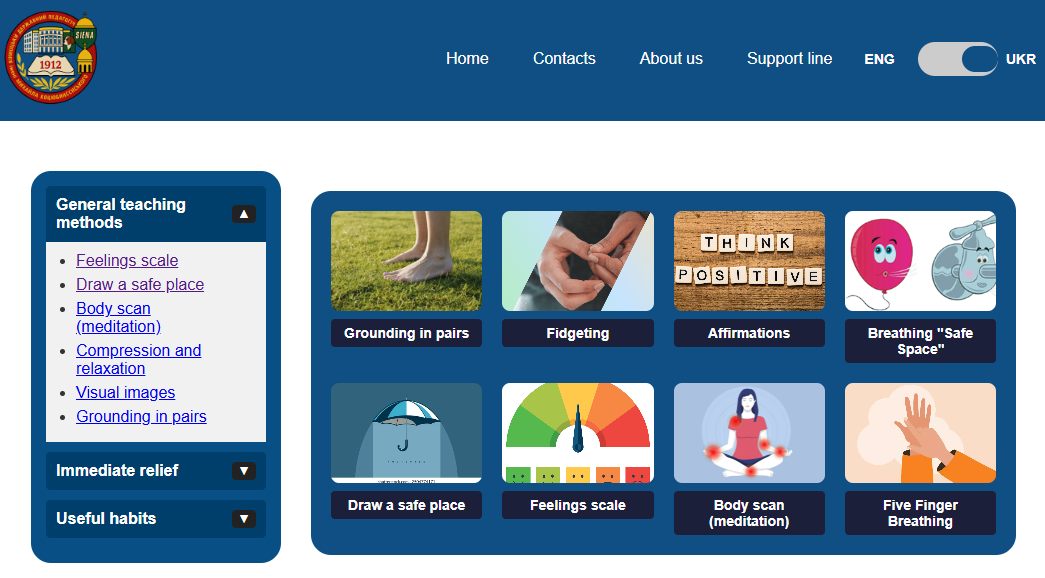
Figure 1. Teacher-facing interface illustrating scenario-based navigation and modular strategy cards; the structure reflects translation of psychological concepts into classroom-recognition actions under low cognitive load constraints.
The interface uses shallow navigation and modular strategy cards with minimal text. This structure arose from reconciling technical preferences for completeness for materials that are easy to find and follow. The final format emerged only after teams negotiated conflicting assumptions about what teachers needed versus what they could attend to during instruction.
Predictability became a design requirement rather than a stylistic preference. Proposed dynamic interactions were rejected because stakeholders anticipated classroom confusion, which forced teams to redefine “engagement” as predictability. Here, psychological theory directly shaped technical implementation.
The system explicitly distinguishes classroom strategies from therapeutic interventions and offers multiple options rather than directives. Educators require support without role overreach, while psychology students emphasize harm prevention. This revision occurred only after students recognized that interface instructions were being interpreted as clinical guidance, prompting a reinterpretation of support as optional rather than a directive.
Content was collaboratively translated into Ukrainian and supplemented with referral resources. This reflects a shift from solving the problem to supporting responsible action: the system guides teachers to appropriate escalation when classroom strategies are insufficient. Design elements serve as artifacts of negotiated meaning rather than as isolated usability optimizations.
5. Evaluation: Observations and Planned Study
This paper reports on completed design and development cycles, focusing on interdisciplinary processes observed during implementation. Formal evaluation of the deployed system is ongoing. The planned evaluation will occur after IRB approval and will use methods aligned with trauma-informed research. The evaluation, therefore, examines both system usability and the success of interdisciplinary knowledge translation embodied in the interface.
5.1. Cognitive Walkthroughs
Participants will complete classroom scenarios using a think-aloud protocol. The focus is on identifying confusion, uncertainty, and emotional discomfort rather than on speed. Participants may pause or skip tasks at any time.
5.2. Usability and Experience Feedback
Surveys will assess usability, clarity, emotional safety, and acceptability using Likert and open-ended questions.
5.3. Ethics and Translation
Materials will be available in Ukrainian and English. Participation is voluntary, and referral resources will be provided.
5.4. Analysis Plan
Data will be analyzed both descriptively and thematically to identify usability barriers and perceived reassurance, informing iterative refinement.
5.5. Preliminary Observations
Preliminary observations were drawn from iterative design cycles, including revision traces, stakeholder feedback, and documented breakdowns in interdisciplinary communication.
Three recurring patterns were observed:
1. Misalignment between psychological concepts and classroom feasibility. Educators frequently rejected theoretically sound categorizations when they proved impractical in real-world instruction, necessitating reformulation into actionable frameworks.
2. Misinterpretation of interface content as clinical guidance. Initial designs were perceived as therapeutic directives, prompting revisions to optional strategies and clearer boundaries between classroom support and clinical intervention.
3. Tension between technical completeness and classroom usability. Technical preferences for feature-rich design conflicted with educators’ need for clarity and low cognitive load, leading to simplified, modular interface structures.
In each case, progress halted until concepts were successfully translated across domains, suggesting that interdisciplinary collaboration was structurally enforced rather than optional.
6. Findings: Interdisciplinary Learning Through Knowledge Translation
Findings are based on an analysis of iterative design cycles, including revision traces, stakeholder feedback, and observed breakdowns in interdisciplinary communication. These materials were analyzed to identify patterns in how knowledge was translated across domains during task completion.
Analysis of these iterative cycles revealed three structural conditions that consistently shaped interdisciplinary interaction: the conditions that supported this process were:
1. Epistemic dependency. No group could progress independently without input from other groups.
2. Artifact-mediated reasoning. The interface served as a shared object through which disciplinary knowledge was externalized and negotiated.
3. Constraint-driven prioritization. Crisis conditions and stakeholder needs limited design options, necessitating reconciliation of competing perspectives.
Findings suggest that learning occurred through negotiated interpretation rather than task completion. Students repeatedly reconciled psychological theory, classroom realities, and technical constraints; progress often stalled until meanings aligned. Concepts were transformed into practices and then into system behavior, making the artifact a record of shared understanding rather than a collection of separate contributions. Two structural conditions produced this mechanism. Authentic stakeholders prevented abstract solutions because decisions had immediate, real-world consequences. Crisis constraints limited expansion and forced prioritization, requiring students to reason about responsibility rather than possibility. Together, these conditions created epistemic dependency: no group could progress independently. Interdisciplinary learning appears to have emerged from required cross-domain interpretation rather than a coordinated division of labor. The artifact served as a medium for reasoning through which translation became observable.
6.1. Limitations and Future Work
The study does not include direct measures of student learning outcomes, so the findings are limited to observed interdisciplinary processes during development. It examines interdisciplinary educational collaboration rather than classroom implementation and does not measure learning or student outcomes. Participants were pre-service teachers, who may differ from experienced educators. Therefore, the findings indicate the feasibility of the learning model rather than the effectiveness of the resulting tool. Future work will evaluate classroom adoption and pedagogical impact.
7. Conclusion
This paper presents a design-based account of an instructional structure in which interdisciplinary progress depends on continuous knowledge translation across domains. The primary contribution is identifying the structural conditions that required such translation during project development. The project demonstrates an interdisciplinary model in which progress depended on translating meaning across psychology, education, and computing rather than on contributing isolated disciplinary components. Because no group could advance independently, students continually reinterpreted theory, classroom realities, and technical constraints.
Authentic stakeholders and crisis conditions further shifted activity from implementation to judgment: students justified decisions, negotiated assumptions, and reasoned about responsibility. Interdisciplinary collaboration, therefore, became epistemic rather than organizational, with understanding emerging through the coordination of perspectives rather than the division of labor.
Accordingly, the work offers a replicable instructional structure for interdisciplinary STEM education in which learning emerges from required cross-domain interpretation in real-world contexts. These findings suggest that interdisciplinary learning is more likely when instructional structures make progress difficult without translating knowledge across domains.
References
Alam, K., & Imran, S. (2015). The digital divide and social inclusion among refugee migrants: A case in regional Australia. Information Technology & People, 28(2), 344–365. https://doi.org/10.1108/ITP-04-2014-0083
Bangpan, M., Dickson, K., Felix, L., Chiumento, A., Nunan, D., Bainbridge, C., Tripney, J., & Kaltenthaler, E. (2024). The impact of mental health and psychosocial support programmes on children and young people’s mental health in the context of humanitarian emergencies in low- and middle-income countries: A systematic review and meta-analysis. Global Mental Health, 11, e17. https://doi.org/10.1017/gmh.2024.17
Engeström, Y. (2001). Expansive learning at work: Toward an activity theoretical reconceptualization. Journal of Education and Work, 14(1), 133–156. https://doi.org/10.1080/13639080020028747
Goto, R., Pinchuk, I., Kolodezhny, O., Pimenova, N., Kano, Y., & Skokauskas, N. (2024). Mental health of adolescents exposed to the war in Ukraine. JAMA Pediatrics, 178(5), 480–488. https://doi.org/10.1001/jamapediatrics.2024.0295
Gray, C. M., Kou, Y., Battles, B., Hoggatt, J., & Toombs, A. L. (2018). The dark patterns side of UX design. Proceedings of the 2018 CHI Conference on Human Factors in Computing Systems. https://doi.org/10.1145/3173574.3174108
Irani, L., Vertesi, J., Dourish, P., Philip, K., & Grinter, R. E. (2010). Postcolonial computing: A lens on design and development. Proceedings of the SIGCHI Conference on Human Factors in Computing Systems. https://doi.org/10.1145/1753326.1753538
Kadir, A., Shenoda, S., & Goldhagen, J. (2018). Effects of armed conflict on child health and development: A systematic review. BMJ Paediatrics Open, 2, e000336. https://doi.org/10.1136/bmjpo-2018-000336
Lattuca, L. R., Knight, D. B., & Bergom, I. (2013). Developing a measure of interdisciplinary competence for engineers. Journal of Engineering Education, 102(3), 392–420. https://doi.org/10.1002/jee.20023
Pater, J. A., Mynatt, E. D., & McDonald, D. W. (2017). Designing for health & safety: A study of mental health self-disclosure online. Proceedings of the ACM Conference on Computer Supported Cooperative Work. https://doi.org/10.1145/2998181.2998193
Prince, M. J., & Felder, R. M. (2006). Inductive teaching and learning methods: Definitions, comparisons, and research bases. Journal of Engineering Education, 95(2), 123–138. https://doi.org/10.1002/j.2168-9830.2006.tb00884.x
Reuter, C., Hughes, A. L., & Kaufhold, M.-A. (2018). Social media in crisis management: An evaluation and analysis of crisis informatics research. International Journal of Human–Computer Interaction, 34(4), 280–294. https://doi.org/10.1080/10447318.2018.1427832
SAMHSA. (2014). SAMHSA’s Concept of Trauma and Guidance for a Trauma-Informed Approach. Rockville, MD. https://ncsacw.acf.hhs.gov/userfiles/files/SAMHSA_Trauma.pdf
Toombs, A. L., Bardzell, J., & Bardzell, S. (2015). The proper care and feeding of hackerspaces: Care ethics and cultures of making. Proceedings of the 33rd Annual ACM Conference on Human Factors in Computing Systems. https://doi.org/10.1145/2702123.2702522
Toyama, K. (2011). Technology as amplifier in international development. Proceedings of the SIGCHI Conference on Human Factors in Computing Systems. https://doi.org/10.1145/1978942.1979061