Embedding Digital Twins in Higher Education: A Competency-Based Training Model within an Urban Innovation Ecosystem
Embedding Digital Twins in Higher Education:
Embedding Digital Twins in Higher Education: A Competency-Based Training Model within an Urban Innovation Ecosystem
Mariangela
De Vita1,2
 ,
Giordana Castelli1
1Department of Engineering, ICT and Technology for Energy and Transport (DIITET), Science of Cities Interdepartmental Centre, Italian National Research Council, 00185 Rome, Italy, 2Department of Civil, Building and Environmental Engineering, University of L’Aquila, 67100 L’Aquila, Italy.
How to cite: De Vita, M., Castelli, G. (2026). Embedding Digital Twins in Higher Education: A Competency-Based Training Model within an Urban Innovation Ecosystem. In: 12th International Conference on Higher Education Advances (HEAd’26). Valencia, 15-18 June 2026. https://doi.org/10.4995/HEAd26.2026.21858
Abstract
This paper analyses the Thematic Schools developed within the Casa delle Tecnologie Emergenti di Matera (CTEMT), and Urban Innovation Ecosystem funded by the Italian Ministry, as an embedded higher education model for urban digital competency development. The aim of the study is to examine how a competency-based and laboratory-oriented training program, integrated with a real Urban Digital Twin infrastructure, can enhance professional upskilling in smart city contexts. The program involved 291 participants across multiple editions, with a predominance of highly educated professionals and 75% new ecosystem actors. Results show strong demand for operational digital skills, particularly in geospatial interoperability and regulatory compliance. The findings indicate that integrating education with technological experimentation fosters applied learning and strengthens innovation ecosystems. The study concludes that ecosystem-embedded training models can effectively bridge higher education, professional practice, and digital infrastructure development.
Keywords: Competency-based education; Experiential learning; Digital Twin; Smart Cities; Professional upskilling; Innovation ecosystems
1. Introduction
The accelerating digital transformation of urban systems is reshaping the competencies required by professionals, researchers, and public administrations involved in city governance and territorial development. The diffusion of smart city infrastructures and urban Digital Twins demands interdisciplinary expertise that integrates technological, regulatory, analytical, and governance-oriented knowledge.
Higher education institutions are increasingly challenged to redesign their pedagogical models in order to respond to these evolving demands. The shift from knowledge transmission to competency-based education has been widely recognized as a necessary transition in contemporary higher education systems (Mulder, 2014; European Commission, 2018). Competency-based approaches emphasize applied learning, problem-solving abilities, and alignment with professional practice, particularly in rapidly evolving technological domains.
At the same time, emerging educational research highlights the importance of experiential and practice-oriented learning models, where students engage directly with real-world infrastructures and complex systems (Kolb, 1984; Wiek et al., 2011). In technology-intensive domains, learning environments that integrate digital tools and simulation platforms enhance applied skill acquisition and decision-making capacity (Boulton et al., 2018). More recently, Digital Twins have been identified not only as urban governance tools but also as potential educational infrastructures capable of supporting scenario-based learning and experimentation (Batty, 2018; Fuller et al., 2020).
Within this evolving framework, the Casa delle Tecnologie Emergenti di Matera (CTEMT) was established as an urban innovation hub aimed at fostering experimentation, technological development, and knowledge transfer in emerging digital domains. The initiative is implemented within the Italian National Research Council (CNR), through the Interdepartmental Centre for the Science of Cities (CISC), which promotes interdisciplinary research and applied experimentation on urban systems and digital transformation processes.
In contrast to traditional university courses detached from operational infrastructures, CTEMT embeds training activities within a living technological ecosystem. Into the framework of the project consisting in about 15 million euros of funding received from the Ministry of Enterprises and Made in Italy (MIMIT), Task 3.2 was designed to equip students, professionals, public administrators, and researchers with advanced methods and tools for urban digitalization. The overall budget allocated to the training task amounted to €409,400.65, of which €229,881.63 were specifically devoted to the design and implementation of seasonal Thematic Schools, implemented between autumn 2025 and autumn 2026. This structured investment reflects a strategic institutional commitment to embedding higher education innovation within a real digital infrastructure.
The thematic schools were conceived as multidisciplinary and competency-based programs addressing scientific domains related to smart cities, digital governance, WebGIS infrastructures, regulatory frameworks such as DNSH, artificial intelligence, Digital Twin architectures, and urban economic complexity. Their objectives were to strengthen applied digital competencies, enable participants to interact with advanced technological infrastructures including the Urban Digital Twin of Matera, foster learning-by-doing approaches through laboratory-based activities, and promote collaboration between research institutions, universities, industrial partners, and professional bodies.
This paper analyses the design, implementation and outcomes of the CTEMT thematic schools as an innovative higher education model embedded within a real-world digital infrastructure. In this context, the paper addresses the following research questions: (i) Does embedding training activities within an Urban Digital Twin environment enhance the development of applied digital competencies? (ii) Which types of competencies are most demanded by participants engaged in ecosystem-embedded training programs? By addressing these questions, the study aims to contribute to the understanding of how higher education models can be effectively integrated within technological innovation ecosystems.
2. Methodology
This study adopts a descriptive case-study approach aimed at analysing the CTEMT Thematic Schools as an embedded higher education model. The methodological framework combines structural analysis of the training configuration with quantitative examination of participation data. The analysis focuses on three dimensions: institutional design, pedagogical model, and integration with technological infrastructure. The case study approach is particularly suitable for exploring complex and context-dependent educational models where training, infrastructure, and ecosystem dynamics are strongly interconnected.
2.1. Institutional and Program Design
The thematic schools were organized as seasonal editions (Fall, Winter, Summer) composed of modular courses covering complementary scientific domains. Their design involved collaboration with scientific, industrial, and academic partners, including universities and technology providers, ensuring interdisciplinary content and technological relevance.
The modules addressed diverse topics to engage a heterogeneous audience. These topics included Smart Cities and Smart Buildings, DNSH regulatory frameworks and environmental compliance, WebGIS and QGIS Server implementation, governance and artificial intelligence applications, digital management of the built environment and Digital Twin architectures, as well as urban economic complexity and sustainable tourism governance. This thematic diversification allowed the program to engage participants with different professional backgrounds and levels of specialization.
The target audience included freelance professionals, public administration technicians, researchers, doctoral candidates, consultants, and start-up actors. The courses were delivered in in-person, remote, and hybrid formats, primarily hosted at the San Rocco Technological Hub located in Matera, Italy – that is the main technological hub of the urban digital ecosystems funded by the MIMIT- or online, ensuring accessibility and scalability.
2.2. Pedagogical Framework
The training model adopted a competency-based and problem-oriented pedagogical framework grounded in modular specialization, applied learning, and laboratory experimentation. Participants were allowed to enroll in individual modules aligned with their professional needs, enabling flexible and targeted upskilling pathways.
The courses combined theoretical foundations with operational training on digital tools, regulatory frameworks, and governance models. Learning-by-doing constituted the core of the training experience, as laboratory sessions and practical exercises were systematically integrated into the modules.
Each course provided certification of acquired competencies, and selected modules allowed the recognition of professional credits for professional orders. The certification mechanism reinforced the professional orientation of the program and strengthened its relevance for post-graduate upskilling.
2.3. The Dual Virtuous Process: Training–Infrastructure Integration
A distinctive feature of the CTEMT model was the implementation of a dual virtuous process linking training activities with the Urban Digital Twin of Matera. On the one hand, participants were trained to use advanced digital infrastructures through structured educational activities. On the other hand, the outputs developed during laboratory sessions were used to test, validate, and enrich the digital environment.
In the WebGIS modules, participants developed and published thematic cartographic services that could be integrated into interoperable systems. In governance and artificial intelligence modules, scenario simulations were conducted to support decision-making processes. Modules focused on the built environment addressed Digital Twin architectures and integration mechanisms, while economic modules applied data-driven approaches to sustainable urban development strategies specifically related to the Matera context.
Through this mechanism, the Digital Twin functioned not only as an object of instruction but as a living infrastructure progressively validated and enriched through educational experimentation. The integration between education and technological infrastructure transformed the thematic schools into a dynamic experimentation platform that simultaneously strengthened competencies and contributed to technological validation.
3. Results
These results directly address the research questions by identifying both the most demanded competencies and the role of the Digital Twin as an applied learning environment. The CTEMT thematic schools registered a total of 291 participants across the different seasonal editions.
Figure 1 presents enrollment by thematic module. The distribution shows a clear prevalence of technically oriented modules. The WebGIS (QGIS) course attracted 145 participants, representing the highest demand. Smart Cities and Buildings and DNSH each recorded 104 enrollments, followed by Smart Governance (79 participants). Urban Economy & Tourism and Digital Built Environment modules attracted 40 and 39 participants respectively, while the only one participant who selected “Other.”
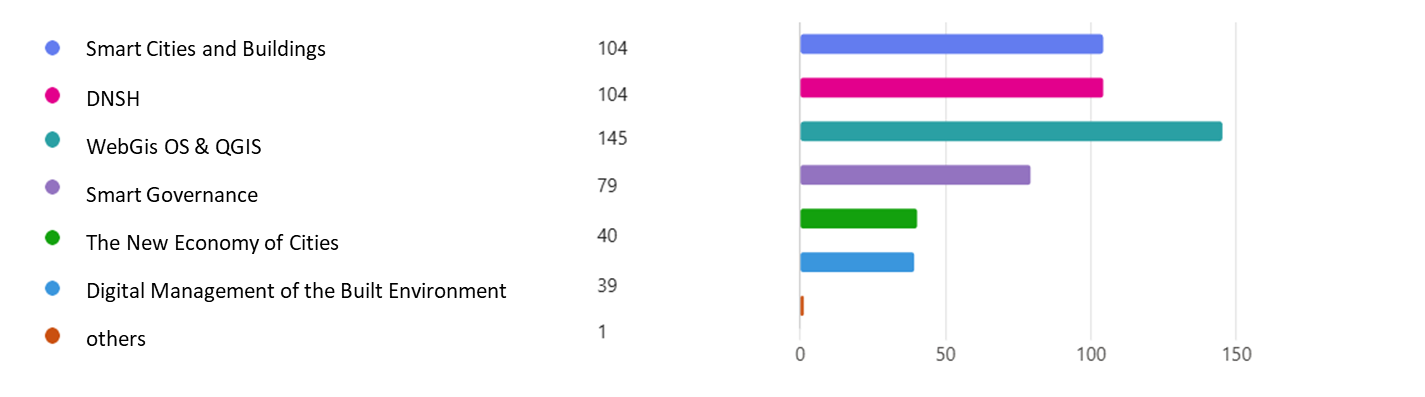
Figure 1. Enrollment distribution across thematic modules (N = 291), highlighting the predominance of technically oriented courses such as WebGIS and Smart Cities.
The prominence of WebGIS training indicates a strong demand for operational digital competencies, particularly those related to geospatial interoperability and web-based cartographic services. The high enrollment in DNSH and Smart Cities modules also suggests that regulatory and sustainability-oriented knowledge is perceived as strategically relevant for professional practice.
3.1. Professional Profile
Figure 2 illustrates the professional profile of participants. Freelance professionals accounted for 105 participants (37%), while an additional 105 participants (37%) were categorized under other professional roles. Students represented 28 participants (10%), researchers 23 (8%), and administrative staff 22 (8%).
The predominance of professionals confirms that the thematic schools functioned primarily as post-graduate and continuing education programs. The relatively lower share of students reinforces the positioning of the initiative as a professional upskilling ecosystem rather than a traditional undergraduate pathway.
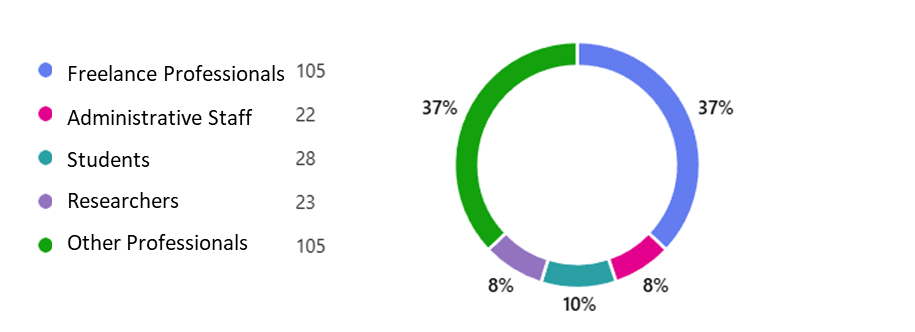
Figure 2. Professional profile of participants, showing the prevalence of freelance and other professional categories over students and researchers.
3.2. Educational Background
Figure 3 presents the educational background of participants. The majority held a One-Cycle degree (136 participants), followed by Master’s Degree (36) and PhDs (20). A smaller number held Bachelor’s Degrees (8), University Certificates (3), Associate Degrees (17), while 71 participants were classified under “Other.”
The high proportion of advanced academic qualifications indicates that the program attracted highly educated individuals seeking specialization in applied digital competencies rather than foundational knowledge acquisition.
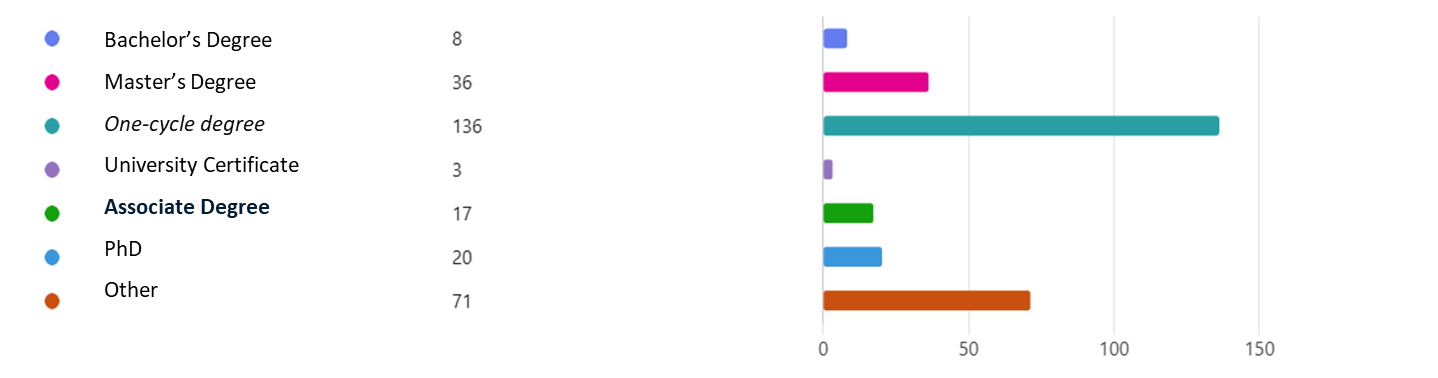
Figure 3. Educational background of participants, indicating a high proportion of Master’s degree holders and advanced academic qualifications.
3.3. Ecosystem Expansion
Figure 4 shows previous participation in other CTEMT initiatives. A total of 218 participants (75%) had not previously attended CTEMT training programs, while 73 participants (25%) had prior involvement.
This result demonstrates the strong outreach capacity of the thematic schools and their ability to expand the innovation ecosystem by engaging new stakeholders. The initiative therefore not only strengthened competencies but also broadened the network of actors connected to CTEMT’s digital infrastructure.
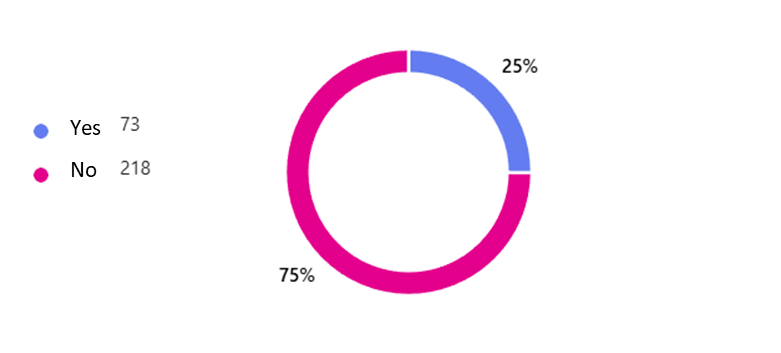
Figure 4. Previous participation in CTEMT initiatives (N = 73), illustrating the significant share of new ecosystem actors (N=218).
4. Conclusions
The CTEMT thematic schools represent an innovative higher education model embedded within a technological innovation ecosystem. By integrating competency-based training with a real urban digital infrastructure, the initiative bridges the gap between theoretical instruction and applied experimentation.
Participation data confirm a strong demand for operational digital competencies, particularly in geospatial interoperability and regulatory compliance. The predominance of professionals and the high share of new participants highlight the effectiveness of the model in supporting professional upskilling and ecosystem expansion. A key innovative element is the integration between training activities and the Urban Digital Twin, where education contributes directly to technological validation and infrastructure development.
From a practical perspective, the findings suggest several recommendations for higher education institutions and training providers. Embedding educational programs within real technological infrastructures enhances applied learning outcomes, while modular and competency-based formats enable flexible and targeted upskilling. Furthermore, collaboration with innovation ecosystems and industry actors is essential to ensure the relevance and continuous updating of educational content. However, the study is limited by the absence of longitudinal data on participants’ professional trajectories. Future research should therefore investigate the long-term impact of ecosystem-embedded training models on career development and on the evolution of innovation ecosystems.
Overall, the CTEMT experience suggests that embedding higher education within digital experimentation ecosystems can enhance applied learning, support lifelong education, and foster sustainable innovation networks.
References
Batty, M. (2018). Digital Twins. Environment and Planning B: Urban Analytics and City Science, 45(5), 817–820.
Boulton, C., Kent, C., & Williams, H. (2018). Virtual learning environments and experiential learning in higher education. Computers & Education, 125, 1–12.
European Commission. (2018). Council recommendation on key competences for lifelong learning.
Fuller, A., Fan, Z., Day, C., & Barlow, C. (2020). Digital Twin: Enabling technologies, challenges and open research. IEEE Access, 8, 108952–108971.
Kolb, D. (1984). Experiential learning: Experience as the source of learning and development. Prentice Hall.
Mulder, M. (2014). Conceptions of professional competence. In International handbook of research in professional and practice-based learning.
Wiek, A., Withycombe, L., & Redman, C. (2011). Key competencies in sustainability. Sustainability Science, 6(2), 203–218.